The Laying of the United States Capitol Cornerstone
1793 · Washington, D.C., United States
The cornerstone of the United States Capitol is laid by George Washington.
October 13, 1792
The cornerstone of the White House was laid in Washington, D.C., beginning the construction of the residence of the President of the United States.
Washington, D.C., United States | United States Government
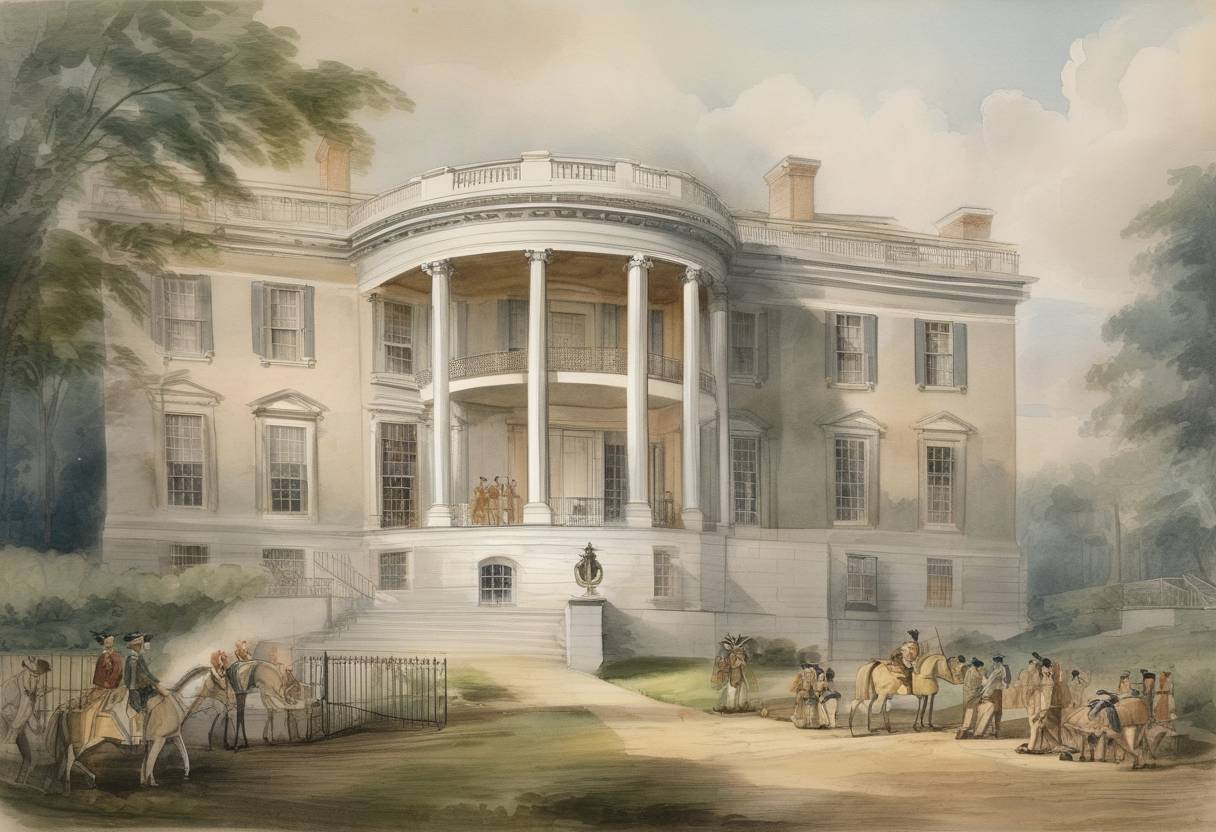
On October 13, 1792, a significant event in American history took place: the laying of the cornerstone for the White House in Washington, D.C. This marked the beginning of the construction of what would become the official residence and workplace of the President of the United States.
The Residence Act of 1790: The decision to build a federal city along the Potomac River was formalized by the Residence Act, which was signed into law by President George Washington on July 16, 1790. This act designated a location for the new capital of the United States, which would later be named Washington, D.C., in honor of the first president.
Design Competition: In 1792, a public competition was held to select the design for the President’s House. James Hoban, an Irish-born architect, won the competition with a design inspired by the Leinster House in Dublin, Ireland.
Ceremony: The cornerstone laying ceremony on October 13, 1792, was a Masonic event, reflecting the influence of Freemasonry among the nation’s founders. Although detailed records of the ceremony are scarce, it is believed that George Washington, a Freemason himself, may have participated in the event.
Construction: The construction of the White House was a massive undertaking for its time. Workers included both enslaved and free laborers, who contributed to the building’s completion. The sandstone used for the exterior walls was quarried from Aquia Creek in Virginia.
Completion and First Occupancy: The White House was completed in 1800, and President John Adams became its first resident in November of that year. Since then, it has served as the home and office for every U.S. president.
Architectural Influence: The White House has undergone several renovations and expansions over the years, but Hoban’s original neoclassical design remains a symbol of the American presidency and government.
Historical Impact: The White House stands as a testament to the early vision for the United States’ capital and has become an iconic symbol of American leadership and democracy.
The laying of the cornerstone of the White House on October 13, 1792, was not just the start of a building project but the beginning of a legacy that continues to play a central role in the nation’s history and governance.
Source: www.whitehousehistory.org