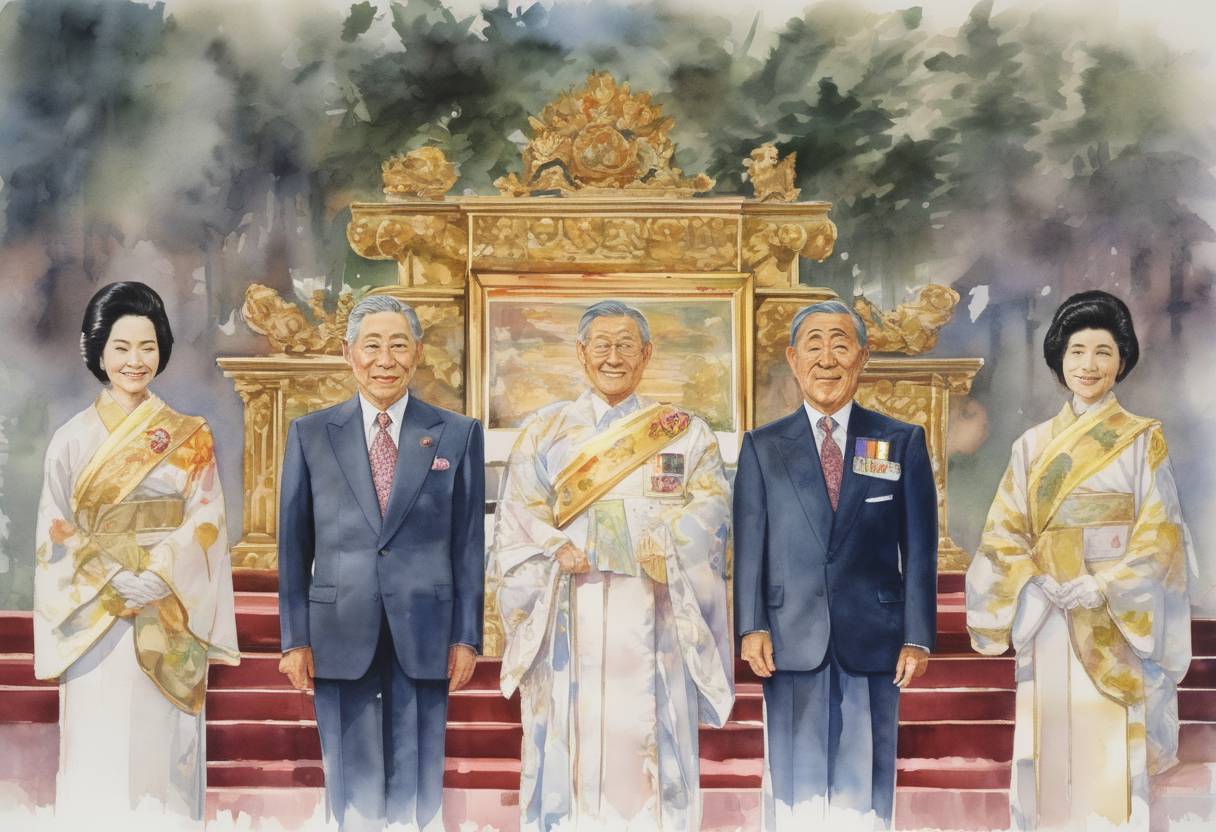
The Enthronement of Emperor Akihito: Beginning of the Heisei Era
On November 12, 1990, Crown Prince Akihito was formally installed as the Emperor of Japan, marking a significant transition in Japanese history. This event followed the death of his father, Emperor Hirohito, on January 7, 1989, which ended the Shōwa era and initiated the Heisei era.
Context and Background
- Emperor Hirohito’s Reign: Emperor Hirohito, also known posthumously as Emperor Shōwa, reigned from 1926 to 1989. His era witnessed significant events, including World War II and Japan’s subsequent recovery and economic boom.
- Transition to Heisei: Upon Hirohito’s death, Akihito ascended to the throne, and the Heisei era officially began. The term “Heisei” translates to “achieving peace,” reflecting hopes for a peaceful and prosperous future for Japan.
The Enthronement Ceremony
- Date and Location: The enthronement ceremony took place on November 12, 1990, at the Imperial Palace in Tokyo.
- Ceremonial Traditions: The enthronement was steeped in traditional rituals, including the “Sokui no Rei,” a ceremony where the new emperor formally announces his ascension to the throne. This event was attended by dignitaries from around the world, symbolizing Japan’s global connections.
- Public Celebrations: The enthronement was marked by public celebrations and a national holiday, allowing the Japanese people to participate in the historic occasion.
Significance of the Heisei Era
- Domestic and International Impact: The Heisei era saw Japan navigating numerous challenges, including economic stagnation, natural disasters, and evolving international relations.
- Emperor Akihito’s Role: Known for his efforts to humanize the imperial role, Emperor Akihito focused on reconciliation and outreach, both domestically and internationally. He was particularly noted for his visits to sites of historical significance and his emphasis on peace and understanding.
Aftermath and Legacy
- Reiwa Era: Emperor Akihito abdicated the throne on April 30, 2019, the first Japanese emperor to do so in over two centuries. His son, Naruhito, succeeded him, marking the beginning of the Reiwa era.
- Historical Reflection: The Heisei era is often reflected upon as a time of transition and adaptation for Japan, as the nation faced both internal and external changes while maintaining its cultural heritage.
The enthronement of Emperor Akihito was not just a ceremonial transition but a moment that encapsulated Japan’s aspirations for peace and stability in a rapidly changing world.