1259 · Paris, France
The Treaty of Paris is signed between King Louis IX of France and King Henry III of England, ending a series of conflicts between the two nations.
February 16, 1249
Andrew of Longjumeau is sent by King Louis IX of France as an ambassador to the Mongol Empire.
Paris, France | French Monarchy
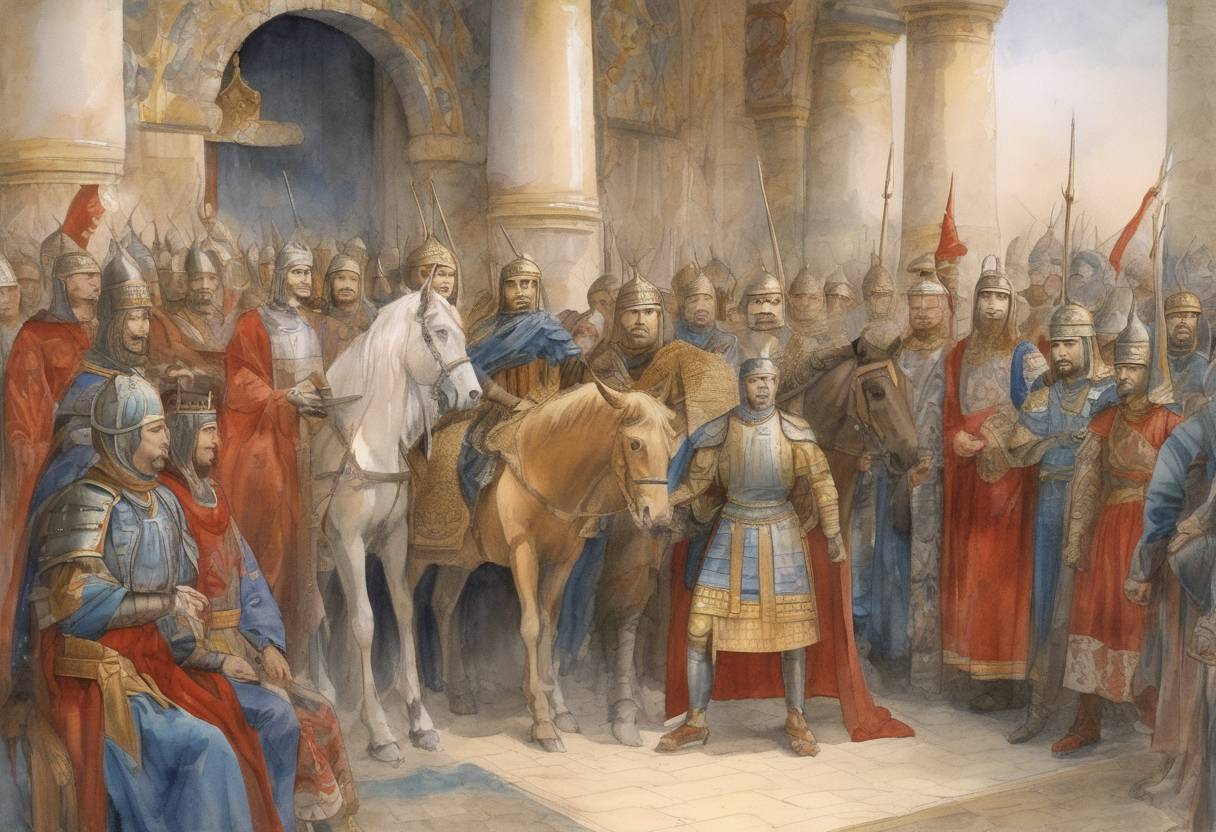
On February 16, 1249, Andrew of Longjumeau, a Dominican friar, was dispatched by King Louis IX of France as an ambassador to the Mongol Empire. This mission was part of a broader diplomatic and strategic effort by European powers to engage with the Mongols, who were rapidly expanding their empire across Asia and into Europe.
The Mongol Empire: By the mid-13th century, the Mongol Empire was the largest contiguous empire in history, stretching from Eastern Europe to the Sea of Japan. The Mongols, under the leadership of Genghis Khan and his successors, had conquered vast territories and posed a significant threat to both the Islamic world and Christendom.
European Concerns: The Mongol invasions of Eastern Europe in the 1240s, including the devastating campaigns in Hungary and Poland, alarmed European rulers. There was a pressing need to understand the Mongol intentions and possibly form alliances to counter their expansion.
Louis IX’s Crusade: King Louis IX, a devout Christian, was deeply involved in the Crusades, aiming to strengthen Christian presence in the Holy Land. The possibility of an alliance with the Mongols against Muslim powers was an attractive prospect.
Andrew of Longjumeau: A Dominican friar known for his linguistic skills and previous experience in the Near East, Andrew was chosen for his ability to navigate complex cultural and religious landscapes.
Objectives: The primary goal of Andrew’s mission was to establish diplomatic relations with the Mongols and explore the possibility of a military alliance against the Muslim states in the Middle East. He was also tasked with gathering intelligence on the Mongol Empire.
Journey: Andrew’s journey took him through the Byzantine Empire and across the vast steppes of Central Asia. The mission was perilous, involving travel through hostile territories and harsh climates.
Diplomatic Challenges: Andrew’s mission faced significant challenges. The Mongols, under the leadership of the Great Khan Güyük, were not inclined to form alliances with distant European powers. The Mongols viewed themselves as the rightful rulers of the world, expecting submission rather than partnership.
Limited Success: Although Andrew returned to France with letters from the Mongol Khan, the mission did not result in a formal alliance. The Mongol response was largely dismissive, reiterating their demand for submission from European rulers.
Historical Impact: Despite its limited immediate success, Andrew of Longjumeau’s mission was part of a series of early diplomatic contacts between Europe and the Mongol Empire. These interactions provided valuable insights into Mongol politics and culture, influencing subsequent European diplomatic and military strategies.
In summary, Andrew of Longjumeau’s mission to the Mongol Empire on February 16, 1249, represents an early attempt at cross-cultural diplomacy during a period of significant geopolitical upheaval. While it did not achieve its primary objectives, it laid the groundwork for future interactions between Europe and the Mongol world.
Source: en.wikipedia.org