The Divine Wind Festival (Toshigami Matsuri) Instituted by Emperor Tenmu
675 · Nara, Japan
Emperor Tenmu institutes the Divine Wind Festival (Toshigami Matsuri) in Japan, intended to honor the deities and ensure good fortune for the upcoming year.
March 3, 0724
Emperor Shōmu ascended to the throne of Japan, marking the beginning of his reign.
Nara, Japan | Imperial Court of Japan
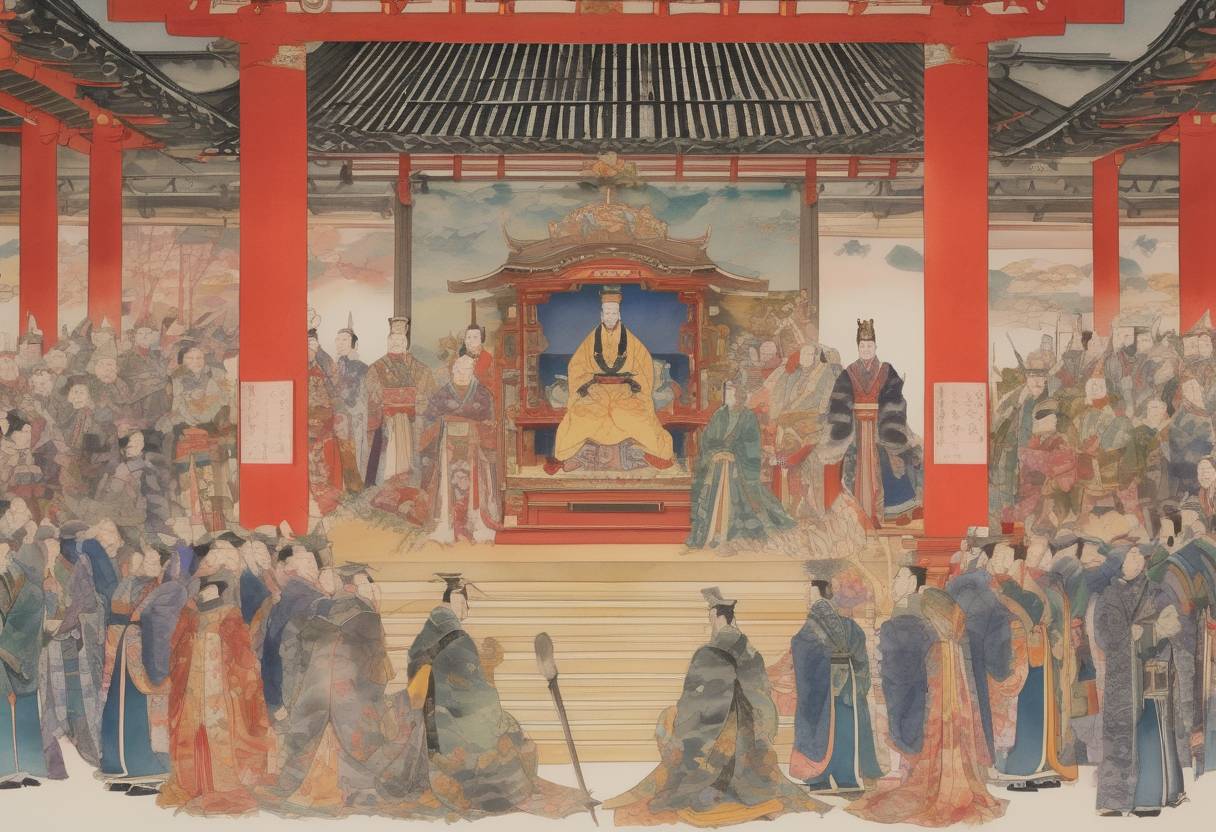
On March 3, 724, Emperor Shōmu ascended to the Chrysanthemum Throne, marking the beginning of his reign as the 45th emperor of Japan. His reign is noted for significant developments in Japanese culture, religion, and governance, as well as for the challenges he faced.
Emperor Shōmu was born in 701, the son of Emperor Monmu and Fujiwara no Miyako. His ascension to the throne followed the abdication of his aunt, Empress Genshō, who reigned from 715 to 724. The Fujiwara clan, to which his mother belonged, was a powerful political family that played a crucial role in his rise to power.
Promotion of Buddhism: Emperor Shōmu is perhaps best known for his fervent support of Buddhism. He sought to unify the nation under the Buddhist faith, which he believed could bring peace and stability. This led to the construction of several significant Buddhist temples, including the famous Tōdai-ji in Nara, which houses the Great Buddha (Daibutsu).
Establishment of Provincial Temples: In 741, Shōmu issued an edict for the establishment of provincial temples (kokubunji) and convents (kokubunniji) throughout Japan. This was part of his broader effort to integrate Buddhism into the state apparatus and promote it as a means of social cohesion.
Economic and Social Challenges: Shōmu’s reign was marked by several natural disasters, including famines and epidemics, which placed a strain on the economy and the populace. These challenges were compounded by the heavy taxation required to fund his ambitious temple-building projects.
Political Struggles: The emperor faced political challenges from the powerful aristocracy, particularly the Fujiwara clan, which sought to consolidate its influence over the imperial court. Despite these pressures, Shōmu managed to maintain his authority, in part by leveraging his religious initiatives.
Emperor Shōmu abdicated the throne in 749 in favor of his daughter, Empress Kōken, and took the unusual step of becoming a Buddhist monk. His reign left a lasting legacy on Japanese culture, particularly through the promotion of Buddhism and the architectural achievements of the period.
The construction of Tōdai-ji and the casting of the Great Buddha are considered monumental achievements of Shōmu’s reign, symbolizing the fusion of religious devotion and state power. His efforts to promote Buddhism laid the groundwork for its enduring influence in Japan.
Emperor Shōmu’s reign is remembered as a period of cultural flourishing and religious transformation, despite the economic and political challenges of the time. His commitment to Buddhism and the arts significantly shaped the cultural landscape of Japan for centuries to come.
Source: en.wikipedia.org