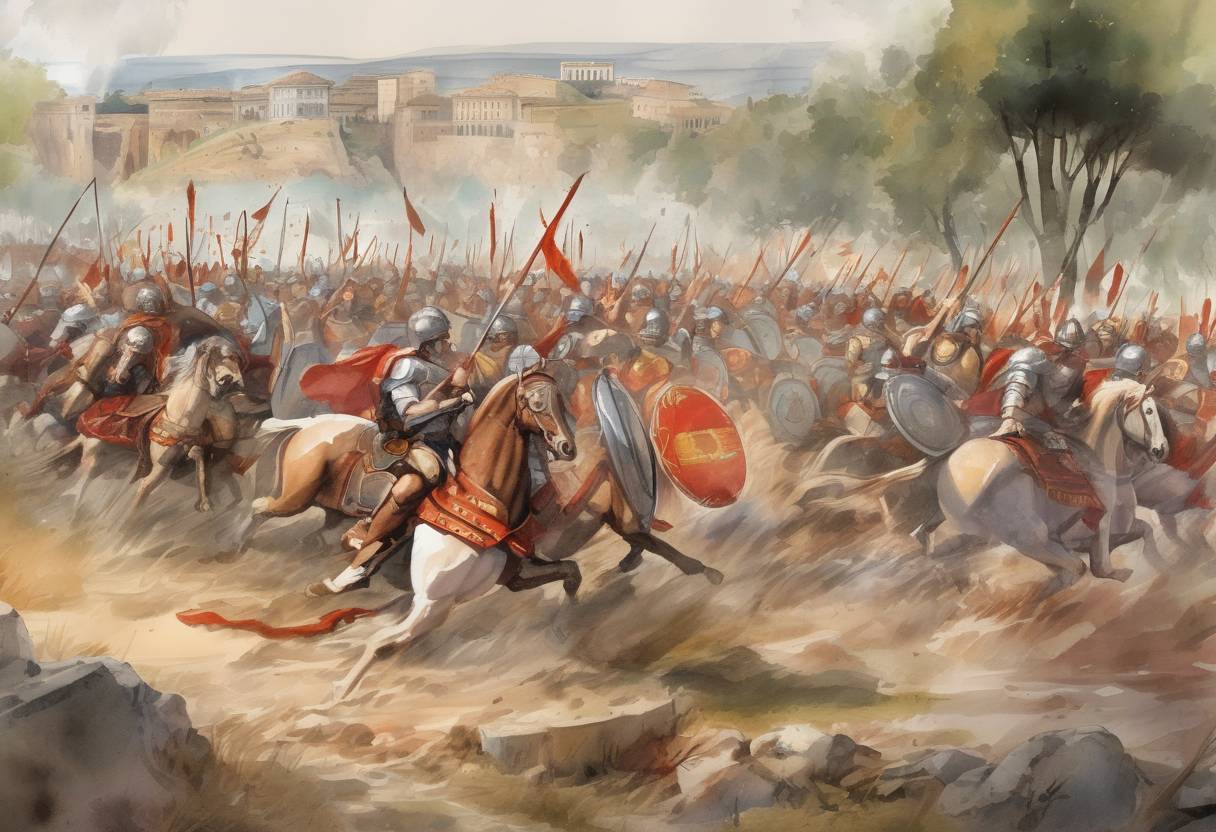
The Battle of the Allia: July 18, 390 BCE
The Battle of the Allia was a pivotal event in the early history of the Roman Republic, marking a significant defeat against the Senones, a Gallic tribe. This battle took place on July 18, 390 BCE, near the river Allia, approximately 11 miles north of Rome. The consequences of this defeat were profound, leading to the infamous sack of Rome.
Context and Prelude
- Roman Expansion: By the early 4th century BCE, Rome was expanding its influence in the Italian peninsula, which inevitably led to conflicts with neighboring tribes and peoples, including the Gauls.
- The Senones: The Senones were a Gallic tribe that had migrated into the Italian peninsula. They were part of a larger movement of Gallic tribes seeking new territories.
- Tensions Rise: The immediate cause of the conflict is believed to have been a diplomatic dispute between the Romans and the Senones, possibly involving the city of Clusium, which had sought Roman assistance against the Gauls.
The Battle
- Roman Forces: The Roman army, composed mainly of hastily assembled citizen-soldiers, was ill-prepared for the encounter with the experienced and fierce Gallic warriors.
- Location: The battle took place near the river Allia, a tributary of the Tiber, which provided a strategic location for the Gauls to intercept the Roman forces.
- Outcome: The Romans suffered a catastrophic defeat. The Roman forces were overwhelmed by the Gallic warriors, leading to a chaotic retreat. Many Roman soldiers were killed, and the survivors fled in disarray.
Aftermath
- Sack of Rome: Following their victory at the Allia, the Senones, led by their chieftain Brennus, marched on Rome. The city was poorly defended, and the Gauls entered Rome with little resistance.
- The Siege of the Capitoline Hill: A small group of Romans managed to hold out on the Capitoline Hill, but the rest of the city was sacked and burned.
- Ransom and Withdrawal: According to historical accounts, the Romans eventually paid a substantial ransom to the Gauls to persuade them to leave the city. The phrase “Vae victis” (“Woe to the vanquished”) is famously attributed to Brennus during this negotiation.
Historical Significance
- Roman Military Reforms: The defeat at the Allia and the sack of Rome exposed the vulnerabilities of the Roman military system, prompting significant reforms in the Roman army.
- Psychological Impact: The sack of Rome left a lasting psychological impact on the Roman people, influencing their future military and diplomatic strategies.
- Legend and Memory: The events surrounding the battle and the sack became legendary in Roman history, serving as a cautionary tale about the dangers of complacency and the need for vigilance.
The Battle of the Allia remains a significant event in Roman history, illustrating the challenges faced by the early Republic and the resilience that would eventually lead to Rome’s dominance in the ancient world.