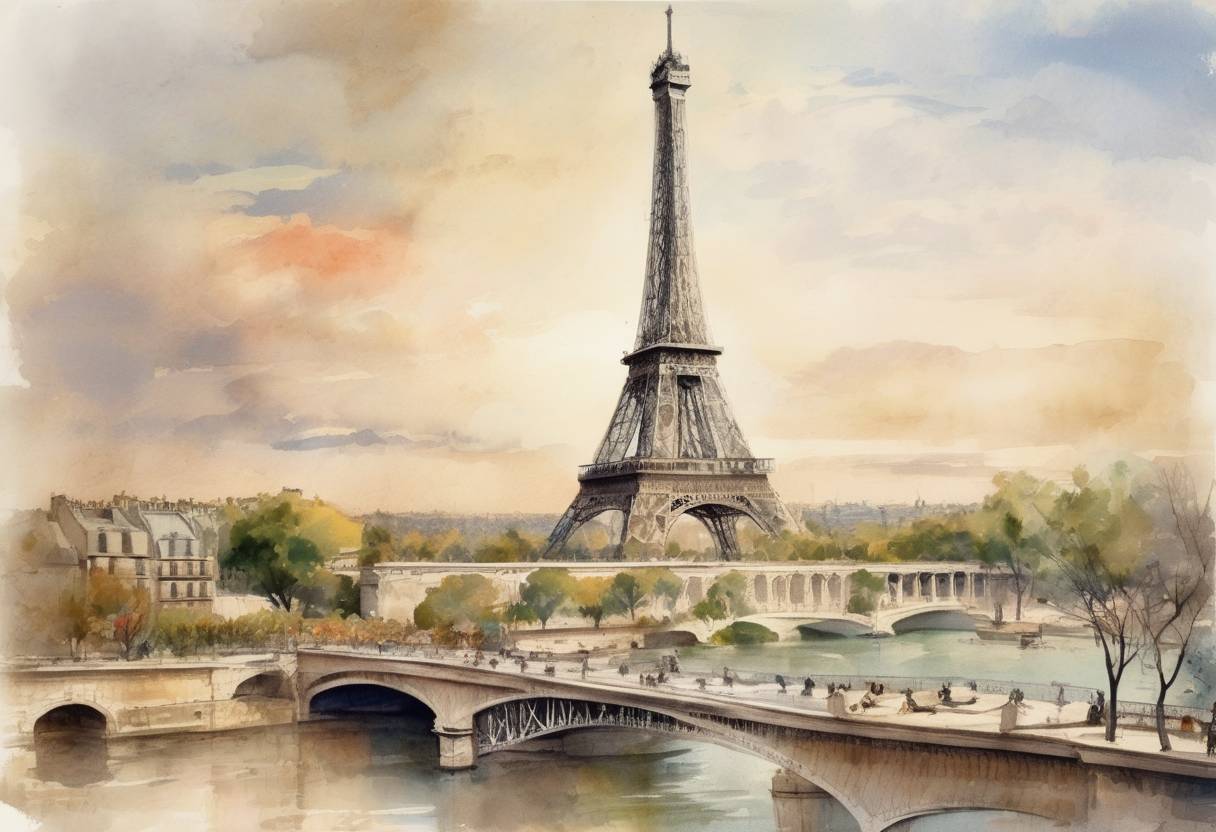
Completion of the Eiffel Tower - March 31, 1889
On March 31, 1889, the Eiffel Tower was officially completed in Paris, France. Designed by the engineer Gustave Eiffel, the tower has since become a global cultural icon of France and one of the most recognizable structures in the world.
Background and Design
- Purpose: The Eiffel Tower was constructed as the centerpiece for the 1889 Exposition Universelle (World’s Fair) held in Paris to celebrate the 100th anniversary of the French Revolution.
- Design and Construction: The tower was designed by Gustave Eiffel’s engineering company, with Maurice Koechlin and Émile Nouguier as the chief engineers and architect Stephen Sauvestre contributing to the design.
- Construction Timeline: Construction began on January 28, 1887, and took just over two years to complete, involving around 300 workers.
Key Features
- Height: Upon completion, the Eiffel Tower stood at 300 meters (984 feet), making it the tallest man-made structure in the world at the time, a title it held until the completion of the Chrysler Building in New York City in 1930.
- Materials: The structure is made of iron and consists of 18,038 individual parts held together by 2.5 million rivets.
- Design Innovations: The tower’s open-lattice iron design was both innovative and controversial, showcasing the possibilities of iron as a building material.
Reception and Impact
- Initial Reception: Initially, the Eiffel Tower faced criticism from some of Paris’s leading artists and intellectuals, who viewed it as an eyesore. However, it quickly became a beloved symbol of modern engineering and design.
- Cultural Significance: Over time, the Eiffel Tower has become synonymous with Paris and French culture, attracting millions of visitors annually and serving as a backdrop for numerous cultural and historical events.
Legacy
- Tourism: Today, the Eiffel Tower is one of the most visited monuments in the world, with nearly 7 million visitors each year.
- Symbolism: It stands as a testament to the industrial age and the innovative spirit of the late 19th century, symbolizing human achievement and the artistic and scientific advancements of the era.
The completion of the Eiffel Tower on March 31, 1889, marked a significant moment in architectural history, transforming the Paris skyline and leaving an enduring legacy as a symbol of France and a marvel of engineering.