Decree by Roman Emperor Valentinian II on August 22, 392
392 · Rome, Roman Empire
The Roman Emperor Valentinian II issued a decree prohibiting pagan worship in the Roman Empire, marking a significant step in the Christianization of the empire.
February 27, 0380
The Edict of Thessalonica was issued by Roman Emperors Theodosius I, Gratian, and Valentinian II, declaring Nicene Christianity as the official state religion of the Roman Empire.
Thessalonica, Roman Empire | Roman Empire
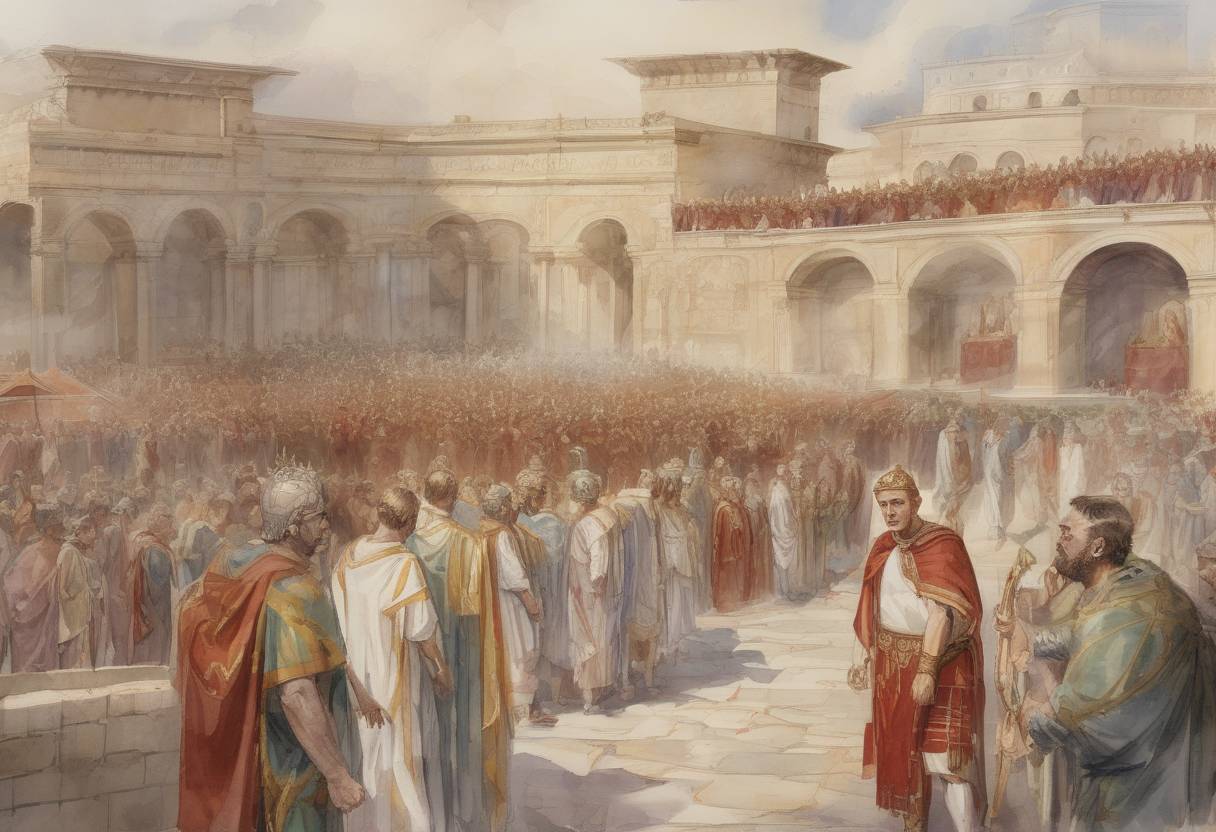
On February 27, 380, the Edict of Thessalonica was issued by Roman Emperors Theodosius I, Gratian, and Valentinian II. This pivotal decree declared Nicene Christianity as the official state religion of the Roman Empire, marking a significant turning point in the history of Christianity and the Roman state.
The Roman Empire and Christianity: Prior to the Edict of Thessalonica, the Roman Empire had a complex relationship with Christianity. The Edict of Milan in 313, issued by Emperor Constantine, had previously granted religious tolerance to Christians, ending centuries of persecution. However, the empire was religiously diverse, with various forms of paganism and different Christian sects coexisting.
Theological Disputes: The early Christian Church was marked by theological disputes, particularly concerning the nature of Christ. The First Council of Nicaea in 325, convened by Constantine, sought to address these disputes, resulting in the Nicene Creed, which affirmed the doctrine of the Trinity and the divinity of Jesus Christ. Despite this, Arianism, which contested these views, remained influential.
Official Religion: The Edict of Thessalonica proclaimed that all Roman subjects should adhere to the faith as practiced by the bishops of Rome and Alexandria, effectively endorsing Nicene Christianity. It stated that those who followed this faith were to be called “Catholic Christians.”
Condemnation of Heresies: The edict condemned other Christian sects, particularly Arianism, labeling them as heretical. It declared that those who did not follow Nicene Christianity were to be considered heretics and were subject to various civic disabilities.
Religious Uniformity: By making Nicene Christianity the state religion, the edict aimed to unify the empire under a single religious doctrine, reducing theological conflicts that could lead to political instability.
Impact on Paganism and Heretical Sects: The edict marked the beginning of a period where pagan practices and other Christian sects faced increasing suppression. Over time, this led to the marginalization and decline of paganism within the empire.
Foundation for the Christian State: The Edict of Thessalonica laid the groundwork for the Christianization of the Roman Empire, influencing the development of the medieval Christian state and the role of the Church in governance.
Theodosius I’s Reign: Theodosius I continued to enforce and expand upon the edict’s principles throughout his reign, further solidifying the position of Nicene Christianity. He convened the First Council of Constantinople in 381, which reaffirmed the Nicene Creed and addressed various theological issues.
Long-term Influence: The establishment of Christianity as the state religion had profound implications for the future of Europe and the Western world, shaping religious, cultural, and political landscapes for centuries to come.
The Edict of Thessalonica represents a critical juncture in the history of the Roman Empire and Christianity, marking the transition from a diverse religious landscape to a predominantly Christian state.
Source: en.wikipedia.org