Germany Declares War on Romania: August 28, 1916
1916 · Berlin, Germany
Germany declares war on Romania during World War I, expanding the Eastern European front as Romania joins the Allied Powers.
August 1, 1914
Germany declared war on Russia, marking the beginning of World War I.
Berlin, Germany | German Empire
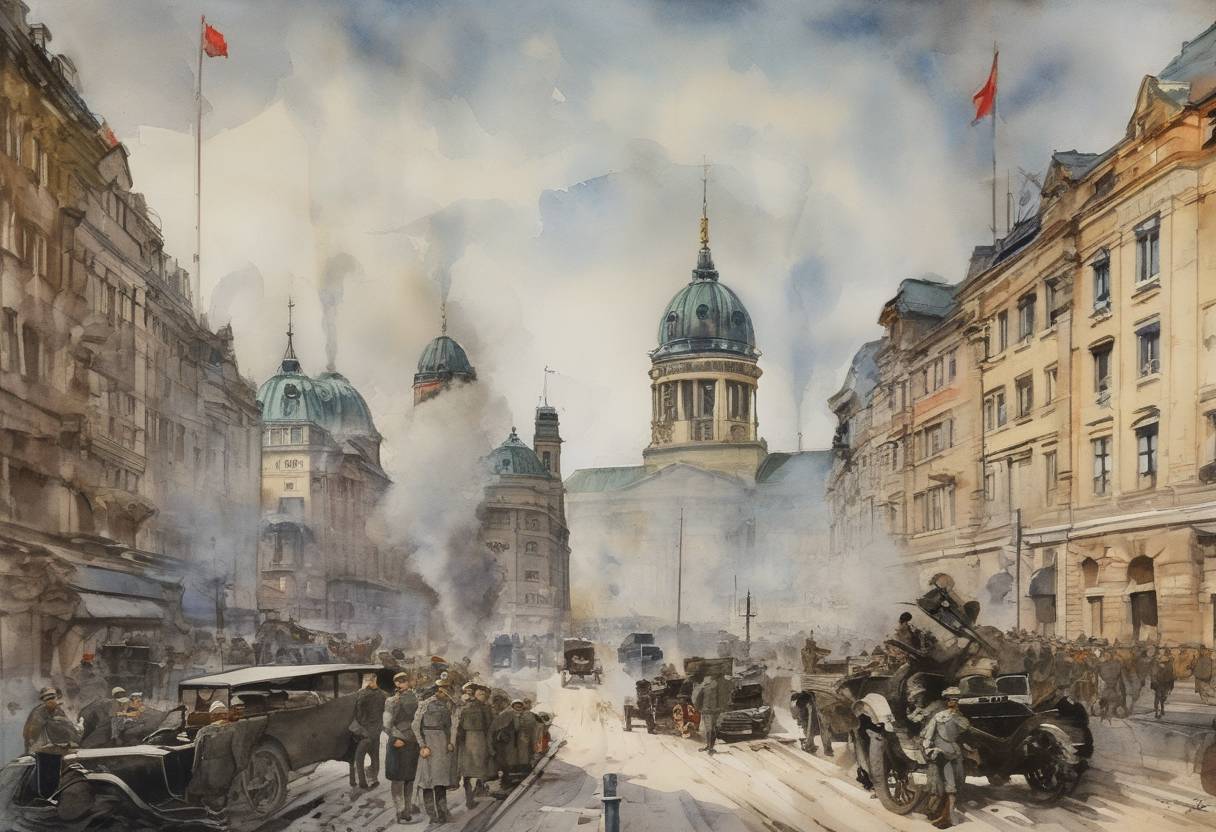
On August 1, 1914, Germany declared war on Russia, a pivotal moment that marked the escalation of tensions into what would become World War I. This declaration was a significant step in the unfolding of the Great War, setting off a chain reaction among the major powers of Europe.
The roots of World War I are complex, involving a web of alliances, militarism, imperial ambitions, and nationalist fervor. Key events leading up to Germany’s declaration of war on Russia include:
Assassination of Archduke Franz Ferdinand: On June 28, 1914, Archduke Franz Ferdinand of Austria-Hungary was assassinated in Sarajevo by Gavrilo Princip, a Bosnian Serb nationalist. This event triggered a diplomatic crisis known as the July Crisis.
Austria-Hungary’s Ultimatum to Serbia: In response to the assassination, Austria-Hungary issued an ultimatum to Serbia on July 23, 1914, with demands that were intentionally harsh. Serbia’s response was seen as unsatisfactory by Austria-Hungary, leading to a declaration of war on July 28, 1914.
Alliance Systems: Europe was divided into two major alliance systems: the Triple Entente (comprising France, Russia, and the United Kingdom) and the Triple Alliance (comprising Germany, Austria-Hungary, and Italy, although Italy remained neutral at the war’s outset). These alliances meant that a conflict involving one power could quickly involve others.
Russian Mobilization: In support of Serbia and as part of its alliance obligations, Russia began mobilizing its forces on July 30, 1914. This mobilization was perceived as a direct threat by Germany, which was allied with Austria-Hungary.
Germany, under Kaiser Wilhelm II, viewed Russian mobilization as an act of aggression and a threat to its ally, Austria-Hungary. On August 1, 1914, Germany declared war on Russia. This decision was influenced by several factors:
Schlieffen Plan: Germany’s military strategy, known as the Schlieffen Plan, called for a quick victory over France (Russia’s ally) by invading through Belgium, before turning to fight Russia. This plan required rapid mobilization and preemptive action against Russia.
Diplomatic Failures: Efforts to mediate the crisis diplomatically failed, partly due to the rigid alliance systems and the lack of effective communication and trust among the powers.
The declaration of war on Russia set off a series of declarations and mobilizations that expanded the conflict:
France and Belgium: Germany’s subsequent invasion of Belgium on August 4, 1914, prompted the United Kingdom to declare war on Germany, further expanding the conflict.
Global Conflict: What began as a regional conflict in the Balkans quickly escalated into a global war, involving many nations across different continents.
Long-term Impact: World War I had profound effects on the 20th century, leading to significant political, social, and economic changes, including the eventual downfall of empires, the redrawing of national borders, and setting the stage for World War II.
The declaration of war by Germany on Russia on August 1, 1914, was a critical juncture that transformed a regional dispute into a world war, reshaping the course of history.
Source: en.wikipedia.org