1960 · Sverdlovsk, Soviet Union
The U-2 incident occurred when an American U-2 spy plane was shot down over the Soviet Union, escalating Cold War tensions.
February 10, 1962
American U-2 pilot Francis Gary Powers is exchanged for Soviet spy Rudolf Abel in Berlin, during the Cold War.
Berlin, Germany | CIA
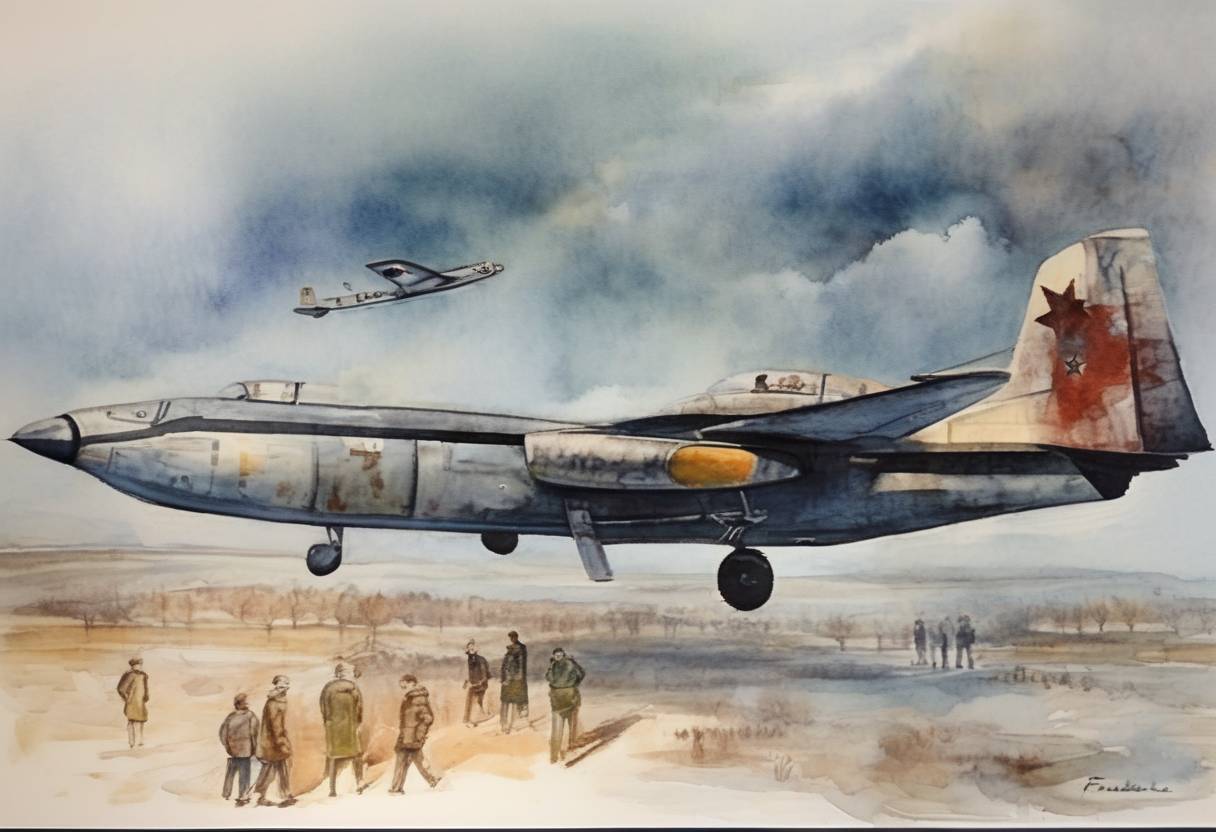
On February 10, 1962, a significant event in Cold War history unfolded on the Glienicke Bridge in Berlin, where American U-2 pilot Francis Gary Powers was exchanged for Soviet spy Rudolf Abel. This exchange marked a pivotal moment in the espionage activities between the United States and the Soviet Union during the tense years of the Cold War.
Francis Gary Powers was a pilot for the Central Intelligence Agency (CIA) who flew U-2 reconnaissance missions over the Soviet Union. On May 1, 1960, Powers was shot down by a Soviet surface-to-air missile while flying over Soviet airspace. He was captured and subsequently put on trial for espionage, resulting in a conviction and a sentence of ten years in prison.
Rudolf Abel, whose real name was Vilyam Genrikhovich Fisher, was a Soviet intelligence officer operating in the United States under the guise of an artist. Abel was arrested by the FBI in 1957 and convicted of espionage. He was sentenced to 30 years in prison but became a valuable bargaining chip for the U.S. government.
The exchange took place on the Glienicke Bridge, which connected East and West Berlin and was often used for such exchanges during the Cold War. The bridge became known as the “Bridge of Spies” due to its role in these clandestine activities.
Negotiations: The exchange was the result of prolonged negotiations between the United States and the Soviet Union, facilitated by intermediaries. The discussions were complex, reflecting the delicate nature of Cold War diplomacy.
Execution: On the morning of February 10, 1962, Powers and Abel were brought to opposite ends of the bridge. At a prearranged signal, they crossed simultaneously to the other side, effectively completing the exchange.
Powers’ Return: Upon his return to the United States, Powers faced scrutiny and criticism, with some questioning his conduct during the mission and captivity. However, a subsequent investigation cleared him of any wrongdoing, and he was later awarded several medals for his service.
Abel’s Reception: Abel returned to the Soviet Union, where he was received as a hero. He continued to work for the KGB until his retirement.
Impact on Cold War Relations: The exchange was a rare instance of cooperation between the two superpowers during a period marked by intense rivalry and suspicion. It underscored the importance of espionage and intelligence in Cold War strategy and highlighted the potential for negotiation even amidst deep-seated tensions.
The Powers-Abel exchange remains a notable example of Cold War diplomacy and the intricate dance of espionage that characterized much of the era. It also served as a reminder of the human element within the broader geopolitical struggle between the United States and the Soviet Union.
Source: en.wikipedia.org