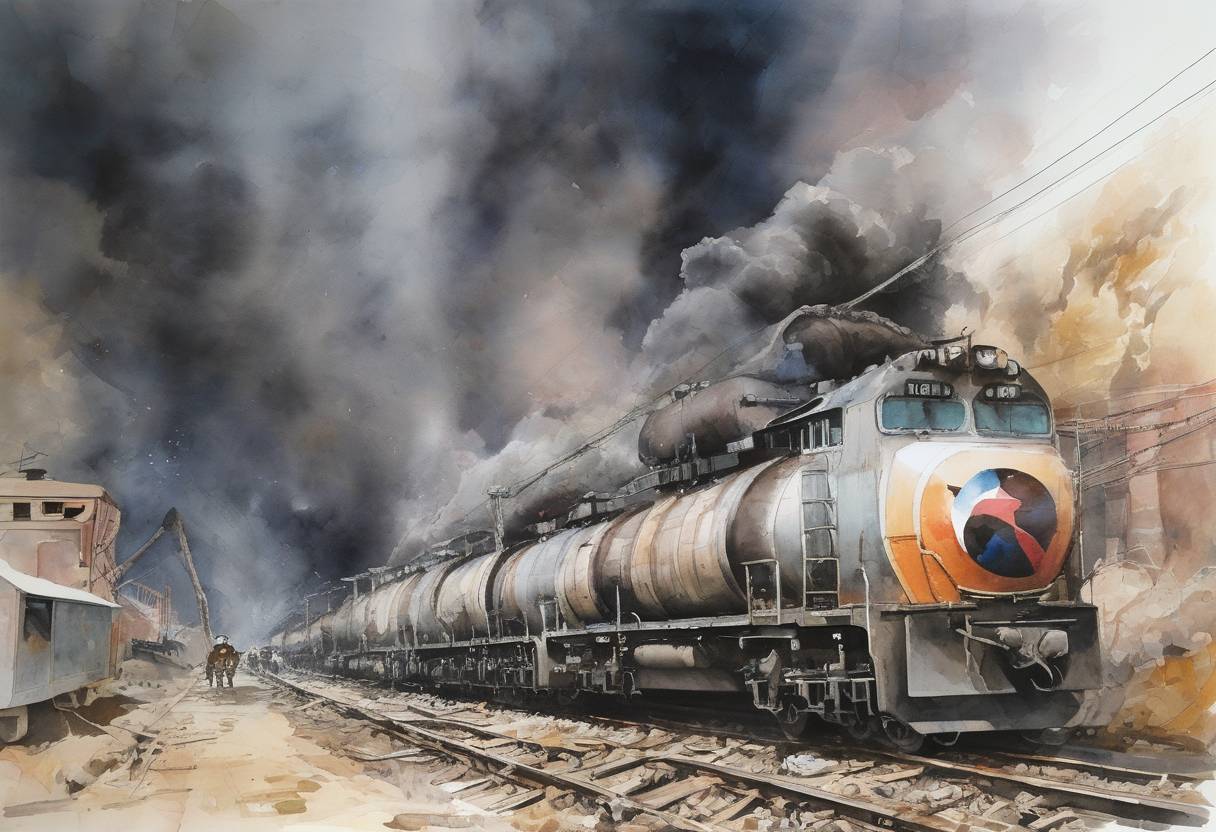
Ryongchon Train Explosion - April 22, 2004
On April 22, 2004, a catastrophic train explosion occurred in Ryongchon, North Korea, resulting in significant loss of life and widespread destruction. This tragic event is one of the deadliest industrial accidents in North Korean history.
Background
Ryongchon is a town located near the border with China, serving as a critical transportation hub in North Korea. The town’s proximity to the border made it a vital point for trade and logistics, which included the transportation of goods via rail.
The Incident
- Date: April 22, 2004
- Location: Ryongchon, North Korea
- Casualties: At least 160 people killed, over 1,300 injured
Sequence of Events
Collision: Two fuel trains, reportedly carrying ammonium nitrate fertilizer and fuel oil, collided at the Ryongchon railway station. The collision occurred in the afternoon, around 1:00 PM local time.
Explosion: The impact of the collision triggered a massive explosion. The combination of ammonium nitrate, a highly explosive chemical, and fuel oil resulted in a devastating blast.
Destruction: The explosion caused extensive damage to the surrounding area. Buildings within a 500-meter radius were destroyed, and the blast was powerful enough to shatter windows up to 4 kilometers away.
Aftermath
Humanitarian Impact: The explosion left hundreds dead and injured, overwhelming local medical facilities. The North Korean government declared a state of emergency in the region.
International Response: Despite North Korea’s typically secretive nature, the severity of the disaster prompted the government to request international aid. Various countries and organizations, including the United Nations, responded with humanitarian assistance.
Reconstruction Efforts: The North Korean government initiated reconstruction efforts to rebuild the devastated area. This included rebuilding homes, schools, and infrastructure.
Broader Historical Significance
The Ryongchon train explosion highlighted several critical issues:
Safety Concerns: The incident underscored the potential dangers associated with transporting hazardous materials, particularly in regions with limited safety infrastructure.
International Relations: The disaster provided a rare glimpse into North Korea’s internal challenges and its interactions with the international community, as it sought aid and support.
Humanitarian Challenges: The response to the disaster illustrated the difficulties faced by North Korea in managing large-scale emergencies, given its isolated position and limited resources.
The Ryongchon train explosion remains a poignant reminder of the risks inherent in industrial and transportation sectors, particularly in regions with limited safety oversight.