January 20, 1981

Ronald Reagan was inaugurated as the 40th President of the United States. On the same day, 52 American hostages were released from Iran after 444 days in captivity.


Washington, D.C., United States | United States Government
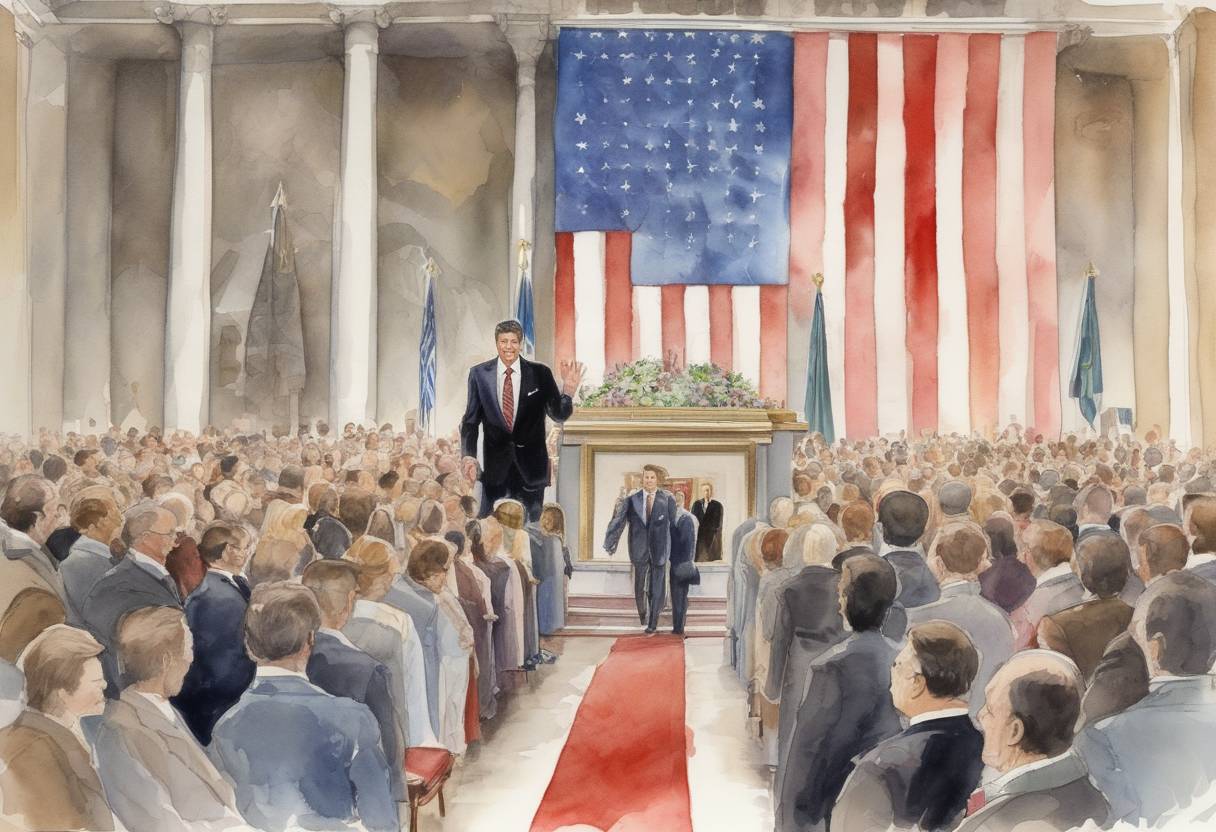
Watercolor painting based depiction of Ronald Reagan was inaugurated as the 40th President of the United States. On the same day, 52 American hostages were released from Iran after 444 days in captivity. (1981)

January 20, 1981: Ronald Reagan’s Inauguration and the Release of American Hostages from Iran

Ronald Reagan’s Inauguration

On January 20, 1981, Ronald Reagan was inaugurated as the 40th President of the United States. This event marked a significant political shift in the country, as Reagan, a Republican and former Governor of California, succeeded Democrat Jimmy Carter. Reagan’s presidency was characterized by a conservative agenda, focusing on reducing the size of the federal government, cutting taxes, and increasing defense spending.

Key Context and Events Leading Up to the Inauguration

  • Economic Challenges: The United States was facing economic difficulties, including high inflation and unemployment, which contributed to Carter’s unpopularity and Reagan’s electoral victory.
  • Political Climate: Reagan’s campaign capitalized on a message of optimism and a strong stance against the Soviet Union, appealing to voters seeking change after a tumultuous decade.

Inauguration Highlights

  • Inaugural Address: Reagan’s speech emphasized themes of national renewal and strength, famously stating, “Government is not the solution to our problem; government is the problem.”
  • Historical Significance: Reagan’s inauguration was the first to be held on the west front of the U.S. Capitol, a tradition that continues today.

Release of American Hostages from Iran

On the same day as Reagan’s inauguration, 52 American hostages were released from Iran, ending a 444-day ordeal that had begun on November 4, 1979, when Iranian militants seized the U.S. Embassy in Tehran.

Background and Key Events

  • Iranian Revolution: The hostage crisis was rooted in the Iranian Revolution of 1979, which saw the overthrow of the Shah, a U.S. ally, and the rise of Ayatollah Khomeini.
  • Diplomatic Efforts: The Carter administration engaged in prolonged and complex negotiations to secure the hostages’ release, which were ultimately finalized just as Reagan took office.

Release and Aftermath

  • Timing: The hostages were freed minutes after Reagan was sworn in, a timing that underscored the end of Carter’s presidency and the beginning of Reagan’s.
  • Impact on U.S.-Iran Relations: The crisis severely damaged U.S.-Iran relations, leading to decades of tension and mistrust that persist to this day.

Broader Historical Significance

The events of January 20, 1981, symbolized a pivotal moment in U.S. history, marking both a political transition and the resolution of a major international crisis. Reagan’s presidency would go on to shape the political landscape of the 1980s, while the hostage crisis left a lasting impact on American foreign policy and public perception of the Middle East.

Source: www.history.com