2010 · Low Earth Orbit, N/A
The International Space Station (ISS) surpassed a major milestone by completing 57,361 orbits around the Earth since its launch in 1998.
February 10, 2009
Two satellites, an Iridium communications satellite and a defunct Russian military satellite, collided in orbit, marking the first major collision between two satellites in space.
Low Earth Orbit, N/A | Iridium Communications
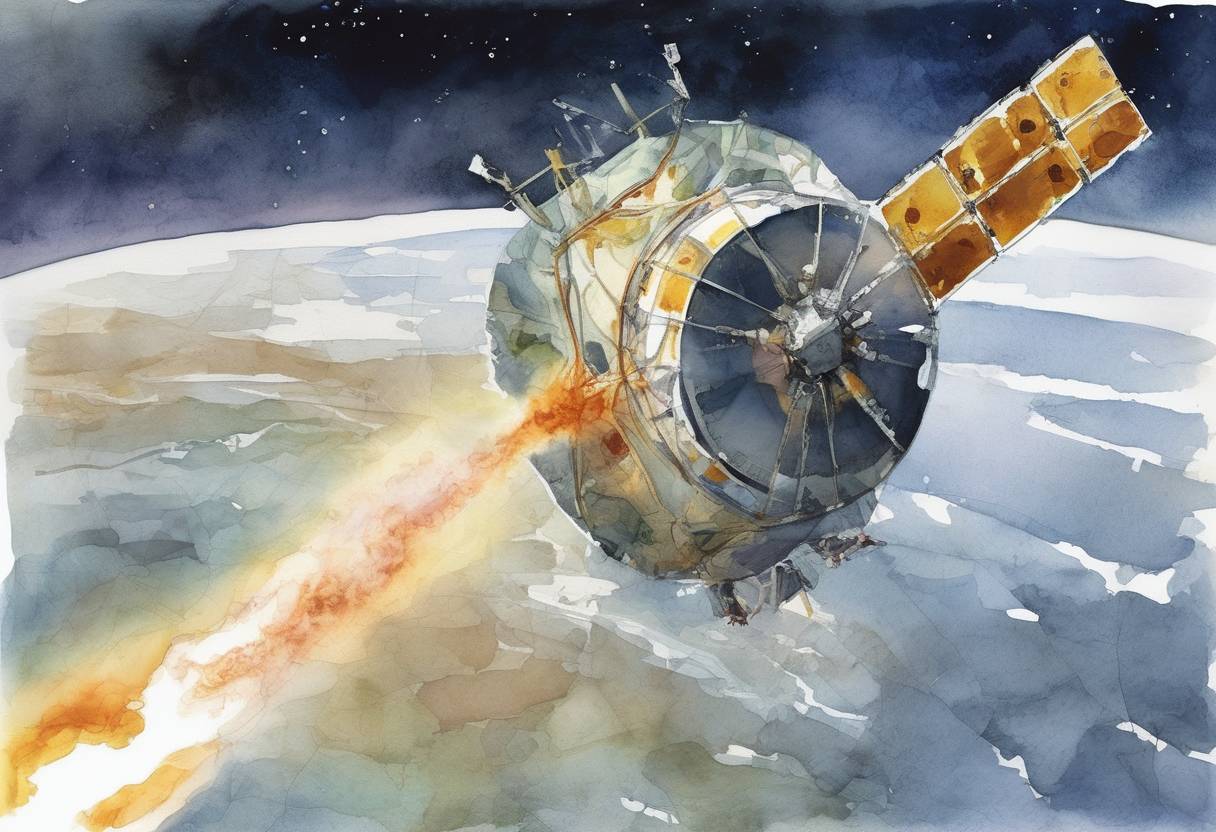
On February 10, 2009, a significant event occurred in the realm of space exploration and satellite operations: the first major collision between two satellites in orbit. This incident involved an operational Iridium communications satellite and a defunct Russian military satellite, Cosmos 2251.
The collision resulted in the complete destruction of both satellites, generating a significant amount of space debris. This debris posed a potential threat to other satellites and the International Space Station (ISS) due to the high velocity and unpredictable trajectories of the fragments.
Space Debris: The collision created approximately 2,000 pieces of trackable debris, with many smaller, untrackable fragments. This increased the risk of further collisions in space, a phenomenon known as the Kessler Syndrome, where the density of objects in low Earth orbit is high enough to cause a cascade of collisions.
Impact on Space Operations: The event highlighted the need for improved space traffic management and collision avoidance systems. It underscored the importance of tracking both active and defunct satellites to prevent future incidents.
Policy and Regulation: The collision prompted discussions among international space agencies and organizations about the need for better coordination and regulation of space activities. It led to increased efforts in developing guidelines for satellite end-of-life disposal and debris mitigation.
Technological Developments: In response to the collision, advancements in space situational awareness technologies were accelerated. This includes improved tracking systems and the development of debris removal technologies.
The 2009 satellite collision marked a pivotal moment in space operations, emphasizing the growing challenges of space debris management as the number of satellites in orbit continues to increase. It served as a wake-up call for the global space community to address the sustainability of space activities and ensure the long-term usability of Earth’s orbital environment.
This event remains a critical reference point in discussions about space safety and the collaborative efforts required to mitigate the risks associated with space debris.
Source: www.nasa.gov