Peter Minuit's Arrival in New Netherland - May 4, 1626
1626 · New Amsterdam, New Netherland (now USA)
Dutch explorer Peter Minuit arrived in New Netherland (present-day New York) to become the director-general of the colony.
June 21, 1621
The Dutch West India Company received its charter for a trade monopoly in the West Indies, which included the Atlantic slave trade and the establishment of colonies in the Americas.
The Hague, Netherlands | Dutch West India Company
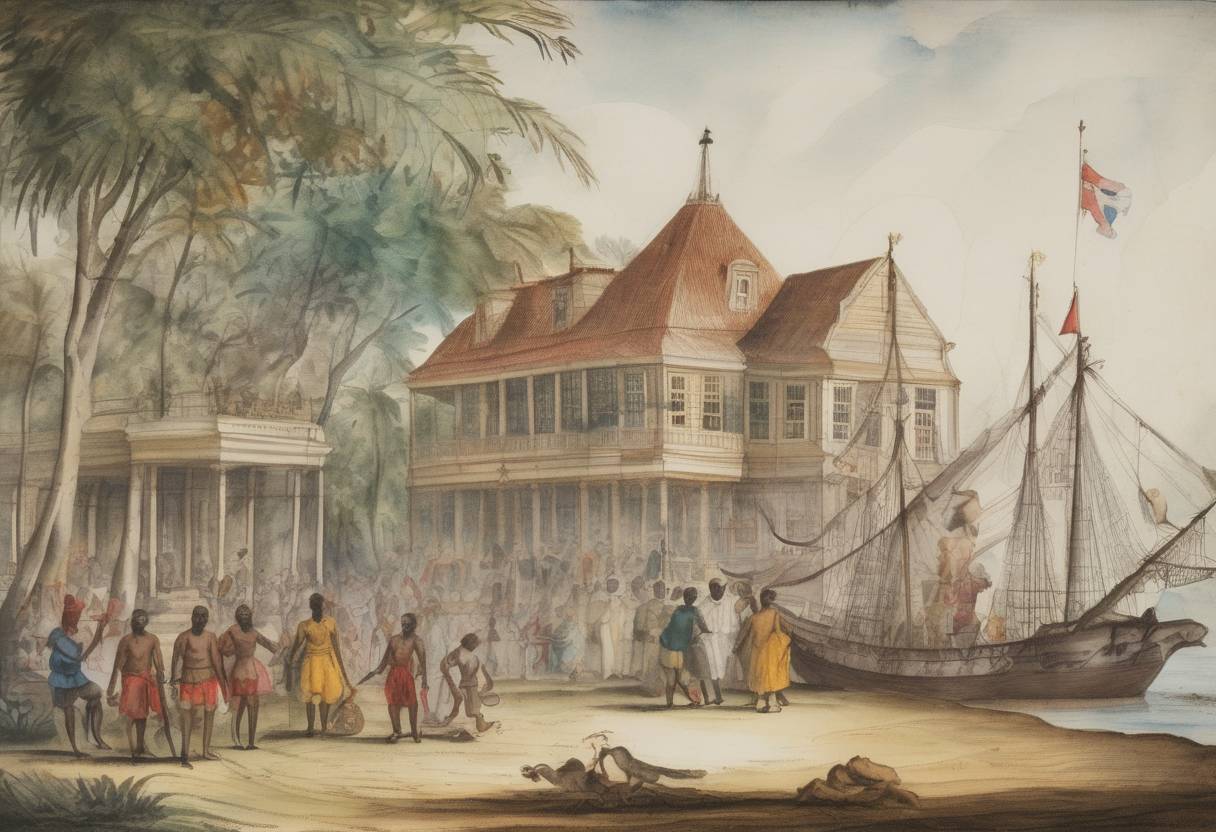
On June 21, 1621, the Dutch West India Company (WIC) was granted its charter by the States-General of the Netherlands, marking a significant moment in the history of European colonial expansion and trade. This charter provided the WIC with a trade monopoly in the West Indies, which encompassed the Caribbean, parts of North and South America, and the west coast of Africa. The company was instrumental in the Atlantic slave trade and the establishment of Dutch colonies in the Americas.
Dutch Independence: The early 17th century was a period of burgeoning Dutch power. The Dutch Republic had recently emerged as a significant maritime and economic power following its independence from Spanish rule, formalized by the Twelve Years’ Truce in 1609.
Economic Ambitions: The Dutch sought to expand their influence and wealth through overseas trade. The success of the Dutch East India Company (VOC), established in 1602, inspired the creation of a similar entity focused on the Atlantic trade routes.
Trade Monopoly: The charter granted the WIC exclusive rights to trade in the West Indies, which included the lucrative markets of the Caribbean, parts of the Americas, and Africa. This monopoly was intended to challenge Spanish and Portuguese dominance in these regions.
Colonization and Expansion: The WIC was empowered to establish colonies, build forts, and enter into treaties with indigenous peoples. This led to the establishment of several Dutch colonies, including New Netherland (present-day New York) and Dutch Brazil.
Military Engagement: The company was authorized to engage in military actions against Spain and Portugal, reflecting the ongoing Eighty Years’ War between the Dutch Republic and Spain.
Atlantic Slave Trade: The WIC played a crucial role in the transatlantic slave trade, transporting enslaved Africans to work in plantations in the Americas. This had devastating effects on African societies and contributed to the entrenchment of slavery in the New World.
Colonial Rivalries: The activities of the WIC intensified European rivalries in the Americas, particularly with the English and the Spanish. This led to numerous conflicts and shifts in colonial control.
Economic Influence: The WIC contributed to the Dutch Golden Age by facilitating the flow of wealth from the Americas and Africa to the Netherlands, bolstering its economy and global influence.
The Dutch West India Company faced numerous challenges, including competition from other European powers and internal financial difficulties. It was eventually dissolved in 1794, but its legacy persisted in the form of Dutch cultural and economic influences in the regions it once controlled.
The chartering of the WIC on June 21, 1621, thus represents a pivotal moment in the history of European colonialism, trade, and the global impact of the Atlantic slave trade.
Source: en.wikipedia.org