March 5, 1933: Nazi Party Wins 44% in German Parliamentary Elections
1933 · Berlin, Germany
Adolf Hitler's Nazi Party won 44 percent of the vote in German parliamentary elections, which helped consolidate Hitler's power in Germany.
February 27, 1933
The Reichstag fire occurs in Berlin, Germany, an arson attack on the German parliament building, which the Nazi government used as a pretext to suspend civil liberties and increase state power.
Berlin, Germany | Nazi Party
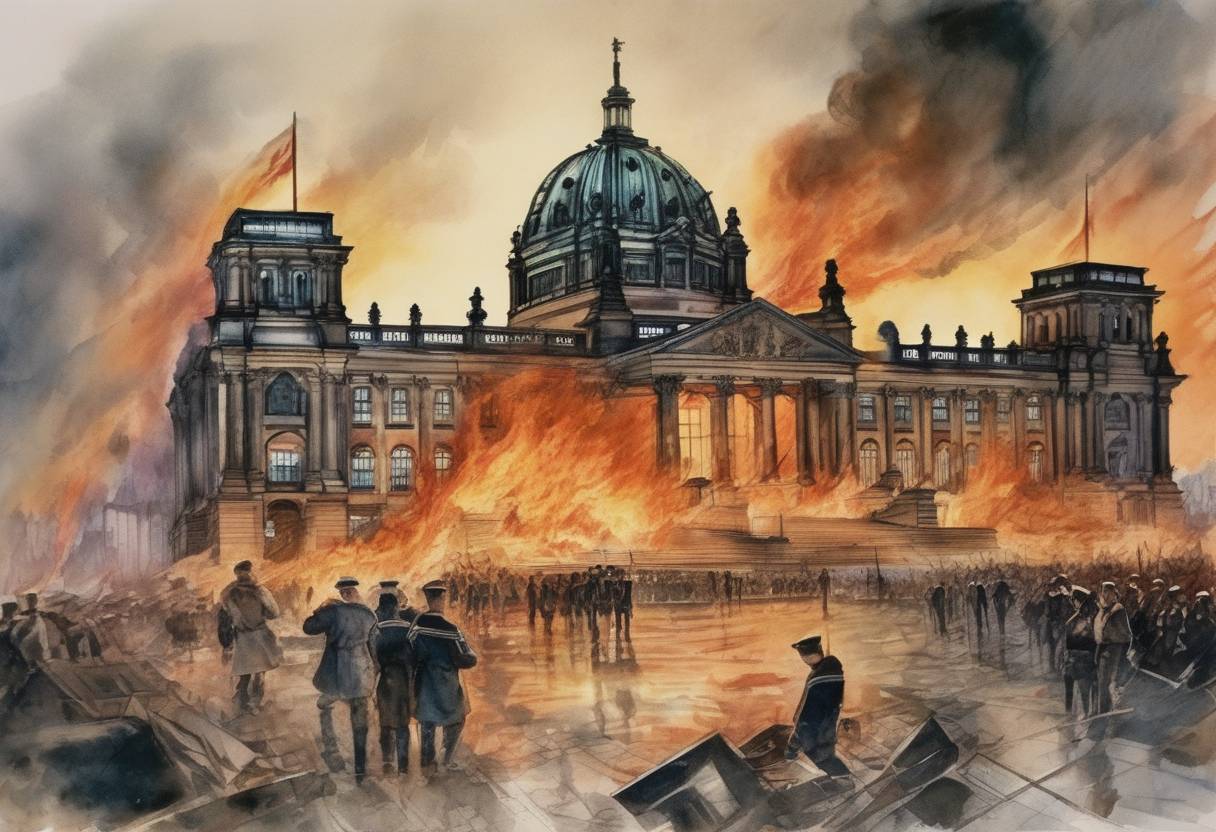
On the night of February 27, 1933, a pivotal event unfolded in Berlin, Germany, that would have profound implications for the future of the country and the world. The Reichstag building, home to the German parliament, was set ablaze in an act of arson. This incident, known as the Reichstag Fire, became a critical turning point in German history, as it was used by the Nazi government as a pretext to consolidate power and suppress civil liberties.
The early 1930s were a period of significant political instability in Germany. The Weimar Republic, established after World War I, was struggling with economic difficulties, political fragmentation, and social unrest. The Nazi Party, led by Adolf Hitler, had been gaining momentum, capitalizing on public discontent and promising to restore Germany’s former glory.
On January 30, 1933, Adolf Hitler was appointed Chancellor of Germany. Despite this position, the Nazis did not have an outright majority in the Reichstag, and their political power was still limited. The fire provided an opportunity for the Nazis to strengthen their grip on the government.
On the evening of February 27, the Reichstag building was engulfed in flames. Firefighters arrived quickly, but the building suffered extensive damage. A young Dutch communist, Marinus van der Lubbe, was found at the scene and arrested. He was charged with arson, and the Nazi leadership quickly blamed the fire on a communist plot to overthrow the government.
The Reichstag Fire had immediate and far-reaching consequences:
Reichstag Fire Decree: The day after the fire, President Paul von Hindenburg, under pressure from Hitler, issued the Reichstag Fire Decree. This emergency decree suspended key civil liberties, including freedom of speech, assembly, and the press. It also allowed for the arrest of political opponents without specific charges.
Suppression of Political Opposition: The decree was used to justify a widespread crackdown on communists, socialists, and other political adversaries. Thousands were arrested, and the Communist Party of Germany (KPD) was effectively banned.
Consolidation of Nazi Power: The fire and subsequent decree paved the way for the Nazis to consolidate power. In the March 1933 elections, the Nazis increased their parliamentary seats, and shortly thereafter, the Enabling Act was passed. This act gave Hitler the authority to enact laws without the Reichstag’s consent, effectively establishing a legal dictatorship.
The Reichstag Fire is often seen as a critical moment in the Nazi rise to power. It demonstrated the regime’s willingness to exploit crises to achieve political ends and marked the beginning of a systematic dismantling of democratic institutions in Germany. The event set a precedent for the use of emergency powers to suppress dissent and laid the groundwork for the totalitarian state that would lead to World War II and the Holocaust.
The true origins of the fire remain a subject of historical debate, with some historians suggesting that the Nazis themselves may have orchestrated it to justify their actions. Regardless of its origins, the Reichstag Fire remains a stark reminder of how fragile democratic institutions can be in the face of authoritarian ambition.
Source: en.wikipedia.org