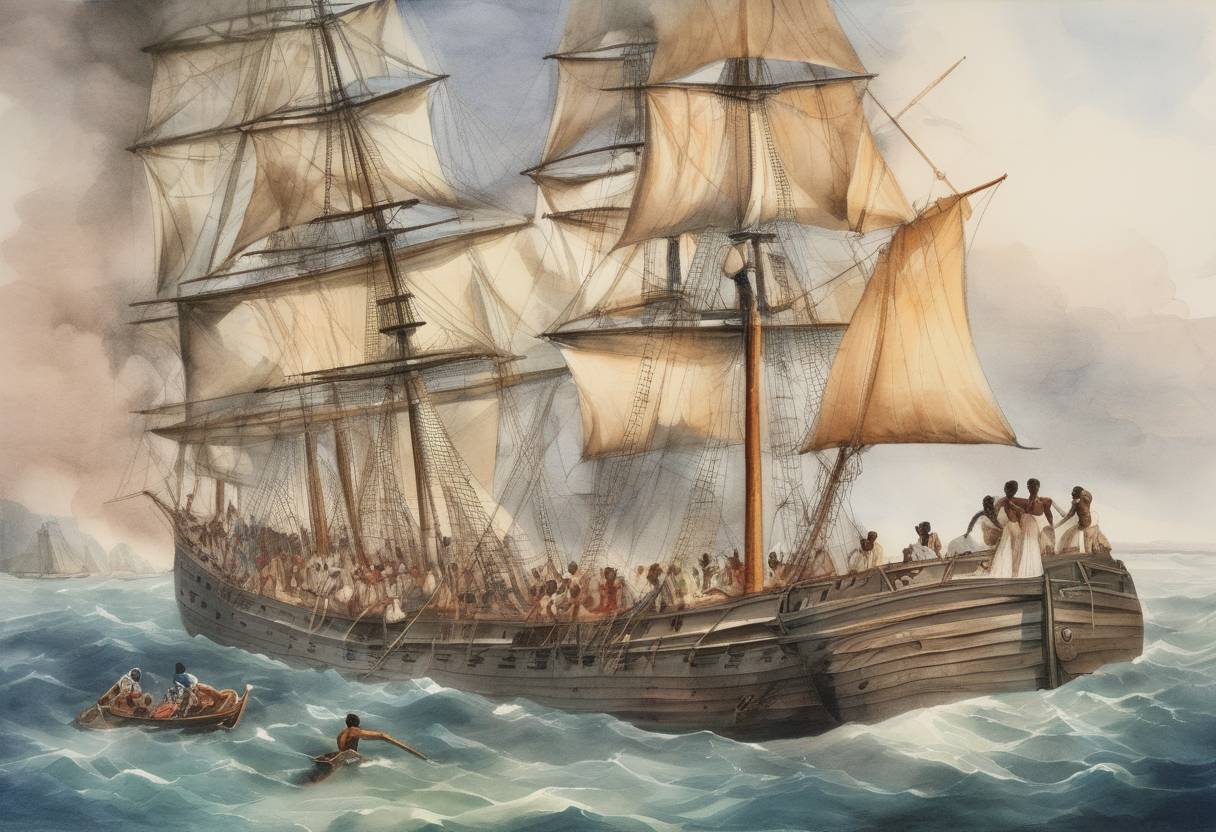
The Amistad Rebellion: July 2, 1839
On July 2, 1839, a significant event unfolded in the history of the transatlantic slave trade and the fight for freedom by enslaved individuals. Fifty-three African captives, led by Joseph Cinqué, revolted aboard the Spanish schooner La Amistad approximately twenty miles off the coast of Cuba. This rebellion became a pivotal moment in the struggle against slavery and had profound legal and political implications.
Background
The Transatlantic Slave Trade: By the early 19th century, the transatlantic slave trade was a well-established, albeit increasingly contested, institution. Despite international treaties aimed at curbing the trade, illegal trafficking persisted, particularly in Spanish colonies like Cuba.
Capture and Enslavement: The Africans aboard La Amistad were originally from the region of present-day Sierra Leone. They had been captured and sold into slavery in violation of international laws prohibiting the slave trade.
The Voyage: The captives were transported to Havana, Cuba, where they were purchased by Spanish planters José Ruiz and Pedro Montes. The planters intended to transport them to plantations in Puerto Principe, Cuba, aboard La Amistad.
The Rebellion
Leadership of Joseph Cinqué: Joseph Cinqué, also known as Sengbe Pieh, emerged as the leader of the captives. On the night of July 1, 1839, he and his fellow captives managed to free themselves from their chains.
Seizing Control: In the early hours of July 2, the captives launched their revolt. They overpowered the ship’s crew, killing the captain and the cook, and took control of the vessel.
Navigational Deception: Cinqué ordered the surviving crew members to sail the ship back to Africa. However, the crew deceived the captives by sailing northeast during the day, towards the United States, while pretending to comply at night.
Aftermath and Legal Battle
Capture by the U.S. Navy: After several weeks at sea, La Amistad was intercepted by the U.S. Navy off the coast of Long Island, New York, in August 1839. The ship and its occupants were taken to New London, Connecticut.
Legal Proceedings: The captives were charged with mutiny and murder. However, their case quickly became a legal and political cause célèbre. Abolitionists rallied to their defense, arguing that the Africans had been illegally enslaved and had the right to fight for their freedom.
Supreme Court Decision: The case eventually reached the U.S. Supreme Court. In 1841, the Court ruled in favor of the captives, declaring them free individuals. The decision was a landmark victory for the abolitionist movement and underscored the illegality of the international slave trade.
Historical Significance
The Amistad rebellion highlighted the brutal realities of the slave trade and the resilience of those who resisted it. It also intensified the national debate over slavery in the United States, contributing to the growing abolitionist sentiment that would eventually lead to the Civil War. The case underscored the importance of legal advocacy in the fight for human rights and justice.
Joseph Cinqué and his fellow captives’ struggle for freedom remains a powerful symbol of resistance against oppression and the enduring quest for justice.