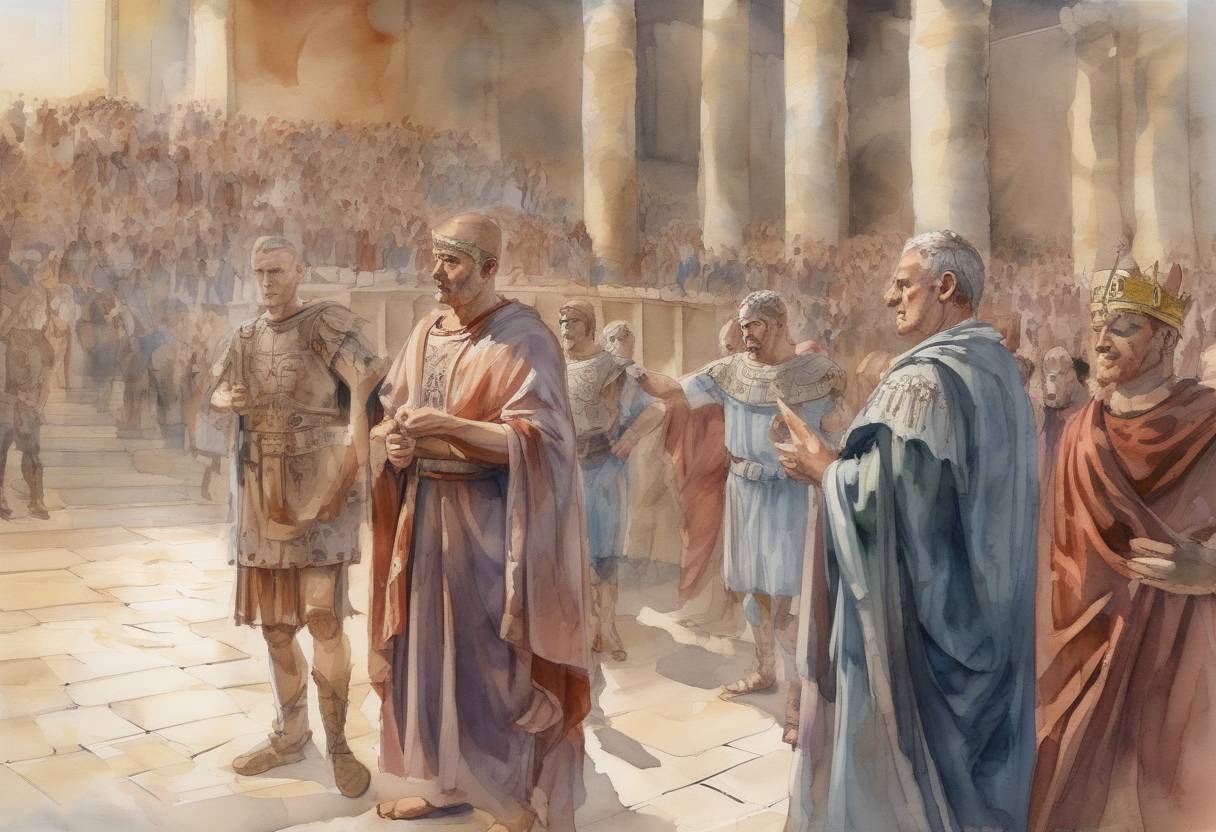
Maximinus Thrax Proclaimed Roman Emperor - March 20, 235
On March 20, 235, Gaius Julius Verus Maximinus, commonly known as Maximinus Thrax, was proclaimed Roman Emperor. This event marked a significant turning point in Roman history, as it initiated the Crisis of the Third Century—a period of military, political, and economic turmoil that nearly led to the collapse of the Roman Empire.
Background
Maximinus Thrax, born around 173 AD in Thrace (modern-day Bulgaria), rose through the military ranks due to his exceptional physical strength and leadership abilities. He was of humble origin, which made his ascent to power unusual in a Roman society that typically favored the aristocracy for leadership roles.
Before becoming emperor, Maximinus served under Emperor Alexander Severus, who was known for his attempts to reform the military and his reliance on the counsel of his mother, Julia Mamaea. These efforts, however, were unpopular with the Roman legions, who perceived them as weakening the military’s effectiveness.
Ascension to Power
The discontent among the troops reached a boiling point during a campaign against the Germanic tribes along the Rhine frontier. On March 20, 235, the soldiers mutinied and assassinated Alexander Severus and his mother. Maximinus was then declared emperor by the legions, marking the first time a man of such low birth had ascended to the imperial throne.
Significance
Maximinus Thrax’s rise to power is significant for several reasons:
Military Influence: His ascension underscored the growing power of the Roman military in political affairs. The army’s ability to make and unmake emperors became a defining feature of the Crisis of the Third Century.
Crisis of the Third Century: Maximinus’s reign is often considered the beginning of this crisis, a period characterized by frequent changes of emperors, civil wars, foreign invasions, and economic instability. The empire was divided into multiple competing factions, and the central authority was severely weakened.
Precedent for Soldier-Emperors: Maximinus set a precedent for future soldier-emperors, who would often come from the ranks of the military rather than the senatorial class. This shift contributed to the erosion of traditional Roman political structures.
Aftermath
Maximinus Thrax’s reign was marked by continuous military campaigns and efforts to consolidate power. However, his rule was short-lived. In 238, he faced a rebellion led by the Senate, which declared Gordian I and Gordian II as emperors. Maximinus marched on Rome to suppress the revolt but was assassinated by his own troops during the Siege of Aquileia.
The Crisis of the Third Century continued for several decades, with numerous emperors rising and falling in quick succession. It was not until the reign of Diocletian in 284 that the empire began to stabilize, leading to significant reforms that would shape the future of the Roman Empire.
Maximinus Thrax’s brief and tumultuous reign exemplifies the volatility of this period and highlights the challenges faced by the Roman Empire during the third century.