Curiosity Rover's First Test Drive on Mars - August 22, 2012
2012 · Gale Crater, Mars
The Curiosity rover, part of NASA's Mars Science Laboratory mission, successfully performs its first test drive on the surface of Mars.
August 6, 2012
NASA's Curiosity rover successfully landed on Mars, beginning its mission to explore the planet's climate and geology and assess whether it ever offered conditions favorable for microbial life.
Gale Crater, Mars | NASA
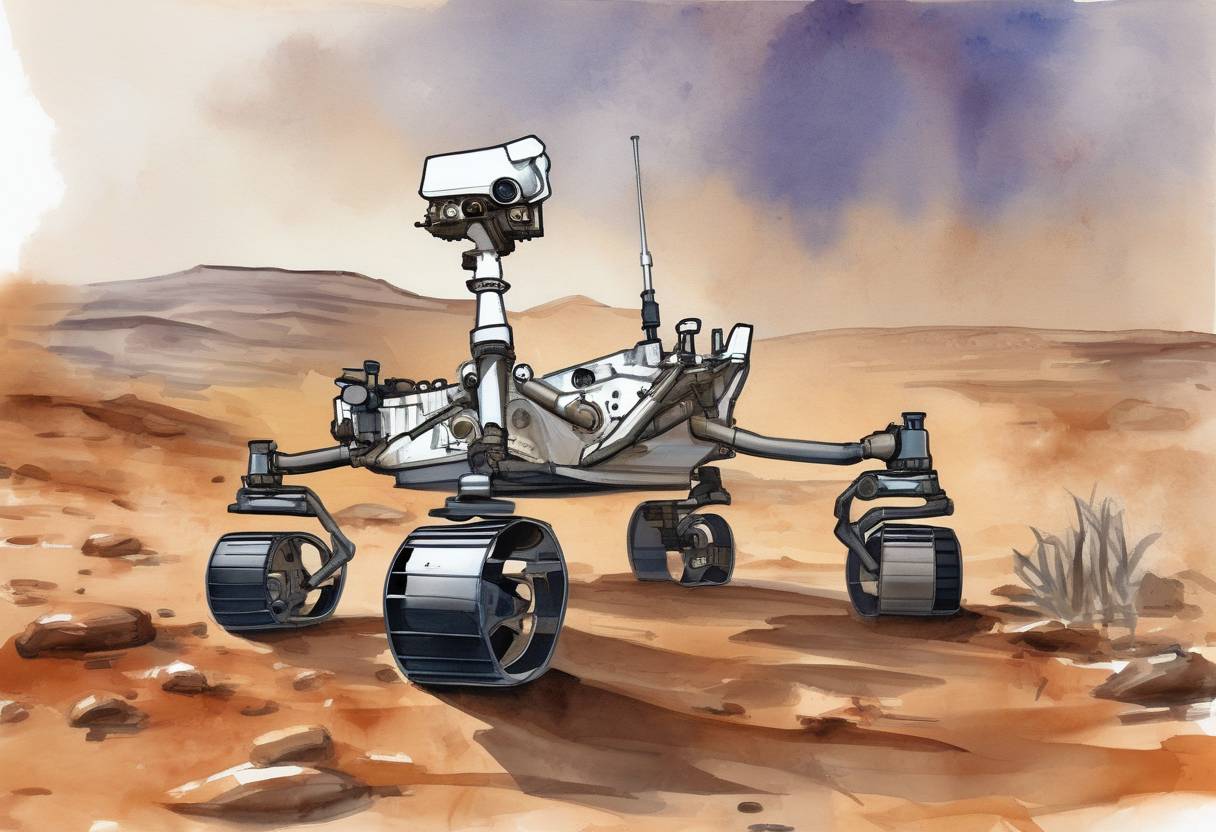
On August 6, 2012, NASA’s Curiosity rover successfully landed on Mars, marking a significant milestone in space exploration. This event was part of NASA’s Mars Science Laboratory (MSL) mission, which aimed to explore the Martian climate and geology and assess whether the planet ever offered conditions favorable for microbial life.
The Curiosity rover was launched from Cape Canaveral, Florida, on November 26, 2011. The mission was designed to build on the findings of previous Mars missions, such as the Spirit and Opportunity rovers, by employing more advanced scientific instruments and technology.
Curiosity’s landing was a complex and highly anticipated event, often referred to as the “seven minutes of terror.” This phrase described the time it took for the rover to descend through the Martian atmosphere and land on the surface. The landing process involved several critical stages:
Curiosity’s primary mission objectives included:
Since its landing, Curiosity has made numerous significant discoveries:
Curiosity’s successful landing and subsequent discoveries have greatly enhanced our understanding of Mars. The mission has provided invaluable insights into the planet’s past habitability and continues to inform future exploration efforts, including the eventual goal of sending humans to Mars.
The Curiosity rover remains operational, continuing to explore the Martian surface and contribute to our knowledge of the Red Planet. Its success has paved the way for subsequent missions, such as the Perseverance rover, which landed on Mars in 2021.
Source: mars.nasa.gov