The Beer Hall Putsch: November 9, 1923
1923 · Munich, Germany
The Beer Hall Putsch, an attempted coup by Adolf Hitler and the Nazi Party, was thwarted in Munich, leading to Hitler's arrest and temporary setback for the Nazi movement.
July 18, 1925
Adolf Hitler published his autobiographical manifesto 'Mein Kampf', outlining his political ideology and future plans for Germany.
Munich, Germany | Nazi Party
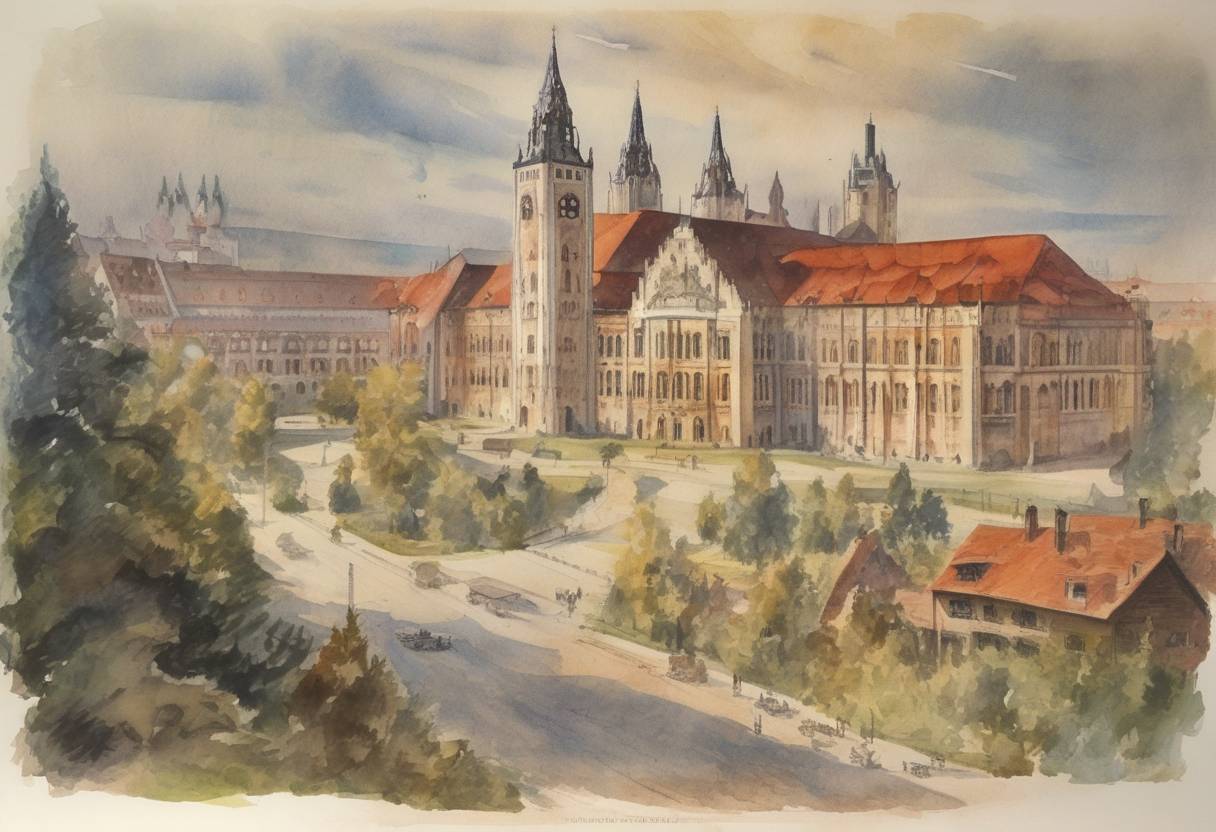
On July 18, 1925, Adolf Hitler published the first volume of his autobiographical manifesto, Mein Kampf (“My Struggle”). This book outlined his political ideology and future plans for Germany, which would later have profound and devastating impacts on world history.
Imprisonment: Hitler wrote Mein Kampf while imprisoned in Landsberg Prison following the failed Beer Hall Putsch of November 1923, an attempted coup to overthrow the Weimar Republic. His sentence was relatively lenient, and he served less than a year of a five-year sentence.
Co-Author: The book was dictated to Rudolf Hess, a close associate and future Deputy Führer of Nazi Germany, who assisted in its composition.
Volume One: The first volume, titled “A Reckoning,” was published in 1925. It covers Hitler’s early life, his experiences during World War I, and his political awakening. It also details his virulent anti-Semitic views and his belief in the superiority of the “Aryan” race.
Volume Two: The second volume, “The National Socialist Movement,” was published in 1926. It elaborates on his plans for the future of Germany, including the expansion of German territory (Lebensraum) and the establishment of a totalitarian state.
Core Themes: The book is characterized by its extreme nationalism, anti-Semitism, anti-communism, and disdain for the Treaty of Versailles. Hitler’s vision included the unification of all Germans into a single nation and the exclusion or elimination of those he deemed undesirable.
Initial Reception: Initially, Mein Kampf did not sell well. However, as the Nazi Party gained power, the book’s sales increased significantly. By the end of World War II, millions of copies had been sold or distributed in Germany.
Historical Significance: Mein Kampf is considered a blueprint for the policies Hitler implemented during his dictatorship, including the aggressive expansionism that led to World War II and the genocidal policies of the Holocaust.
Legacy: The book remains controversial and is banned or restricted in several countries due to its hateful ideology. It serves as a stark reminder of the destructive power of extremist ideologies when combined with political power.
The publication of Mein Kampf marked a significant moment in history, providing insight into the mind of one of the 20th century’s most infamous figures. Its ideas foreshadowed the catastrophic events that would unfold under Hitler’s regime, making it a critical document for understanding the origins and motivations behind Nazi policies.
Source: en.wikipedia.org