The Space Shuttle Columbia Disaster: February 1, 2003
2003 · N/A, United States
The Space Shuttle Columbia disintegrated upon reentry into Earth's atmosphere, resulting in the death of all seven crew members.
January 16, 2003
The Space Shuttle Columbia launched on its final mission, STS-107, which tragically ended in disaster upon re-entry on February 1, 2003.
Cape Canaveral, United States | NASA
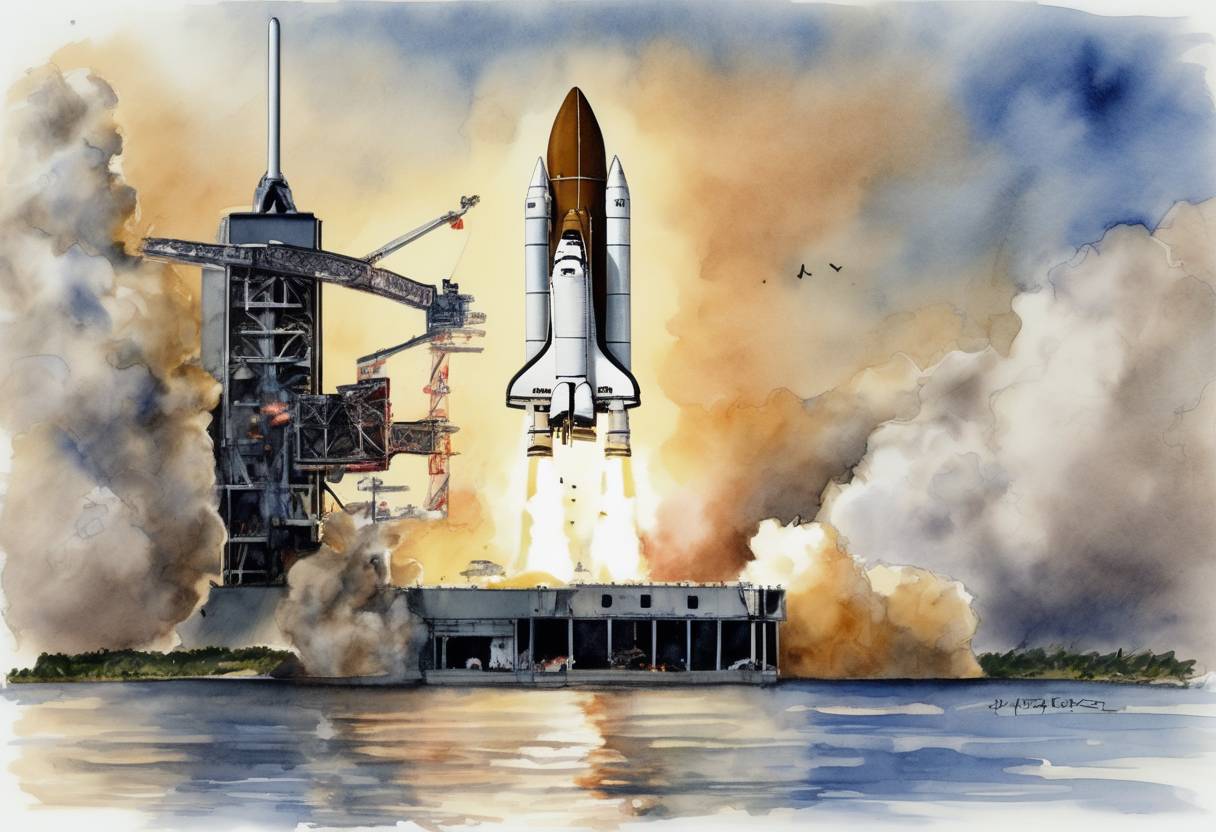
The STS-107 mission was primarily a scientific research mission. The crew conducted a variety of experiments in the fields of physical, life, and space sciences. The mission was notable for its emphasis on microgravity research, with over 80 experiments conducted using the Spacehab Research Double Module.
The mission was crewed by seven astronauts:
During the launch, a piece of foam insulation broke off from the external tank and struck Columbia’s left wing. This incident was captured on video, but its potential impact was not fully understood at the time. The foam strike created a breach in the wing’s thermal protection system, which would later prove catastrophic.
The breach in the thermal protection system allowed superheated atmospheric gases to penetrate the wing structure during re-entry, leading to the destruction of the orbiter and the loss of all seven crew members.
The Columbia disaster had profound implications for NASA and the space program:
Investigation: The Columbia Accident Investigation Board (CAIB) was established to determine the cause of the accident. The investigation highlighted organizational and technical failures, including issues with NASA’s safety culture and decision-making processes.
Program Changes: The Space Shuttle program was temporarily suspended, and significant safety improvements were implemented before flights resumed in 2005.
Legacy: The tragedy underscored the inherent risks of space exploration and led to a renewed focus on safety. It also influenced the decision to retire the Space Shuttle fleet and transition to new spacecraft designs.
The loss of Columbia and its crew remains a somber reminder of the challenges and dangers associated with human spaceflight.
Source: www.nasa.gov