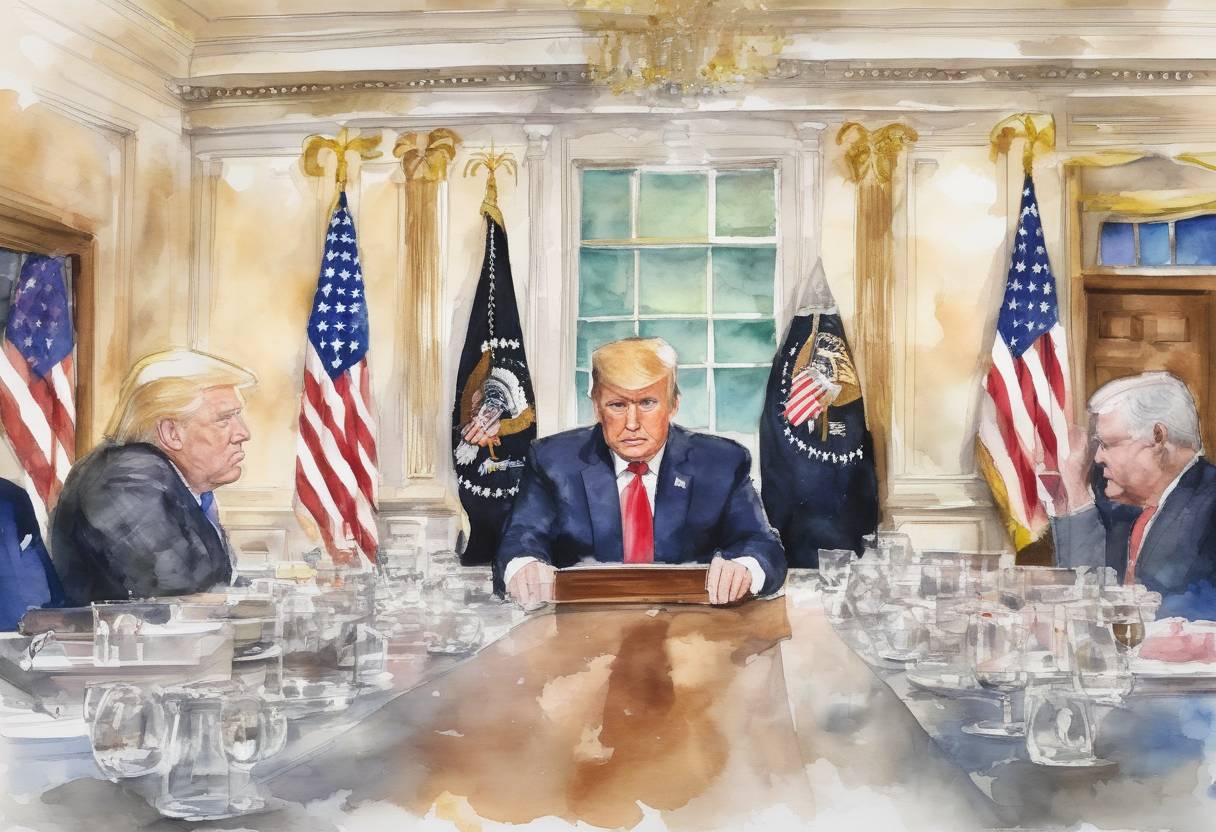
U.S. Withdrawal from the Iran Nuclear Deal - May 8, 2018
On May 8, 2018, U.S. President Donald Trump announced the United States’ withdrawal from the Joint Comprehensive Plan of Action (JCPOA), commonly known as the Iran nuclear deal. This decision marked a significant shift in U.S. foreign policy and had substantial implications for international relations and nuclear non-proliferation efforts.
Background
The JCPOA was an agreement reached in July 2015 between Iran and the P5+1 group of world powers: the United States, the United Kingdom, France, Russia, China, and Germany. The deal aimed to ensure that Iran’s nuclear program would be exclusively peaceful in exchange for the lifting of economic sanctions that had severely impacted the Iranian economy.
Key Provisions of the JCPOA
- Uranium Enrichment: Iran agreed to limit its uranium enrichment to 3.67% and reduce its stockpile of enriched uranium.
- Centrifuges: The number of centrifuges Iran could operate was significantly reduced.
- Inspections: The International Atomic Energy Agency (IAEA) was granted extensive access to monitor Iran’s nuclear facilities.
- Sanctions Relief: In return, Iran received relief from U.S., EU, and UN sanctions, allowing it to re-enter the global economy.
President Trump’s Announcement
In his announcement, President Trump criticized the JCPOA as “a horrible one-sided deal that should have never, ever been made.” He argued that the agreement failed to address Iran’s ballistic missile program and its influence in the Middle East. Trump also expressed concerns that the deal’s sunset clauses would eventually allow Iran to resume its nuclear activities.
Consequences of the Withdrawal
Reimposition of Sanctions: Following the withdrawal, the U.S. reinstated sanctions on Iran, targeting its oil exports, financial institutions, and other sectors.
Impact on Iran: The reimposed sanctions led to a significant economic downturn in Iran, exacerbating inflation and unemployment.
International Response: The other signatories of the JCPOA, particularly the European Union, expressed regret over the U.S. decision and sought to keep the deal alive. They attempted to create mechanisms to bypass U.S. sanctions and continue trade with Iran.
Iran’s Reaction: In response, Iran gradually began to breach the deal’s restrictions, including exceeding uranium enrichment limits, while insisting that its actions were reversible if sanctions were lifted.
Broader Historical Significance
The U.S. withdrawal from the JCPOA heightened tensions in the Middle East and strained relations with European allies. It also raised questions about the future of nuclear non-proliferation efforts and the ability of international agreements to withstand changes in political leadership.
The decision underscored the challenges of balancing national security concerns with diplomatic agreements and highlighted the complexities of addressing nuclear proliferation in a geopolitically volatile region.