Nostra Aetate: A Transformative Declaration
1965 · Vatican City, Vatican City
Pope Paul VI issues the declaration 'Nostra Aetate', transforming the Catholic Church's relations with non-Christian religions.
May 13, 1917
The first apparition of Our Lady of Fátima is reported by three shepherd children in Fátima, Portugal.
Fátima, Portugal | Catholic Church
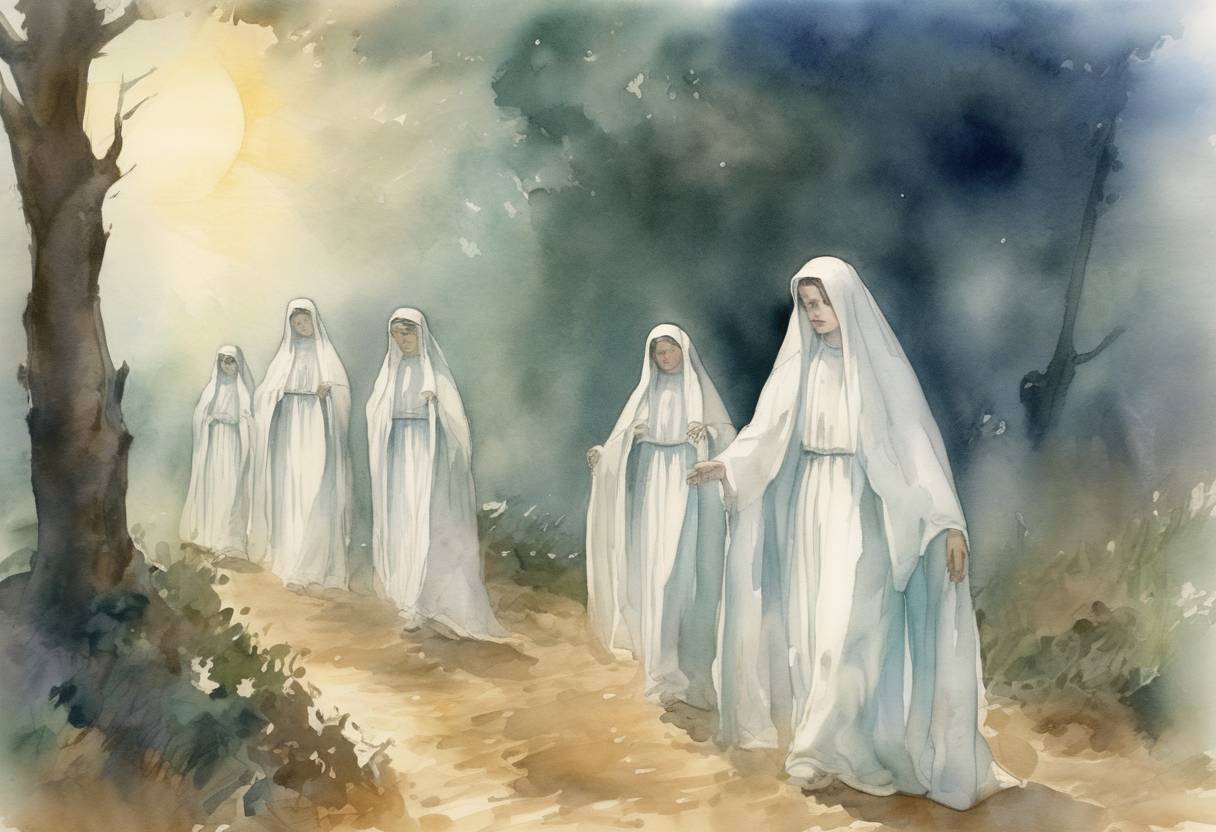
On May 13, 1917, a significant event in Catholic history occurred in the small village of Fátima, Portugal. Three young shepherd children—Lucia dos Santos and her cousins, Francisco and Jacinta Marto—reported witnessing an apparition of the Virgin Mary, who would later become known as Our Lady of Fátima.
The early 20th century was a tumultuous time for Portugal, marked by political instability and anti-clerical sentiment following the establishment of the Portuguese First Republic in 1910. The Catholic Church faced significant challenges, with religious practices being suppressed and church properties confiscated. Amidst this backdrop, the apparitions at Fátima emerged as a beacon of hope and spiritual renewal for many Catholics.
On that spring day in 1917, the three children were tending to their family’s sheep in the Cova da Iria fields when they claimed to have seen a “Lady more brilliant than the sun.” According to their accounts, the Lady was dressed in white and radiated a light that was both intense and comforting. She asked the children to return to the same spot on the 13th of each month for the next six months and promised to reveal her identity and purpose in due time.
During this first apparition, the Lady reportedly urged the children to pray the Rosary every day to bring peace to the world and an end to World War I, which was then raging across Europe.
The children adhered to the Lady’s request, and subsequent apparitions occurred on the 13th of each month, culminating in October 1917. These events drew increasing attention, with thousands of pilgrims gathering in Fátima by the final apparition. The most famous of these was the “Miracle of the Sun,” witnessed by a large crowd on October 13, 1917, where observers reported seeing the sun dance in the sky.
The apparitions of Our Lady of Fátima had a profound impact on Catholic devotion and were officially recognized by the Catholic Church in 1930. The messages conveyed during the apparitions emphasized themes of repentance, prayer, and conversion, resonating deeply with the faithful.
Fátima has since become one of the most important Marian pilgrimage sites in the world, attracting millions of visitors each year. The events have also inspired numerous religious, cultural, and artistic expressions, reinforcing the significance of Fátima in both religious and historical contexts.
In summary, the first apparition of Our Lady of Fátima on May 13, 1917, marked the beginning of a series of events that would leave a lasting legacy on Catholic spirituality and devotion, highlighting the enduring power of faith amidst adversity.
Source: www.britannica.com