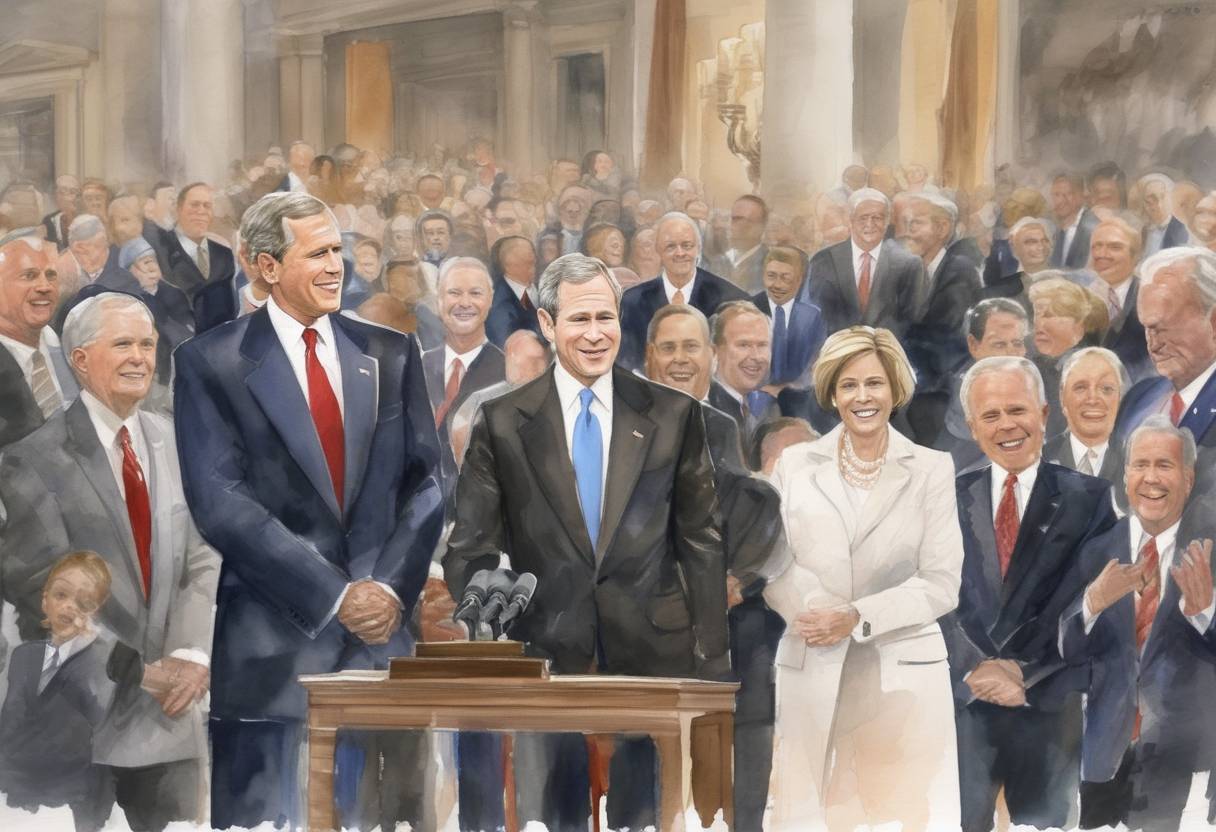
George W. Bush’s Second Inauguration: January 20, 2005
On January 20, 2005, George W. Bush was inaugurated for his second term as the 43rd President of the United States. This event marked the continuation of his presidency following his re-election in the 2004 presidential election, where he defeated Democratic candidate John Kerry.
Context Leading Up to the Inauguration
- 2004 Presidential Election: George W. Bush secured a second term by winning 286 electoral votes to John Kerry’s 251. The election was notable for its focus on national security, the ongoing War on Terror, and the Iraq War, which had begun during Bush’s first term.
- Domestic and International Climate: The United States was deeply engaged in the Middle East, with significant military operations in Iraq and Afghanistan. Domestically, the country was still grappling with the aftermath of the September 11, 2001, terrorist attacks and the subsequent changes in national security policies.
The Inauguration Ceremony
- Location: The inauguration took place at the United States Capitol in Washington, D.C., a traditional venue for presidential inaugurations.
- Oath of Office: Chief Justice William Rehnquist administered the oath of office to President Bush. This was one of Rehnquist’s last major public appearances before his death later in 2005.
- Inaugural Address: In his speech, President Bush emphasized themes of freedom and democracy, both domestically and internationally. He articulated a vision of spreading democracy worldwide, which he framed as a central tenet of U.S. foreign policy.
Key Themes and Messages
- Freedom and Democracy: Bush’s address underscored a commitment to promoting democracy globally, reflecting his administration’s foreign policy agenda, particularly in the Middle East.
- Security and Unity: He reiterated the importance of national security and the need for unity in facing global challenges, a continuation of the rhetoric from his first term.
Aftermath and Historical Significance
- Foreign Policy: Bush’s second term continued to be dominated by foreign policy challenges, including the ongoing conflicts in Iraq and Afghanistan. His administration faced criticism over the handling of these wars and the broader War on Terror.
- Domestic Policy: Domestically, Bush’s second term saw efforts to reform Social Security and immigration, though these initiatives faced significant political challenges.
- Legacy: The second inauguration of George W. Bush is often viewed through the lens of his administration’s impact on U.S. foreign policy and the long-term consequences of the Iraq War.
Bush’s second term would eventually be marked by significant events, including the response to Hurricane Katrina in 2005 and the financial crisis of 2008, both of which shaped the political landscape leading into the subsequent presidential election.