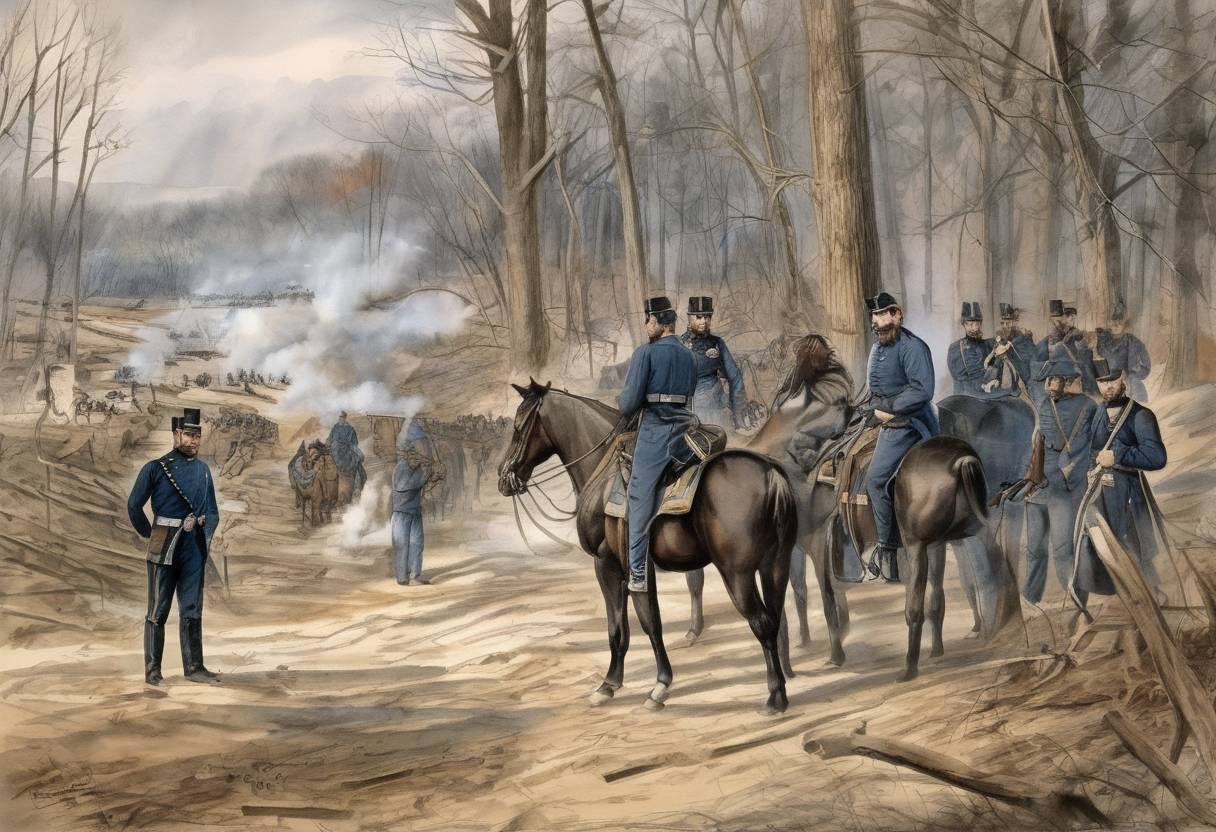
Capture of Fort Donelson: February 16, 1862
The capture of Fort Donelson was a pivotal event in the American Civil War, marking a significant Union victory under the leadership of Brigadier General Ulysses S. Grant. This victory was crucial in the Union’s efforts to gain control of the Western Theater and opened the way for further advances into the Confederate heartland.
Background
- Strategic Importance: Fort Donelson, located in Tennessee, was strategically significant because it protected the Cumberland River, a vital waterway for the Confederacy. Its capture would allow Union forces to penetrate deeper into Southern territory.
- Union Strategy: The Union aimed to divide the Confederacy by gaining control of key rivers and railroads. The capture of Fort Donelson, following the fall of nearby Fort Henry on February 6, 1862, was part of this broader strategy.
The Siege and Battle
- Initial Movements: After capturing Fort Henry, Grant moved his forces overland to Fort Donelson, arriving on February 12, 1862. His forces numbered approximately 25,000 men.
- Confederate Defense: The fort was defended by about 16,000 Confederate troops under the command of Brigadier General John B. Floyd. The fort’s defenses included artillery batteries positioned to control the river approach.
- Engagement: The Union forces began their assault on February 13, with skirmishes and artillery exchanges. Over the next few days, the Union forces tightened their encirclement of the fort.
Surrender
- Breakthrough and Counterattack: On February 15, the Confederates launched a counterattack in an attempt to break through the Union lines and escape. Initially successful, the attack ultimately failed due to lack of coordination and decisive Union countermeasures.
- Grant’s Demand: On February 16, General Grant famously demanded “unconditional and immediate surrender” from the Confederate forces. This demand led to Grant’s nickname, “Unconditional Surrender” Grant.
- Surrender Accepted: Facing no viable alternatives, General Floyd handed over command to Brigadier General Simon Bolivar Buckner, who accepted Grant’s terms. Approximately 12,000 Confederate soldiers were taken prisoner.
Aftermath and Significance
- Union Gains: The capture of Fort Donelson was a major strategic victory for the Union. It secured Kentucky for the Union and opened Tennessee to Union advances, including the eventual capture of Nashville.
- Boost to Morale: The victory significantly boosted Northern morale and established Grant as a prominent Union leader, setting the stage for his future successes.
- Confederate Setback: The loss of Fort Donelson was a severe blow to the Confederacy, leading to the loss of control over key regions and resources.
The capture of Fort Donelson was a turning point in the Civil War, demonstrating the effectiveness of Union strategies and the leadership of Ulysses S. Grant. It marked the beginning of a series of Union victories in the Western Theater that would ultimately contribute to the Confederacy’s defeat.