Ascension of King George II of Great Britain
1727 · London, Great Britain
George II of Great Britain began his reign following the death of his father, King George I.
February 6, 1685
King Charles II of England died, and his brother James II ascended to the throne.
London, England | British Monarchy
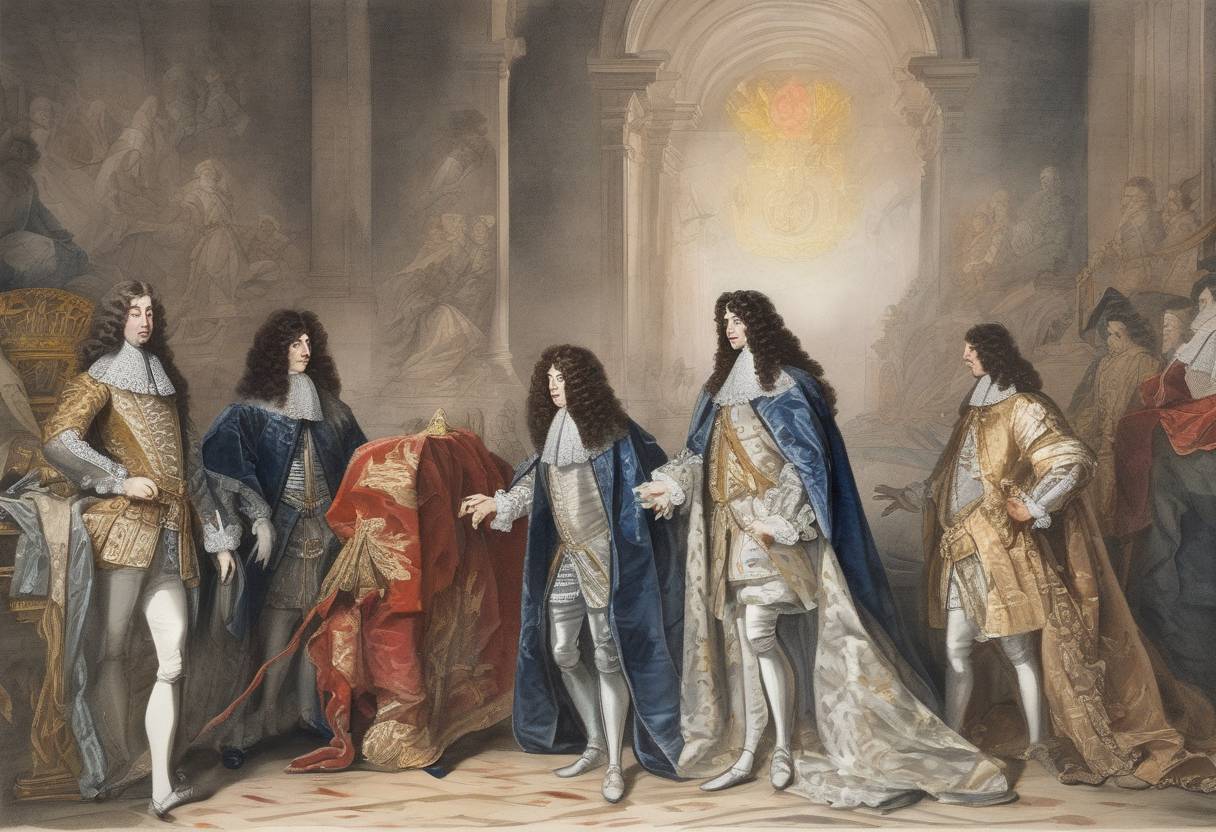
On February 6, 1685, King Charles II of England passed away, marking the end of his 25-year reign and the beginning of a new era under his brother, James II. This transition of power was a significant moment in English history, with profound implications for the monarchy and the nation.
Charles II, known as the “Merry Monarch,” had restored the monarchy in 1660 after the tumultuous period of the English Civil War and the subsequent Commonwealth under Oliver Cromwell. His reign was characterized by a degree of political stability, the re-establishment of the Church of England, and a vibrant cultural life. However, it was also marked by religious tensions, particularly concerning the role of Catholicism in a predominantly Protestant England.
Charles II had no legitimate heirs, as his marriage to Catherine of Braganza produced no children. This situation left his brother, James, Duke of York, as the heir presumptive. James’s open Catholicism was a source of anxiety for many in England, where anti-Catholic sentiment was strong.
Charles II fell ill on February 2, 1685, suffering from a sudden apoplectic fit. Despite the efforts of his physicians, his condition deteriorated rapidly. On his deathbed, Charles converted to Catholicism, a decision that surprised many, given the religious tensions of the time. He died on February 6, 1685, at the age of 54.
Following Charles’s death, James ascended to the throne as King James II of England and Ireland, and James VII of Scotland. His accession was initially smooth, as he was the legitimate successor. James’s reign, however, would soon become contentious due to his attempts to promote Catholicism and his perceived absolutist tendencies.
James II’s reign was short-lived but pivotal. His policies and religious affiliations led to increasing unrest and opposition, culminating in the Glorious Revolution of 1688. This event saw James deposed and replaced by his Protestant daughter Mary II and her husband, William of Orange, marking a significant shift in the balance of power between the monarchy and Parliament.
The transition from Charles II to James II highlighted the ongoing religious and political tensions in England, setting the stage for future constitutional developments. The Glorious Revolution that followed James’s reign would eventually lead to the establishment of a constitutional monarchy, significantly shaping the future of the British Isles.
In summary, the death of Charles II and the ascension of James II on February 6, 1685, were pivotal moments in English history, with lasting impacts on the monarchy and the nation’s political landscape.
Source: www.britannica.com