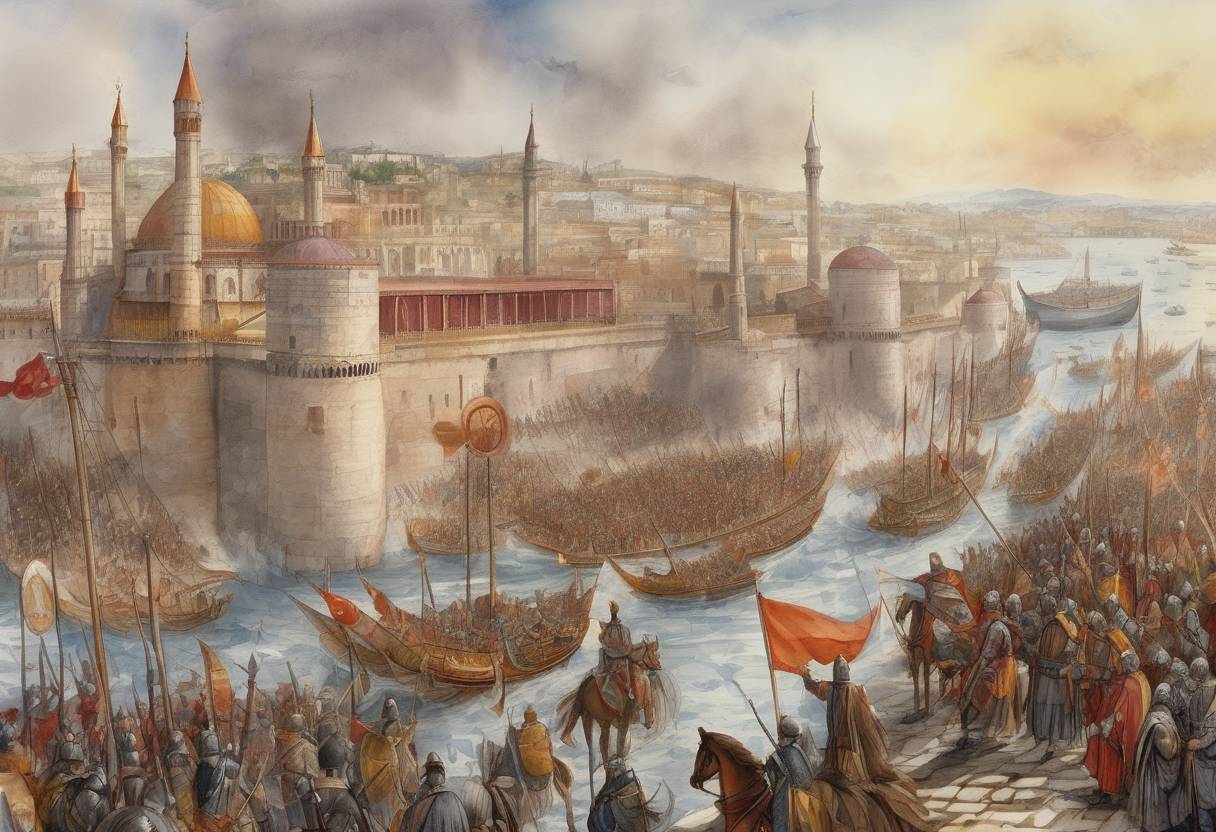
The Sack of Constantinople: April 12, 1204
On April 12, 1204, the Fourth Crusade culminated in the capture and sack of Constantinople, a pivotal event that dramatically altered the course of Byzantine and European history. This event marked a significant turning point, leading to the fragmentation of the Byzantine Empire and the establishment of the Latin Empire.
Background
The Fourth Crusade was initially intended to reclaim Jerusalem from Muslim control. However, due to a series of complex political and financial maneuvers, the Crusaders diverted their mission towards Constantinople, the capital of the Byzantine Empire. The diversion was influenced by several factors:
Financial Constraints: The Crusaders faced severe financial difficulties. They had contracted with the Republic of Venice for transport, but could not pay the agreed sum.
Venetian Influence: The Venetians, led by Doge Enrico Dandolo, had their own interests in weakening the Byzantine Empire, a commercial rival.
Byzantine Political Intrigue: The deposed Byzantine prince, Alexios Angelos, promised the Crusaders financial and military support if they helped him reclaim the throne from his uncle, Alexios III.
The Siege and Sack
After a series of negotiations and failed promises, tensions escalated. On April 12, 1204, the Crusaders launched a full-scale assault on Constantinople. The city, despite its formidable defenses, fell to the Crusaders after a fierce battle.
Looting and Destruction: The sack of Constantinople was marked by extensive looting, destruction, and violence. Many of the city’s treasures, including religious relics and artworks, were either destroyed or taken to Western Europe.
Cultural Impact: The sack significantly weakened the Byzantine Empire’s cultural and economic standing. Many invaluable manuscripts and works of art were lost forever.
Establishment of the Latin Empire
Following the sack, the Crusaders established the Latin Empire, with Baldwin of Flanders crowned as its first emperor. This new political entity lasted until 1261, when the Byzantines, under the leadership of Michael VIII Palaiologos, recaptured Constantinople.
Consequences
Fragmentation of Byzantine Territories: The Byzantine Empire was divided into several successor states, including the Empire of Nicaea, the Despotate of Epirus, and the Empire of Trebizond.
Long-term Weakening of Byzantium: The sack and subsequent establishment of the Latin Empire significantly weakened the Byzantine Empire, making it vulnerable to future invasions, particularly by the Ottoman Turks.
East-West Relations: The event deepened the schism between the Eastern Orthodox and Roman Catholic Churches, exacerbating tensions that had been growing since the Great Schism of 1054.
Historical Significance
The sack of Constantinople in 1204 is often cited as one of the most controversial and consequential events of the Crusades. It shifted the balance of power in the region and had lasting impacts on both Byzantine and European history. The event is remembered as a tragic episode that underscored the complexities and unintended consequences of the Crusading movement.