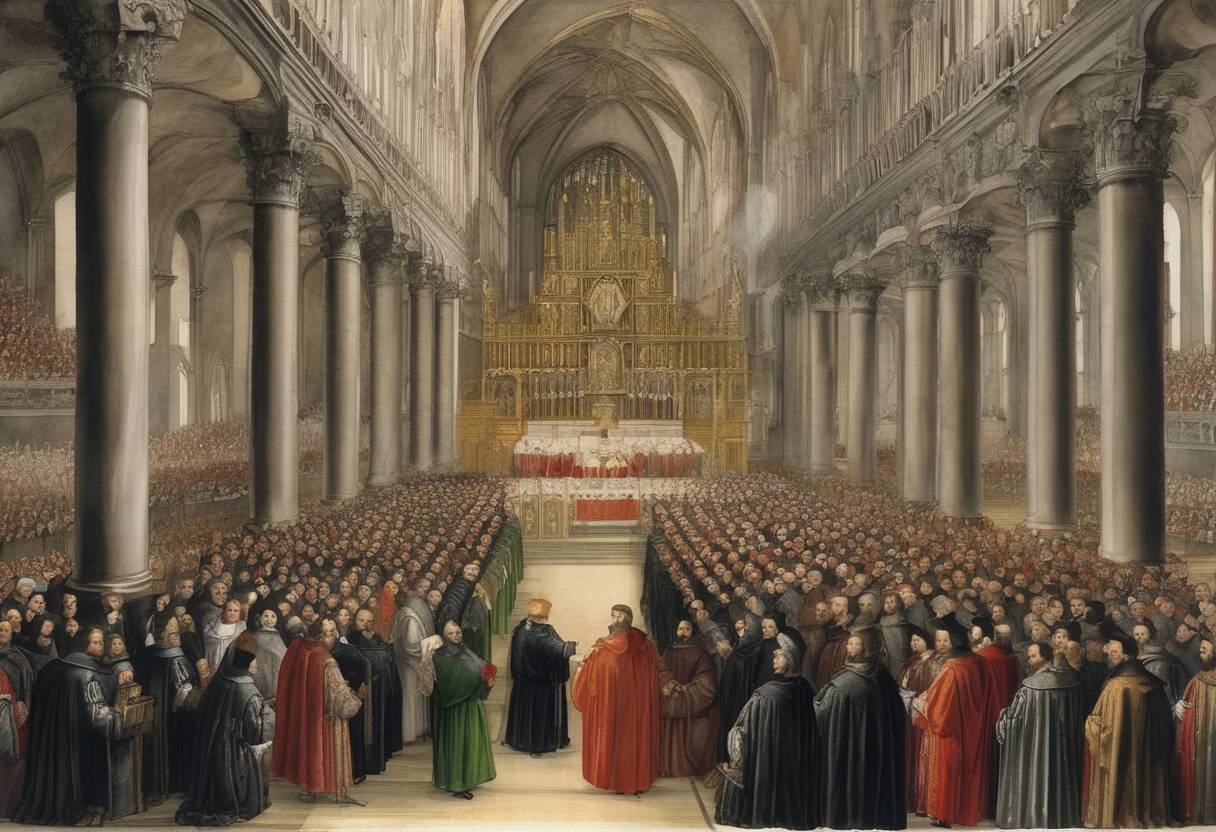
The Final Session of the Council of Trent: April 15, 1563
The Council of Trent, a pivotal event in the history of the Catholic Church, marked an essential phase in the Counter-Reformation. The final session of this influential council began on April 15, 1563. Initially convened in 1545, the Council’s primary aim was to address and counter the doctrinal challenges posed by the Protestant Reformation, which had fundamentally altered the religious landscape of Europe.
Context and Background
The Protestant Reformation, initiated by Martin Luther’s Ninety-Five Theses in 1517, had spread rapidly across Europe. Key Protestant figures such as John Calvin and Huldrych Zwingli further advanced theories that critiqued Catholic doctrines and practices. In response, the Catholic Church sought to reaffirm its theological doctrines and reform internal practices through the Council of Trent.
Objectives of the Council
During its sessions, the Council’s objectives included:
Clarification of Catholic Doctrine: The Council affirmed the authority of the Pope and upheld the traditions of the Church, such as the significance of the seven sacraments and the doctrine of transubstantiation, which were central points of contention with Protestant reforms.
Reformation of Church Practices: The council called for reforms to address issues like the sale of indulgences, clerical abuses, and the need for improved clergy education and discipline.
The 1563 Session
The sessions that began in April 1563 were focused on finalizing doctrinal decrees and reform measures. This session, under the guidance of Papal Legates and influenced by political pressures from Catholic monarchs, laid the groundwork for several significant documents, including:
Decrees on Marriage: Establishing marriage as a sacramental and indissoluble union, countering Protestant views that permitted divorce in certain circumstances.
Reaffirmation of Papal Supremacy: Strengthening the Pope’s role in church governance and addressing issues related to episcopal appointments and seminary education.
Influence and Consequences
The completion of the Council of Trent had long-lasting effects on the Catholic Church and its influence:
Standardization of Doctrine: The council established a clear Catholic identity distinct from Protestant teachings, which was instrumental for the Church in facing ongoing challenges.
Implementation of Reforms: Institutions like seminaries were established to train priests, and diocesan structures were reorganized to prevent abuses and improve pastoral care.
The Council of Trent’s resolutions were instrumental in revitalizing the Catholic Church and countering Protestant expansion, affecting Catholic doctrine and practice well into the modern era. The Council’s decisions also underscored the deep and enduring schism between Protestantism and Catholicism, shaping the religious and political trajectory of Europe for centuries.
Broader Impact
Beyond theological and ecclesiastical implications, the Council of Trent played a crucial role in the broader Counter-Reformation movement. It provided the philosophical and doctrinal framework necessary for revitalizing Catholic Europe, influencing everything from art and music to education and missionary work, thus distinguishing the Catholic revival as a cultural and spiritual renaissance.