The Patenting of the Electric Iron by Henry W. Seely
1882 · New York City, United States
The electric iron was patented by Henry W. Seely in New York City.
August 7, 1888
Theophilus Van Kannel of Philadelphia was granted a patent for the revolving door.
Philadelphia, United States | United States Patent Office
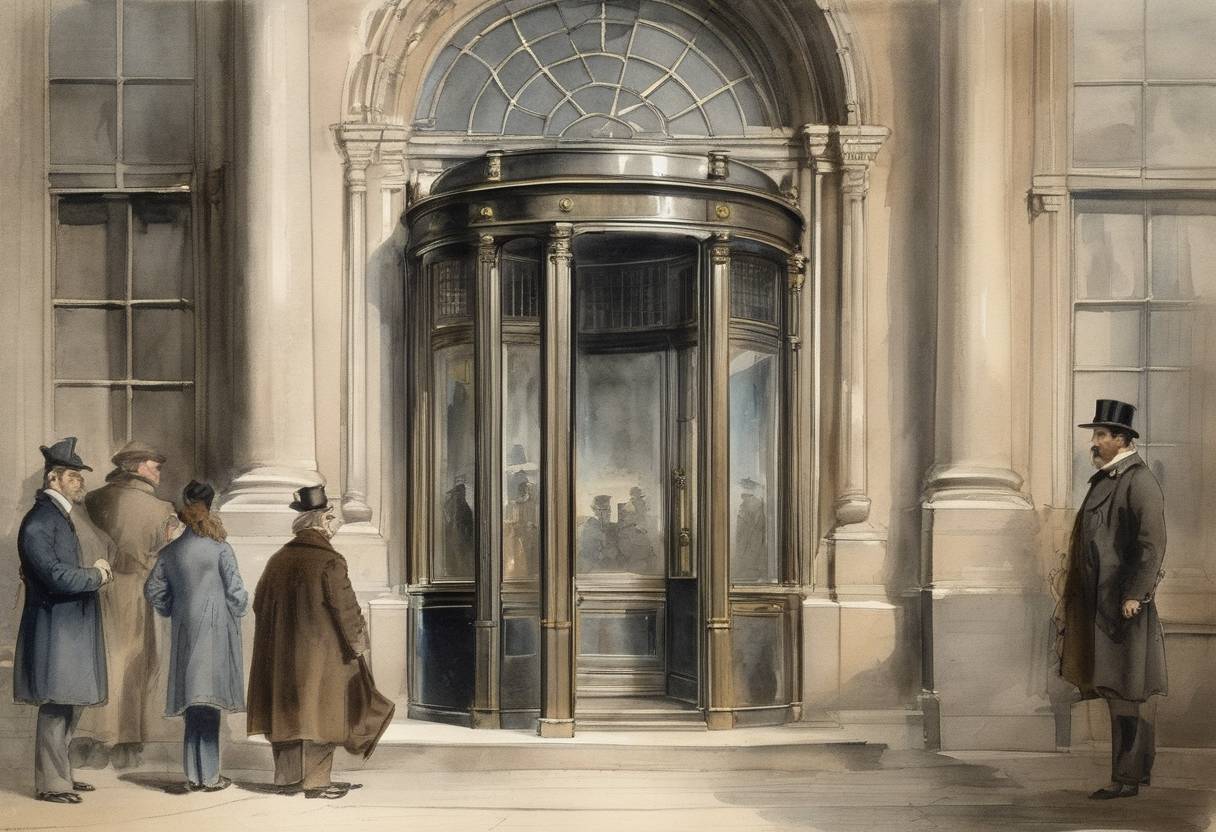
On August 7, 1888, Theophilus Van Kannel of Philadelphia was granted U.S. patent number 387,571 for his invention of the revolving door. This patent marked a significant innovation in building design and architectural engineering.
The concept of revolving doors addressed several practical issues associated with conventional doors. Standard swinging doors were often problematic in high-traffic areas due to their tendency to let drafts in, requiring significant space to open, and potentially posing safety hazards due to strong gusts or direct confrontations with individuals.
Van Kannel’s design introduced a door system comprising multiple wings radiating from a central shaft, enclosed within a cylindrical wall. This construction provided a mechanism where the door could rotate around a central axis. The invention effectively reduced air draft exchange between indoor and outdoor settings, enhanced energy conservation by maintaining indoor climate, and optimized space and traffic flow as the revolving door remained largely stationary in terms of its footprint.
Upon its introduction, the revolving door quickly gained popularity, especially in urban developments and high-rise buildings. Its design contributed to greater energy efficiency and added an element of modernity and prestige to establishments like hotels, office buildings, and department stores. The revolving door became a fixture in American cities and later spread globally.
The patent awarded to Van Kannel not only recognized his ingenuity but also propelled advancements in architecture and building design that prioritized efficiency and user safety.
Theophilus Van Kannel’s contribution with his revolving door patent reflects a turning point in architectural innovations of the late 19th century. The prevalence of this simple yet effective design can still be seen today, underscoring its lasting impact on the built environment.
Source: en.wikipedia.org