1847 · Los Angeles, United States
The Treaty of Cahuenga was ratified, which effectively ended the Californian part of the Mexican–American War.
January 30, 1847
The town of Yerba Buena was re-named San Francisco, following the United States' capture of the Californian territory during the Mexican-American War.
San Francisco, United States | City of San Francisco
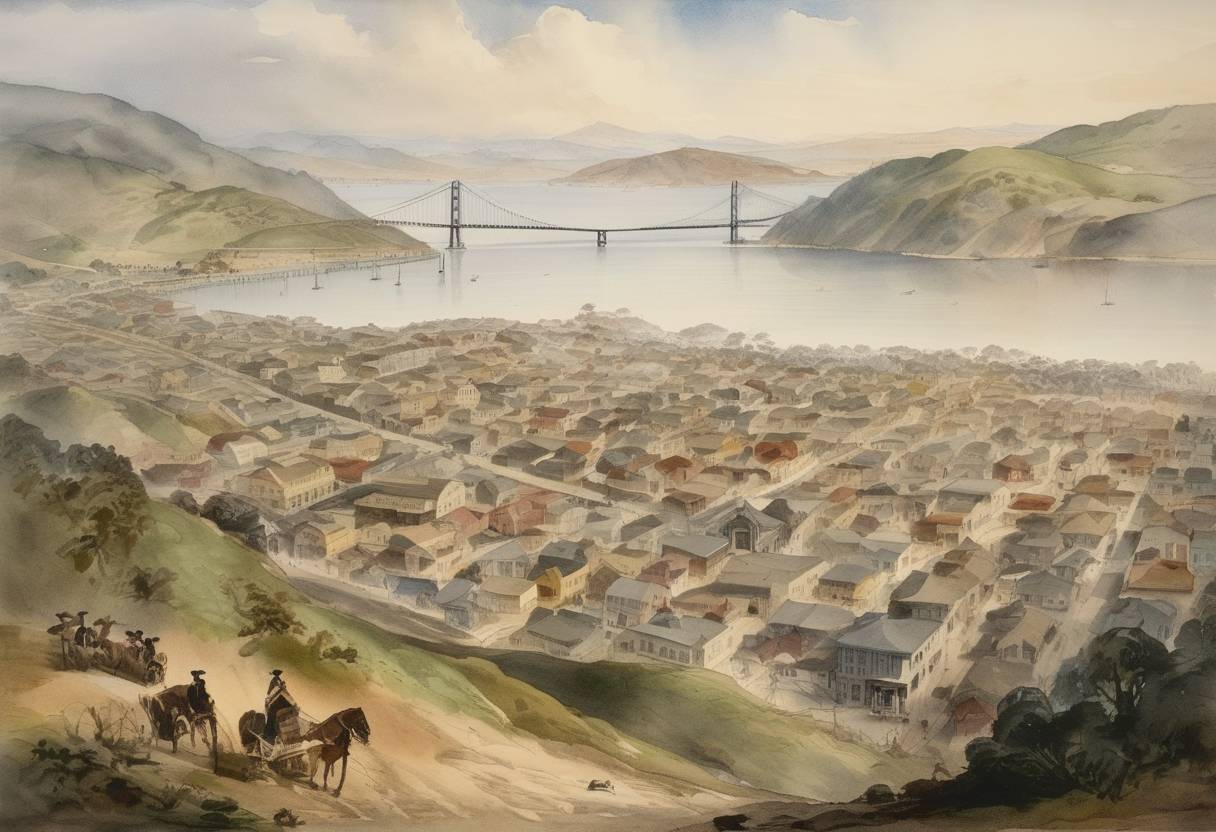
On January 30, 1847, the town of Yerba Buena, located in what is now known as California, was officially renamed San Francisco. This renaming marked a pivotal moment during the Mexican-American War, a conflict that significantly influenced the shaping of the United States’ territorial boundaries.
In the early 19th century, Yerba Buena was a small settlement with a population consisting of diverse groups, including Native Americans, Mexicans, and European settlers. The town’s name, meaning “good herb,” referred to a native plant of the area. This settlement was a part of the larger Alta California region under Mexican control until the United States sought to annex the territory in the 1840s.
The Mexican-American War (1846–1848) was primarily sparked by disputes over territorial boundaries after Texas’ annexation by the United States. During the war, U.S. forces quickly moved to secure significant territories in California. Yerba Buena was captured by U.S. Navy Commodore John D. Sloat in July 1846 as American forces aimed to secure the port city as a strategic advantage.
In January 1847, during the military governorship of Lieutenant Colonel John C. Frémont, the town of Yerba Buena was renamed San Francisco. This decision was influenced by the need to foster American settlement and governance in the newly acquired territories and to align the town’s identity with the San Francisco Bay, a key geographic feature that defined the area.
The change from Yerba Buena to San Francisco held substantial implications for the future of the city and the region. The renaming coincided with the California Gold Rush, which began in 1848, leading to a massive influx of settlers and rapid urban and economic development. San Francisco emerged as a key city in the western expansion of the United States, serving as a major port and cultural hub.
The transformation of Yerba Buena into San Francisco marked a critical transition from Mexican to American governance and highlighted the broader shift in control of the Pacific Coast, contributing significantly to the shaping of modern California and its diverse cultural landscape.
Source: en.wikipedia.org