Geneva Accords and the Indochina Conflict
1954 · Geneva, Switzerland
The first part of the Geneva Accords is signed, aimed at resolving the ongoing conflict in Indochina.
August 12, 1949
The Geneva Conventions, establishing the standards of international law for humanitarian treatment in war, are signed.
Geneva, Switzerland | International Red Cross and Red Crescent Movement
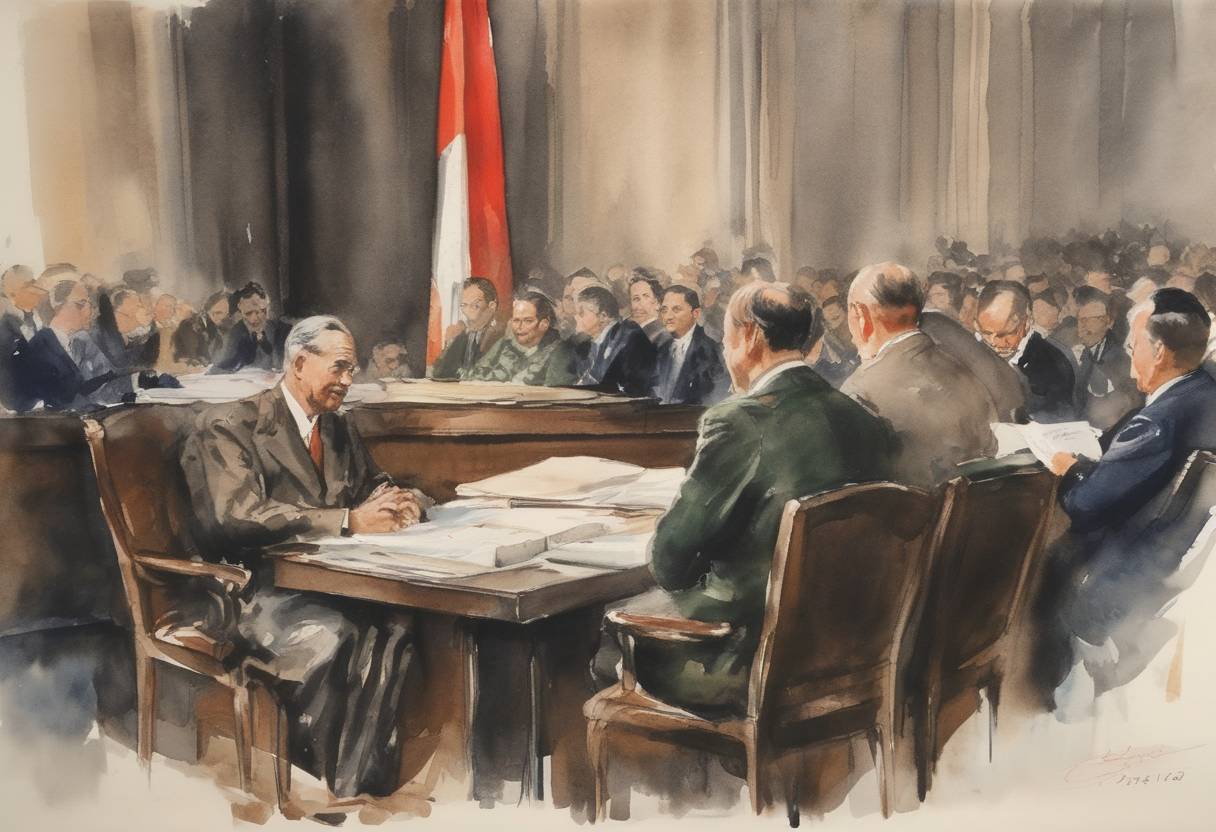
On August 12, 1949, a significant advancement in international humanitarian law was marked by the signing of the Geneva Conventions. These treaties were established to set standards for the humane treatment of individuals during times of war and armed conflict.
The Geneva Conventions originated from concerns for the protection of soldiers wounded in battle and expanded through successive revisions to cover various aspects of warfare. The First Geneva Convention was adopted in 1864, primarily focusing on the care of wounded soldiers. Over the years, additional conventions were formulated, addressing the conduct of hostilities and the treatment of prisoners of war and civilians.
The 1949 signing in Geneva, Switzerland, resulted in four conventions:
The 1949 conventions marked a significant enhancement over earlier versions. They incorporated lessons learned from the atrocities of World War II, ensuring more rigorous protections for individuals involved in or affected by armed conflict. They emphasized the non-discriminatory application of protections and laid the groundwork for additional protocols to be added in subsequent years, further refining the rules of conduct during conflicts.
Post-1949, the Geneva Conventions have been widely ratified, forming the cornerstone of international humanitarian law. They underscore the commitment of the global community to uphold human dignity, even amidst war. The conventions have been supplemented by Additional Protocols adopted in 1977 and 2005, reflecting the evolving nature of conflicts.
The Geneva Conventions continue to serve as a critical framework guiding the actions of nations and international organizations in the mitigation of the suffering caused by war. They represent a landmark in the legal codification of military ethics and humanitarian considerations, influencing global efforts toward peace and security.
Source: www.icrc.org