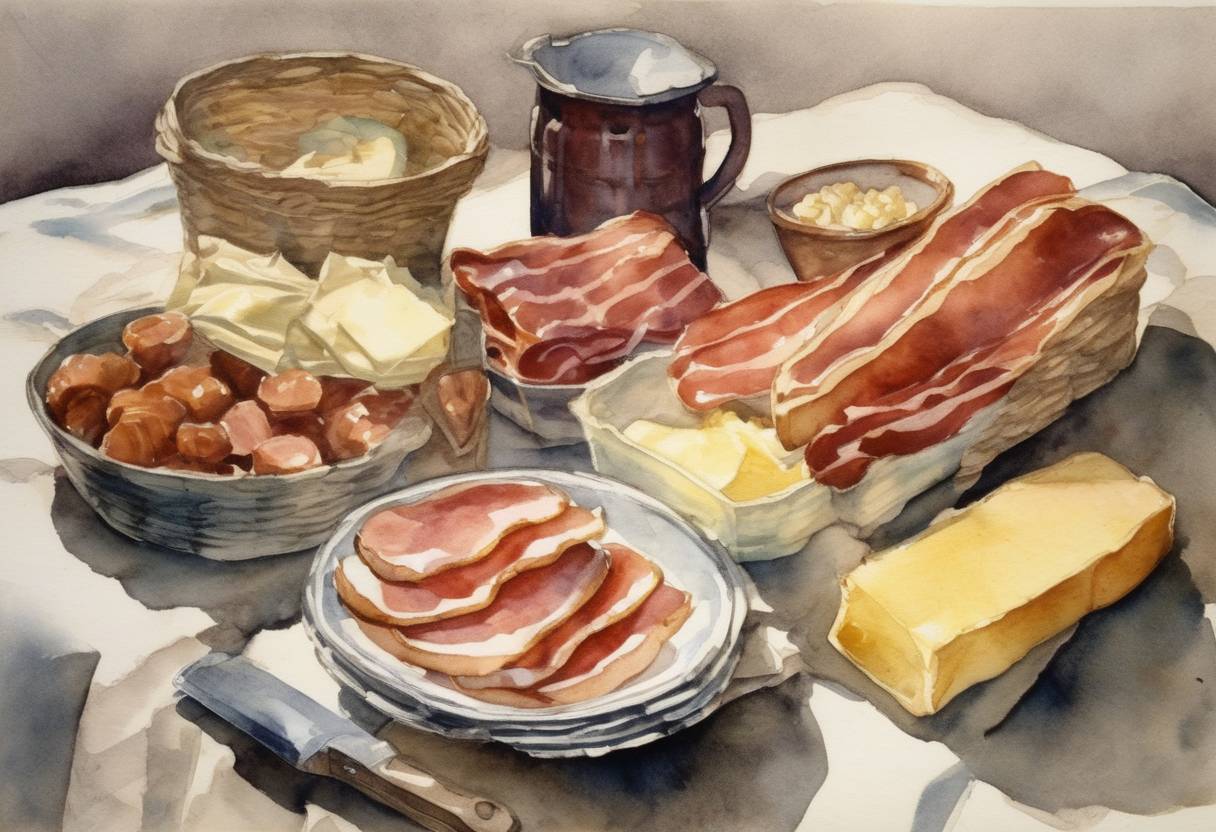
Britain Introduces Food Rationing During World War II on January 8, 1940
On January 8, 1940, the United Kingdom implemented food rationing as a response to wartime shortages, particularly affecting items such as bacon, butter, and sugar. This marked the beginning of a large-scale effort to manage food supplies during World War II, a necessity driven by the German naval blockade and the need to prioritize resources for the military.
Context and Pre-Rationing Challenges
- Prelude to Rationing: When World War II broke out in September 1939, Britain immediately faced the challenge of securing adequate food supplies. The nation imported around 70% of its food, making it vulnerable to disruptions.
- German U-boat Threat: The intensification of the German naval blockade and U-boat attacks on merchant ships posed a severe threat to these imports.
Implementation of Rationing
- Initial Commodities: Bacon, butter, and sugar were the first commodities to be rationed. These items were chosen due to their essential nature and the difficulty in maintaining their supply.
- Rationing System: Each person was given a ration book containing coupons necessary to purchase restricted items, ensuring equitable distribution among the population.
Broader Rationing Measures
- Expansion of Rationing: Over time, the rationing scheme expanded to include meat, tea, jam, cheese, other fats, eggs, and milk. Eventually, even clothing and fuel were rationed.
- Dig for Victory Campaign: The government encouraged the population to grow their own food, promoting self-sufficiency and morale through initiatives like the Dig for Victory campaign.
Consequences and Historical Significance
- Impact on Civilians: Rationing required significant adaptation by the British public, who faced restricted choices and altering of daily life. However, it fostered a sense of shared sacrifice and communal responsibility.
- Long-Term Rationing: Food rationing continued in the UK well after the war, with some items remaining under restriction until the mid-1950s, reflecting the war’s lingering economic impacts.
The introduction of rationing on January 8, 1940, was a pivotal moment that showcased Britain’s resolve to withstand wartime adversities and manage resources effectively. This systemic shift laid the groundwork for subsequent innovations in food production and consumption patterns throughout the war and beyond.