The Battle of Kos: August 5, 1824
1824 · Kos, Ottoman Empire
The Battle of Kos took place during the Greek War of Independence, where Greek forces clashed with the Ottoman Empire's forces.
May 21, 1821
In the Greek War of Independence, the Greeks defeated the Ottomans at the Battle of Eressos on the island of Lesbos.
Eressos, Lesbos, Greece | Greek Revolutionaries
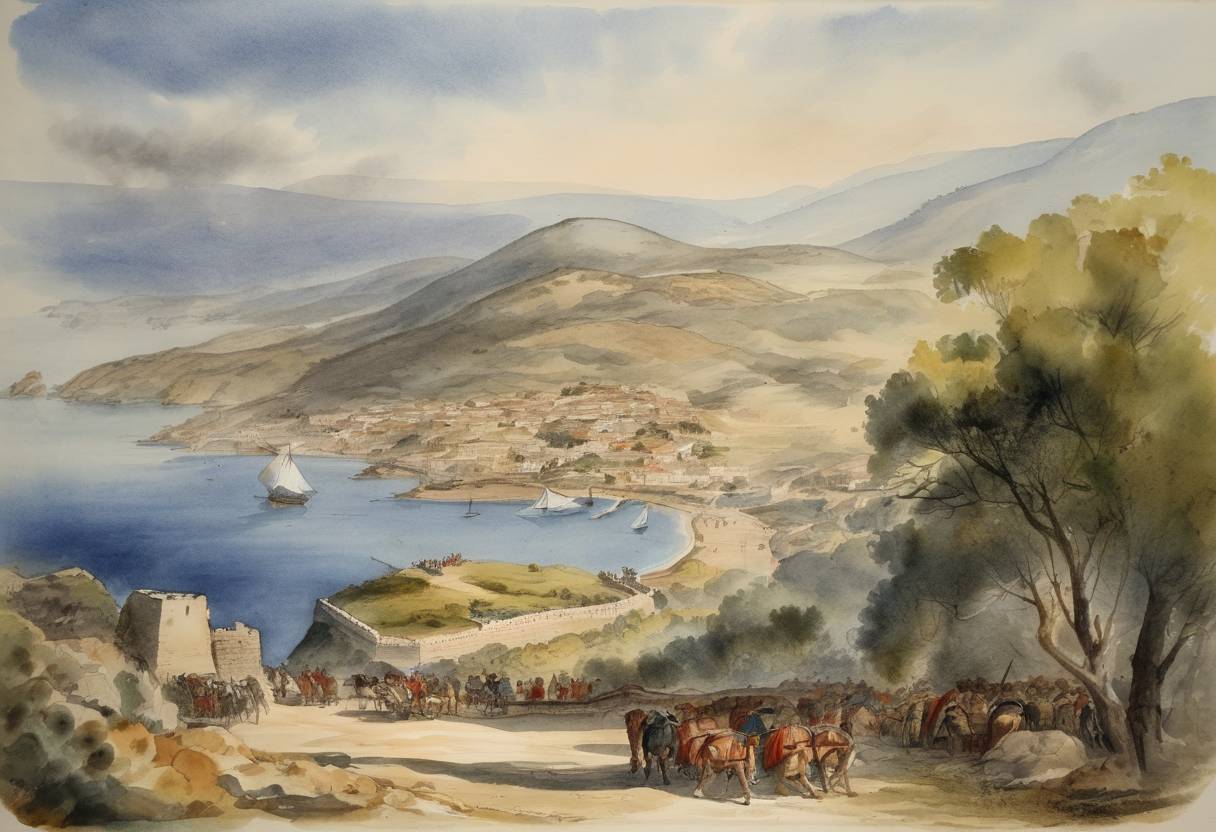
The Greek War of Independence, which began in 1821, was a pivotal struggle between Greek revolutionaries and the Ottoman Empire, aiming to liberate Greece after centuries of Ottoman domination. The insurrection was fueled by a surge of nationalist sentiment and the influence of the Enlightenment and European revolutionary ideals.
On May 21, 1821, the Battle of Eressos took place on the island of Lesbos, marking a significant engagement in the early stages of the Greek War of Independence. The battle saw Greek revolutionaries clashing with Ottoman forces in an attempt to secure control over the area and manifest their burgeoning struggle for freedom and autonomy.
Eressos, located on the western part of Lesbos, held strategic importance due to its proximity to the mainland and its capabilities as a maritime hub. Greek forces sought to establish dominance over such locations to gain logistical advantages and galvanize local support.
The conflict at Eressos involved coordinated efforts by Greek insurgents, who had been preparing for combat through mobilization of local units and maritime resources. Utilizing their knowledge of the local geography, the Greeks orchestrated a tactical engagement that successfully overwhelmed the Ottoman defenses.
The Greek victory at the Battle of Eressos served as a morale booster for the Greek revolutionaries. It catalyzed further uprisings and contributed to the larger strategic efforts to weaken Ottoman control across the Aegean islands and the mainland.
This triumph illustrated the potential successes of the Greek independence movement through cohesive action and strategic planning. It also encouraged European philhellenes (supporters of the Greek cause) to continue their support, both morally and materially.
Though relatively small in scale, the Battle of Eressos exemplifies the tenacity and determination of the Greek independence fighters. It reflects the broader dynamics of the Greek War of Independence, which saw numerous localized battles progressively turning the tide against Ottoman rule, eventually leading to the establishment of an independent Greek state.
The Battle of Eressos stands as one of many steps in the long struggle that would culminate in the recognition of Greek sovereignty and the rebirth of the modern Greek nation.
Source: en.wikipedia.org