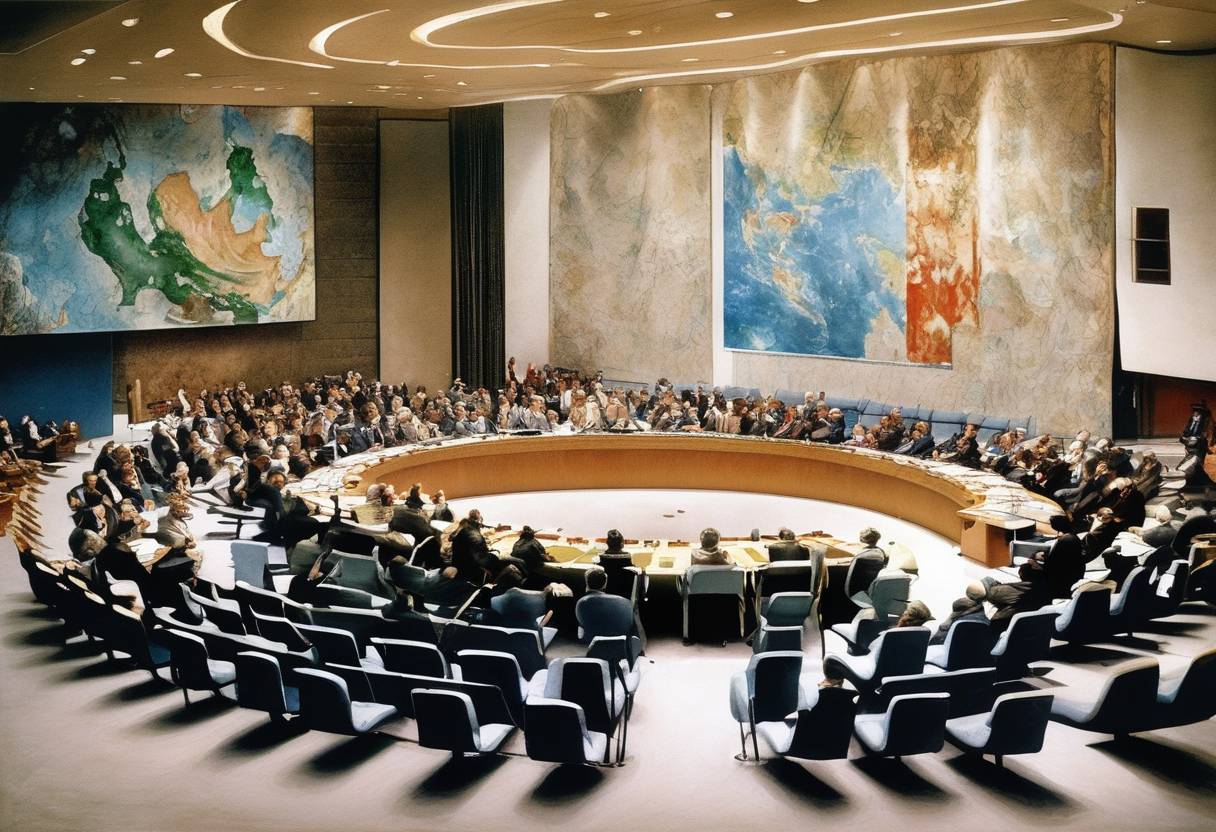
United Nations Security Council Allows PLO Participation - January 12, 1976
On January 12, 1976, the United Nations Security Council took a significant decision regarding the Palestine Liberation Organization (PLO) by voting to allow its participation in a Security Council debate. This decision marked an important moment in international diplomacy concerning the Israeli-Palestinian conflict. The vote was decidedly in favor, with 11 members supporting the resolution, one opposing, and three abstentions.
Context and Background
The PLO, recognized as a representative body responsible for the Palestinian people, had been actively seeking international recognition and a platform within global forums to address issues related to Palestinian self-determination and rights. By the mid-1970s, the PLO had gained observer status at the United Nations General Assembly but did not have formal recognition within the Security Council, which plays a crucial role in international peace and security.
Key Events Leading Up to the Vote
Efforts to include the PLO in discussions at the United Nations had been ongoing as part of broader debates on the Middle East situation. In the broader context of the Arab-Israeli conflict and Peace Process efforts, the need to address Palestinian issues was increasingly recognized globally.
The Vote
- 11 Members in Favor: These members acknowledged the importance of including the PLO in discussions relevant to Middle Eastern peace, recognizing its role as a significant player in the Palestinian quest for statehood and regional stability.
- 1 Member Opposing: The United States cast the sole opposing vote, reflective of its policy stance at the time regarding direct dealings with the PLO, primarily due to its support of Israel and concerns about the PLO’s previous acts of violence.
- 3 Abstentions: The remaining three members abstained from voting, indicating their reservations about fully supporting PLO participation, perhaps due in part to international political considerations or pressure.
Outcome and Historical Significance
While the PLO was allowed to participate in the debate, it was granted no voting rights, aligning with its observer status. Nonetheless, this decision was symbolic, representing a step towards increased international engagement with Palestinian representatives.
The allowance for PLO engagement by the Security Council illustrated the evolving dynamics of international diplomacy concerning the Mid-East conflict and highlighted the nuanced approaches nations took regarding issues of statehood, representation, and peace in the region. The decision reflected growing acknowledgment of the need to involve a wide array of voices to effectively navigate the complexities of Middle Eastern diplomacy.
Overall, the January 12 vote was a pivotal moment in the broader context of international recognition of Palestinian issues and underscored the United Nations’ role as a platform for diverse international engagement on contentious global issues.