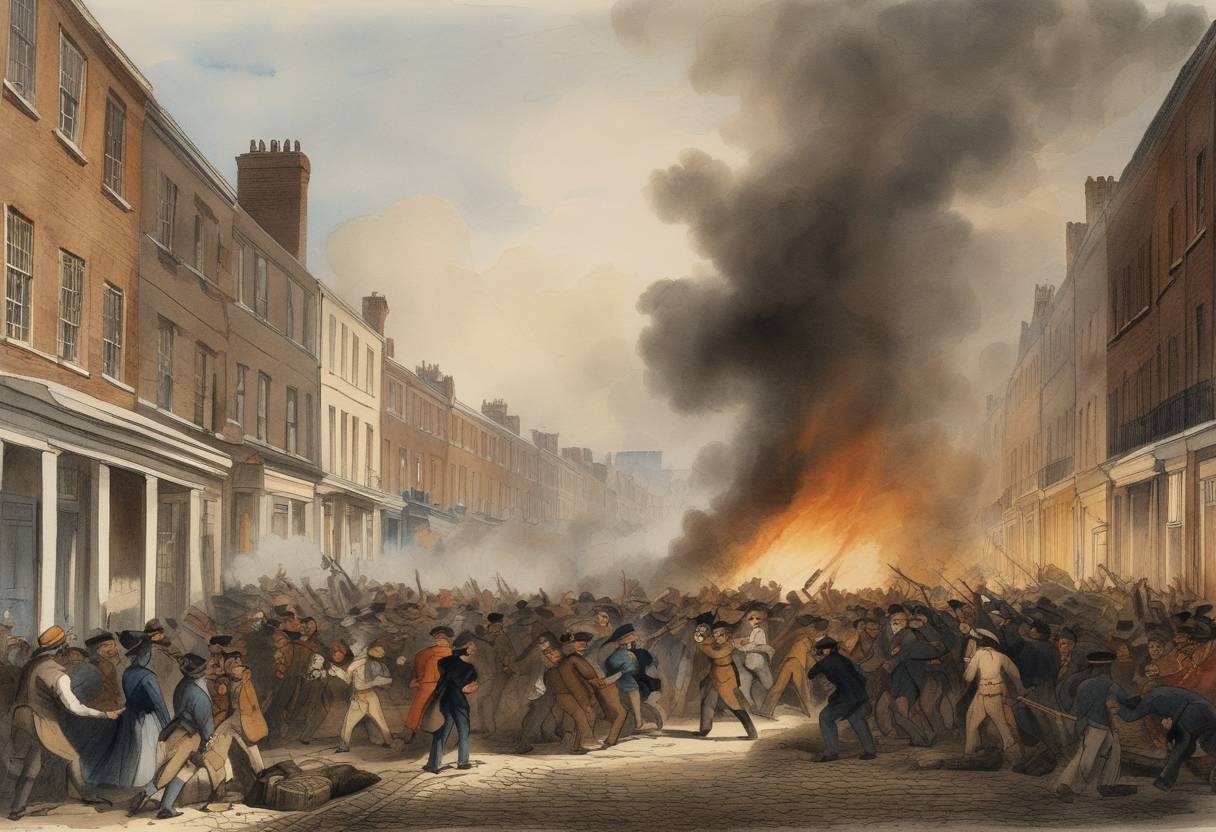
The Brixton Riot of May 22, 1816
Context
Following the conclusion of the Napoleonic Wars in 1815, Britain faced significant economic challenges. The war had drained the nation’s resources, and demobilization added thousands of men to the civilian workforce, exacerbating unemployment. The economic downturn, compounded by poor harvests and rising food prices, caused widespread distress, particularly among the working class.
The Riot
On May 22, 1816, tensions erupted in Brixton, a district in South London, when a group of unemployed and impoverished men resorted to violence to express their grievances over lack of employment and destitution. The immediate spark for the rioting in Brixton was the deepening economic plight and dissatisfaction with the inadequate response from authorities to the crisis.
Events of the Riot
The rioters, driven by desperation, gathered in Brixton, inciting disorder as they vociferously demanded assistance and jobs. This unrest mirrored other disturbances occurring around the same time in England, as economic hardship had sparked widespread social unrest.
Armed with rudimentary weapons such as sticks and stones, the crowd clashed with local authorities. Their grievances were not merely economic; they extended to issues of social justice and calls for reform.
Aftermath and Significance
The riot was part of a broader wave of unrest that swept through the country during this period of economic hardship. It underscored the social tensions bubbling beneath the surface in post-war Britain and highlighted the need for governmental and societal reforms.
In the aftermath, authorities responded with a mixture of suppression and relief efforts, attempting to quell unrest while addressing some of the underlying issues. The events in Brixton were indicative of the broader challenges faced by the country as it transitioned to peace after years of conflict.
The Brixton Riot of 1816 is reflective of the growing pains of a nation grappling with the socioeconomic consequences of war, pointing to the need for economic restructuring and social reform in the wake of large-scale military demobilization and economic downturn.