Germanwings Flight 9525 Crash: March 24, 2015
2015 · Prads-Haute-Bléone, France
Germanwings Flight 9525 crashed in the French Alps, killing all 150 people on board. The crash was deliberately caused by the co-pilot, Andreas Lubitz.
April 30, 2006
Armavia Flight 967 crashed into the Black Sea while attempting to land at Sochi International Airport, resulting in the deaths of all 113 passengers and crew on board.
Sochi, Russia | Armavia
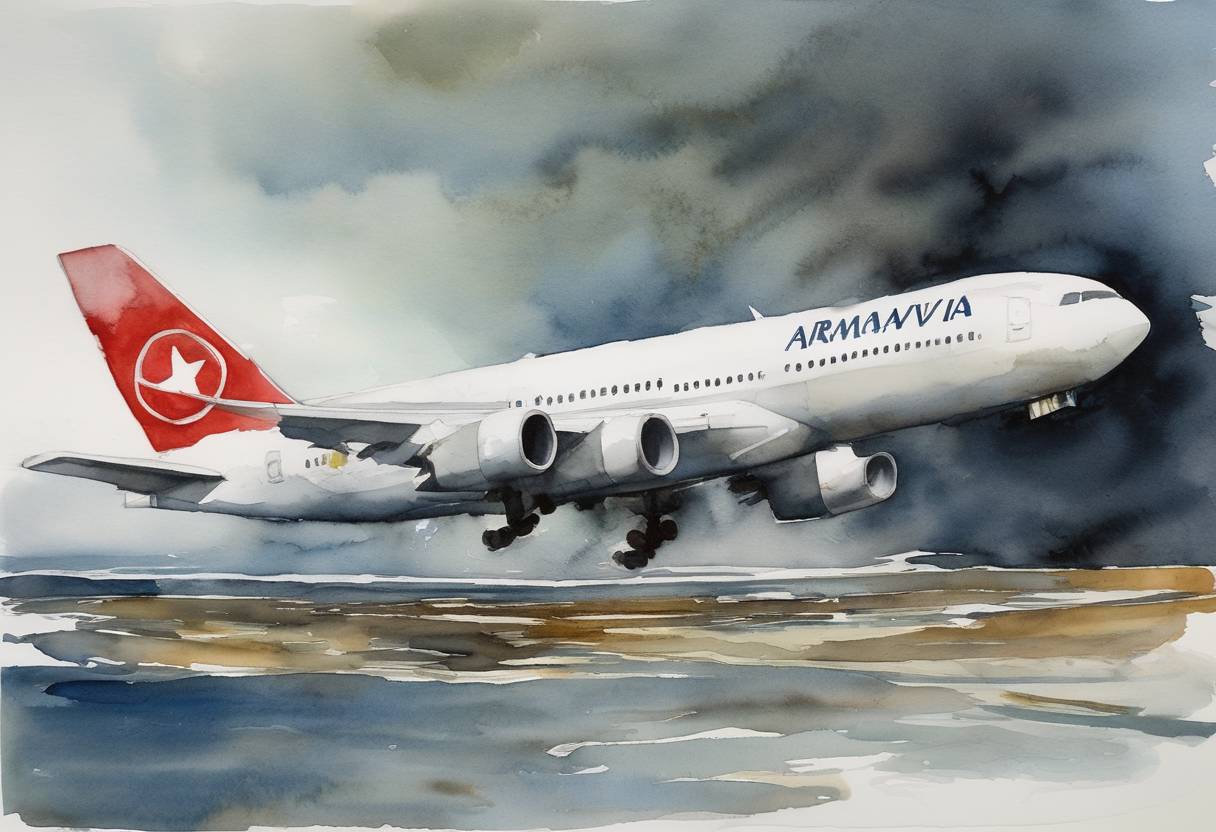
On April 30, 2006, Armavia Flight 967, en route from Zvartnots International Airport in Yerevan, Armenia, to Sochi International Airport in Russia, tragically crashed into the Black Sea. This event resulted in the deaths of all 113 passengers and crew members on board. This catastrophic aviation disaster had a profound impact on aviation safety and international relations between Armenia and Russia.
Weather Conditions: At the time of the accident, the weather conditions around Sochi were challenging, with reports of poor visibility and heavy rainfall.
Attempted Landing: The aircraft made an attempt to land at Sochi International Airport despite adverse weather, a situation that frequently requires heightened vigilance and precision from the flight crew.
Loss of Control: During the second approach after a missed approach, the aircraft lost control and crashed into the Black Sea, approximately off the coast near the airport.
Autonomous Investigation: The investigation was primarily conducted by the Interstate Aviation Committee (MAK) of the Commonwealth of Independent States, along with the Russian aviation authorities. The Armenian authorities also cooperated.
Pilot Error: The investigation concluded that pilot error was the primary cause of the crash. It was determined that the crew failed to properly execute the missed approach procedure and lost spatial orientation, a critical factor given the poor visibility conditions.
Crew Resources Management: The investigation highlighted deficiencies in Crew Resource Management (CRM), which indicates the necessity for better communication and cooperation among flight crew members during critical phases of flight.
Safety Improvements: The crash spurred changes in aviation safety regulations and training, emphasizing the need for improved pilot training in adverse weather conditions and the implementation of more stringent safety practices.
International Response: Both Armenian and Russian authorities expressed condolences and initiated measures to support the families of the victims. The disaster reinforced the importance of international cooperation in aviation safety.
The crash of Armavia Flight 967 remains a poignant reminder of the vital importance of safety protocols and effective response strategies in aviation. It stressed the need for rigorous pilot training, particularly in handling challenging weather conditions, which continues to influence airline safety standards globally.
Source: www.theguardian.com