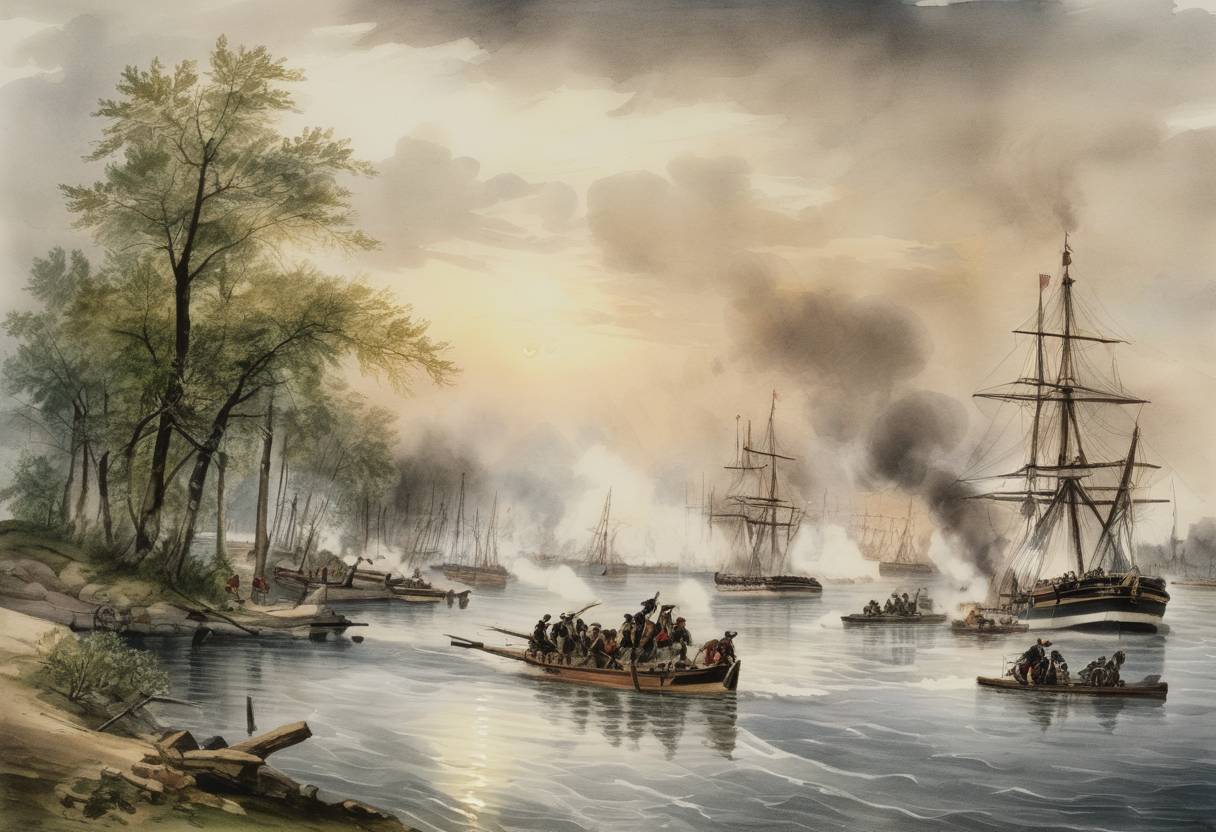
The Detroit Campaign of the War of 1812: American Forces Invade Canada
On July 12, 1812, during the nascent stages of the War of 1812, American forces led by General William Hull initiated an invasion of British-controlled Canada, crossing the Detroit River. This marked the official beginning of the Detroit Campaign, a strategic effort to assert control over the northwest frontier and counter British influence in the region.
Background
The War of 1812, a conflict between the United States and the United Kingdom, primarily stemmed from issues such as trade restrictions due to the British blockade of French ports, the impressment of American sailors into the Royal Navy, and the desire of American expansionists to annex British North American territories. Tensions were particularly high in the Northwest Territory, where American settlers faced resistance from British-allied Native American tribes.
The Crossing
On that day, General Hull’s force of about 2,000 men, consisting mainly of militia and regulars, embarked on a military operation intended to capture the British fort at Amherstburg. Located across the river from Detroit, Amherstburg was integral to controlling the Great Lakes and, by extension, the fur trade and military supply lines.
The American troops crossed the river relatively unopposed, benefiting from local surprise and the strategic initiative. The decision to cross the river stemmed from Hull’s initial confidence in overwhelming British forces and stirring Canadian settler dissatisfaction to foster an uprising against British rule.
Significance
The invasion plan was bold but fraught with challenges. General Hull and his forces faced logistical difficulties, including supply shortages and strained communication lines. Moreover, Hull underestimated the resolve of British forces and their indigenous allies, who would robustly defend their territory in the upcoming engagements.
The initial crossing set the stage for further military operations, but the campaign did not proceed as anticipated. Despite achieving the first objective of crossing into Canada, Hull’s later actions would culminate in a significant setback for American forces.
Aftermath
Hull’s campaign, instead of galvanizing support and yielding a swift victory, would descend into a series of military and strategic missteps. On August 16, 1812, just over a month after his invasion, Hull famously surrendered Fort Detroit to British forces led by Major General Isaac Brock, largely due to misinformation and fear of a large combined British and Native American force. This surrender was a demoralizing blow to American efforts early in the War of 1812 and undermined confidence in American military leadership.
The inauguration of the Detroit Campaign on July 12, 1812, illustrates the complexities and unpredictability of the War of 1812, reflecting the ambitious yet often flawed nature of early American military expeditions.