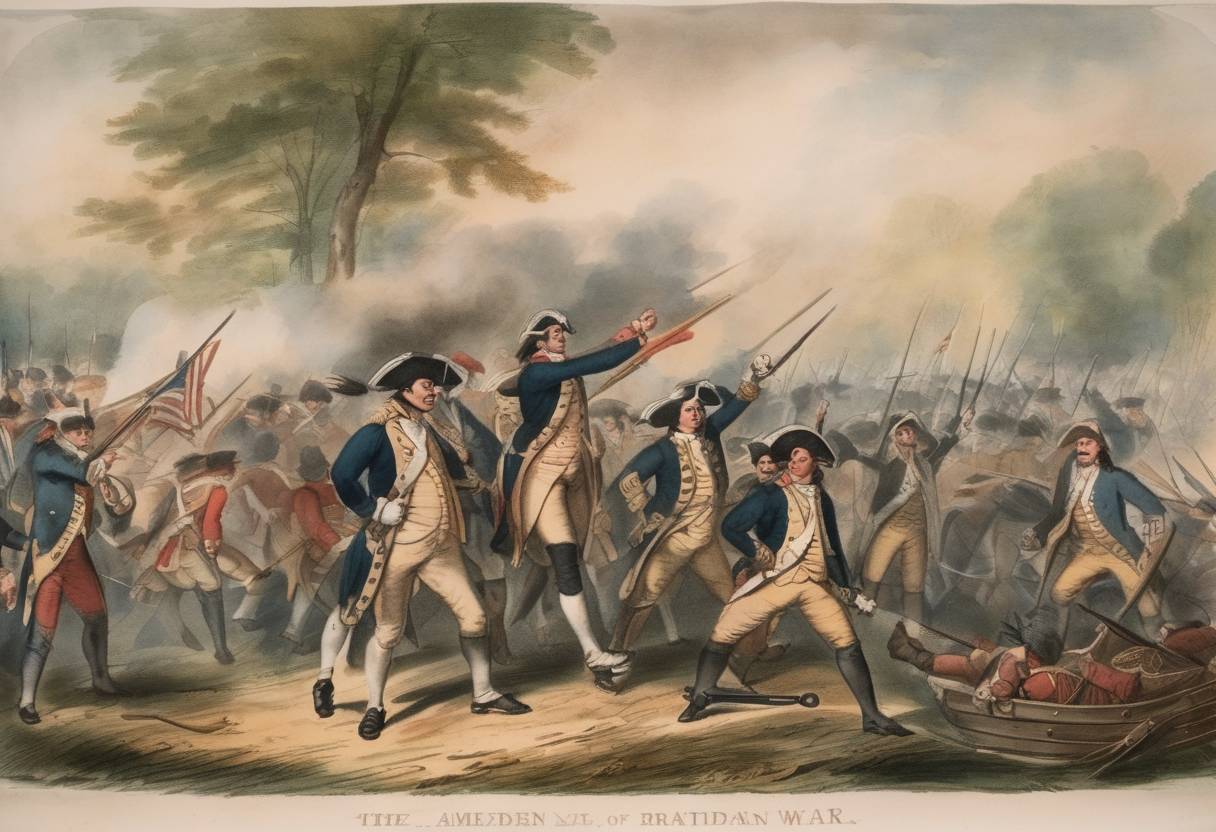
The Battle of Camden: August 16, 1780
The Battle of Camden, fought on August 16, 1780, was a significant conflict during the American Revolutionary War. It marked a decisive victory for the British forces under the command of Lieutenant General Charles Cornwallis over the Continental Army led by Major General Horatio Gates. This battle was crucial in the British campaign to maintain control over the Southern colonies.
Context and Background
Location: The battle took place near Camden, South Carolina, as part of the British strategy to crush the rebellion in the Southern colonies, which were considered more loyalist than other regions.
British Strategy: General Cornwallis aimed to solidify British control in the South by defeating the Continental forces and rallying Loyalists to the Crown.
Continental Forces: Major General Horatio Gates led the American forces. Known for his previous success at the Battle of Saratoga, Gates was appointed to command the Southern Department of the Continental Army. His forces were a mix of Continentals and militia, many of whom were poorly trained and equipped.
The Battle
Force Composition: The British Army consisted of approximately 2,100 regulars and Loyalist troops, while the Americans had around 3,700 soldiers, including a large number of militia.
Engagement: The battle began in the early morning hours. Despite having superior numbers, the Americans were at a disadvantage due to the positioning and experience of their forces.
Tactics and Outcome: The British attacked aggressively, and the untrained American militia on the left flank was quickly routed. This led to a collapse of the American line, and the Continental Army was defeated decisively. The skilled British regulars outmaneuvered and out-fought the less experienced American soldiers.
Aftermath and Consequences
American Losses: The American forces suffered heavy casualties, with over 900 killed or wounded and about 1,000 taken prisoner. This defeat shattered Gates’ reputation, and he was soon replaced by General Nathanael Greene.
British Control: The victory at Camden allowed the British to temporarily consolidate their hold over South Carolina. Loyalist forces were emboldened, and the British gained momentum in the Southern campaign.
Strategic Impact: The loss at Camden highlighted the need for better leadership, training, and coordination among American forces in the South. It also emphasized the critical role of militia and the challenges in integrating them with regular troops.
The Battle of Camden serves as a striking example of the difficulties faced by the Continental Army and the impact of leadership and preparation on the outcomes of the Revolutionary War. Despite this setback, the fight for independence continued, ultimately leading to the eventual withdrawal of British forces from the American colonies.