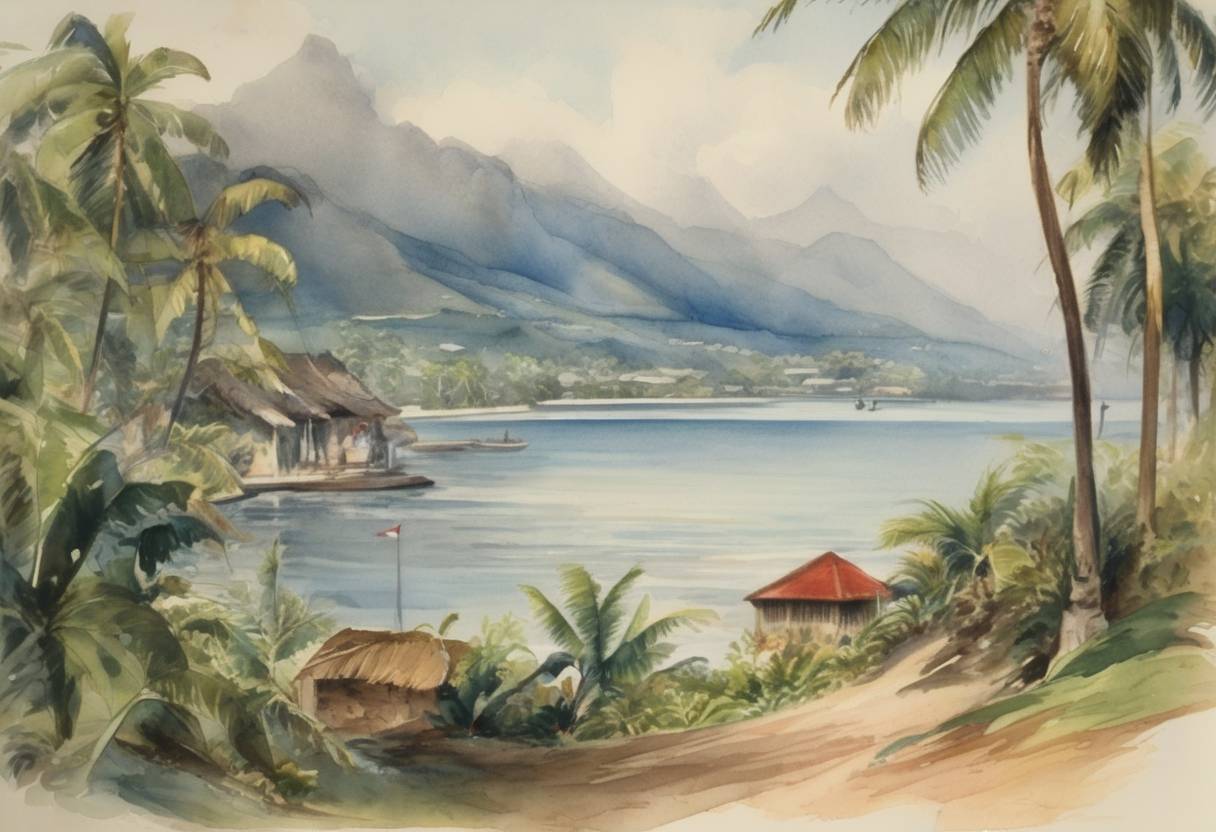
France Annexes Tahiti: July 26, 1891
On July 26, 1891, France consolidated its colonial ambitions in the Pacific by formally annexing Tahiti, the largest island in the Society Islands. This annexation marked a pivotal moment in the history of French Polynesia as it solidified French influence in the region, which had started almost five decades earlier with a protectorate established over the islands.
Context and Preceding Developments
Tahiti had been under French protection since 1842, following tensions with British interests in the region. The French, seeking to expand their maritime empire, initially declared a protectorate over Tahiti, which allowed them significant influence over the local administration while ostensibly recognizing native leadership under Queen Pomare IV.
The establishment of the protectorate was met with resistance from the native Tahitians, leading to a period of conflict known as the French-Tahitian War (1844-1847). Despite these conflicts, France maintained its authority, gradually increasing its control over local affairs.
Significance of the Annexation
The annexation on July 26, 1891, represented the culmination of years of gradual French assertion over the islands. It came at a time of intense European colonial activity globally, as nations expanded their spheres of influence, often at the expense of indigenous populations and their sovereignty. By this date, Tahiti was incorporated directly under French administration, ending the protectorate status and integrating the island more closely into the French colonial empire.
Consequences and Legacy
The formal annexation of Tahiti ushered in a new era of French governance. It led to increased infrastructural development and the spread of French culture and language. Social structures, traditional governance, and indigenous practices faced significant transformation under French rule.
The ramifications of France’s annexation of Tahiti are still felt in modern times, as Tahiti continues to be part of French Polynesia, an overseas collectivity of France. This status permits a degree of local self-government, though the islands remain tied closely to French political and economic systems.
France’s colonial legacy in Tahiti and the broader Society Islands remains a topic of historical and cultural significance, reflecting broader themes of colonialism and its lasting impact on indigenous populations and their societies.