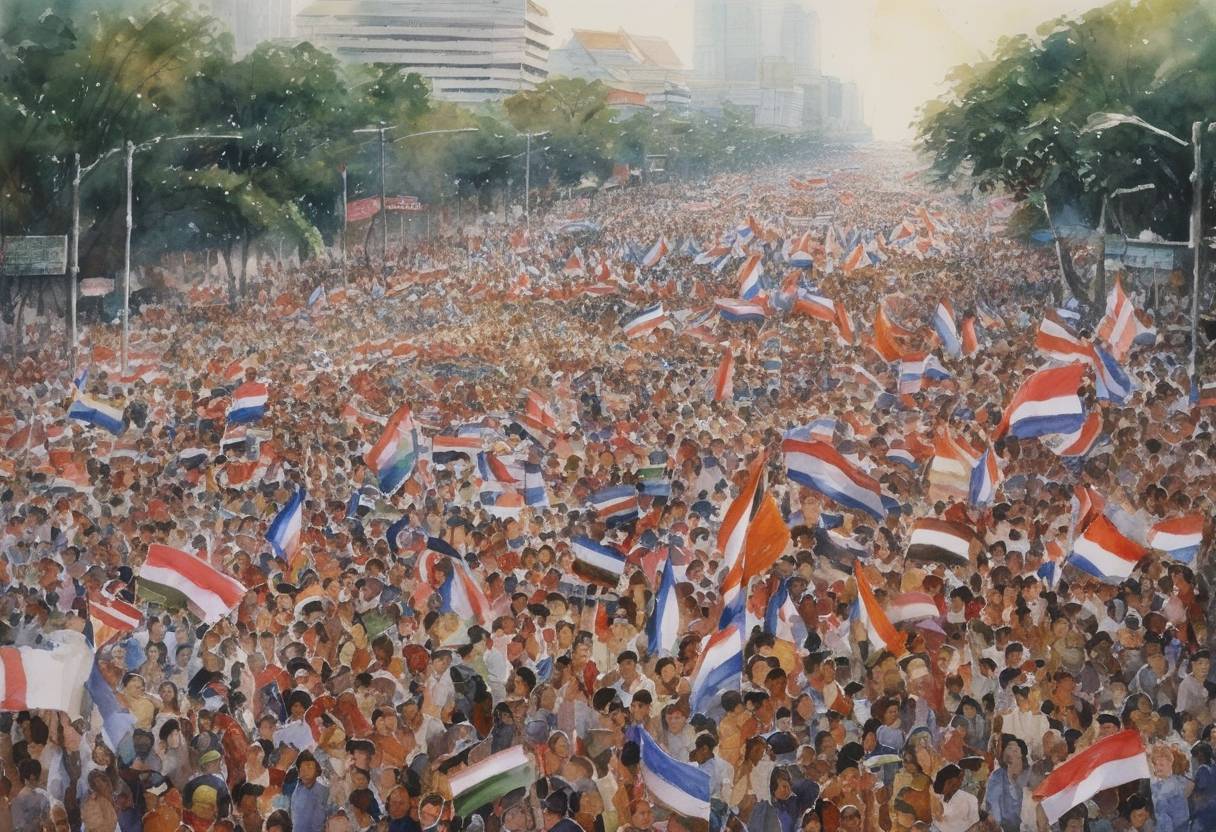
Protests in Thailand: February 5, 2000
On February 5, 2000, an estimated tens of thousands of protesters gathered in the streets of Thailand to demand the resignation of Prime Minister Chuan Leekpai. This demonstration was primarily driven by accusations against Chuan of corruption and economic mismanagement. The protests were a significant moment of public discontent and political pressure in Thailand.
Background
Chuan Leekpai, a member of the Democrat Party, had served as the Prime Minister of Thailand during two non-consecutive terms, first from 1992 to 1995 and again starting from 1997. His return to power in 1997 came at a time when Thailand was reeling from the Asian Financial Crisis, which began in 1997 and severely affected the Thai economy, known for its “Tiger Economy” status before the crisis.
Catalysts for the Protests
- Economic Challenges: By the year 2000, Thailand was still recovering from the crisis, with economic growth slow and unemployment high. Many citizens felt the government’s efforts were insufficient to stabilize the economy or improve the standard of living.
- Corruption Allegations: There were widespread accusations of corruption within Chuan’s administration, further eroding public trust and stoking calls for his resignation.
- Comparison to Predecessors: Incidents of corruption and ineffective governance were not new to Thai politics, but expectations were heightened due to comparisons with previous administrations and hopes for swift recovery post-crisis.
The Protests
The protests on February 5 were notable for their size and intensity. Organized by various opposition groups, including political activists and everyday citizens, the demonstrations brought significant attention to the grievances against Chuan’s government. Protesters demanded not only Chuan’s resignation but also called for comprehensive governmental reforms and improved transparency.
Impact
- Political Pressure: The protest added pressure on Chuan’s government and fueled ongoing political discourse about the role of corruption and mismanagement in Thailand’s economic troubles.
- Public Discontent: This event highlighted a broader discontent with political leadership in Thailand, which would persist and evolve into further political challenges for successive administrations.
Aftermath
Although Chuan Leekpai did not immediately resign following the protests, political pressure continued to mount against his administration until the general election of 2001, where his party lost to Thaksin Shinawatra’s Thai Rak Thai Party. This transition marked a significant shift in the political landscape of Thailand, emphasizing the lingering influence of economic recovery efforts and persistent calls for governmental reforms.
The protests thus served as a pivotal moment in Thailand’s modern political history, encapsulating the tension between public demand for reform and established political structures.