The Union of Lublin: Formation of the Polish-Lithuanian Commonwealth
1569 · Lublin, Poland
The Union of Lublin is signed, merging the Kingdom of Poland and the Grand Duchy of Lithuania into the Polish-Lithuanian Commonwealth.
June 9, 1573
The Union of Lublin is formally ratified, establishing the Polish-Lithuanian Commonwealth.
Lublin, Poland
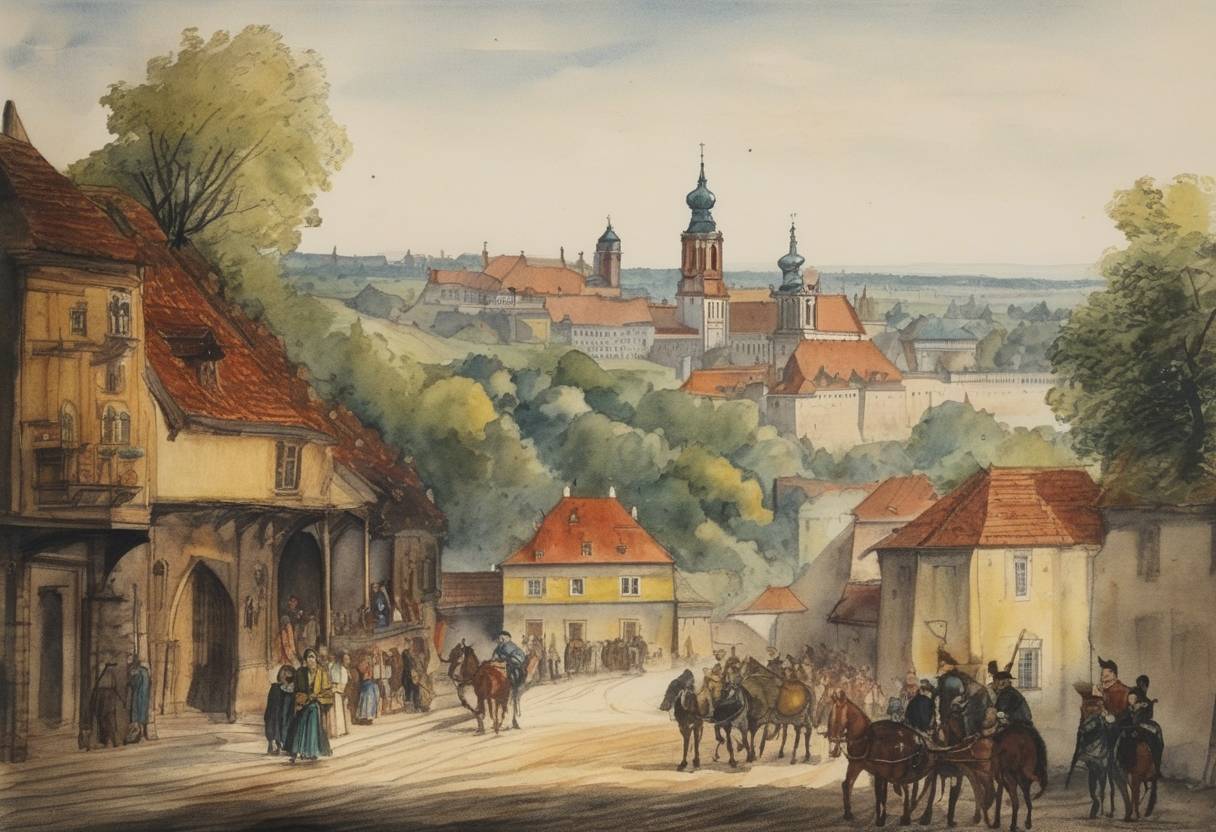
The Union of Lublin, not on June 9, 1573, but on July 1, 1569, marked the formal creation of the Polish-Lithuanian Commonwealth. This significant political and dynastic union united the Kingdom of Poland and the Grand Duchy of Lithuania into a single state. It was a pivotal development in Eastern European history, synthesizing two distinguished entities into a larger, federal structure.
Before the union, Poland and Lithuania were linked through a personal union under a shared monarch. However, political and military challenges, including threats from neighboring powers such as Muscovy, the Holy Roman Empire, and the Ottoman Empire, necessitated a more formalized integration to enhance mutual defense and stability.
The Union of Lublin was characterized by several crucial provisions:
The Polish-Lithuanian Commonwealth enjoyed several decades of prosperity and political influence, becoming a cultural and intellectual hub. However, internal political challenges and increasing external pressures eventually led to the weakening and partitioning of the Commonwealth in the late 18th century.
The Union of Lublin remains a significant historical moment, symbolizing the complexities and possibilities inherent in political unions and federal systems. Its legacy persists in modern discussions about governance, sovereignty, and cultural integration.