Adolf Hitler Becomes Führer of Germany: August 2, 1934
1934 · Berlin, Germany
Adolf Hitler became the Führer of Germany after the death of President Paul von Hindenburg, consolidating his power and marking a pivotal moment in Nazi Germany's history.
February 18, 1943
Joseph Goebbels delivered the Sportpalast speech at the Berlin Sportpalast calling for a Total War against the Allies.
Berlin, Germany | Nazi Party
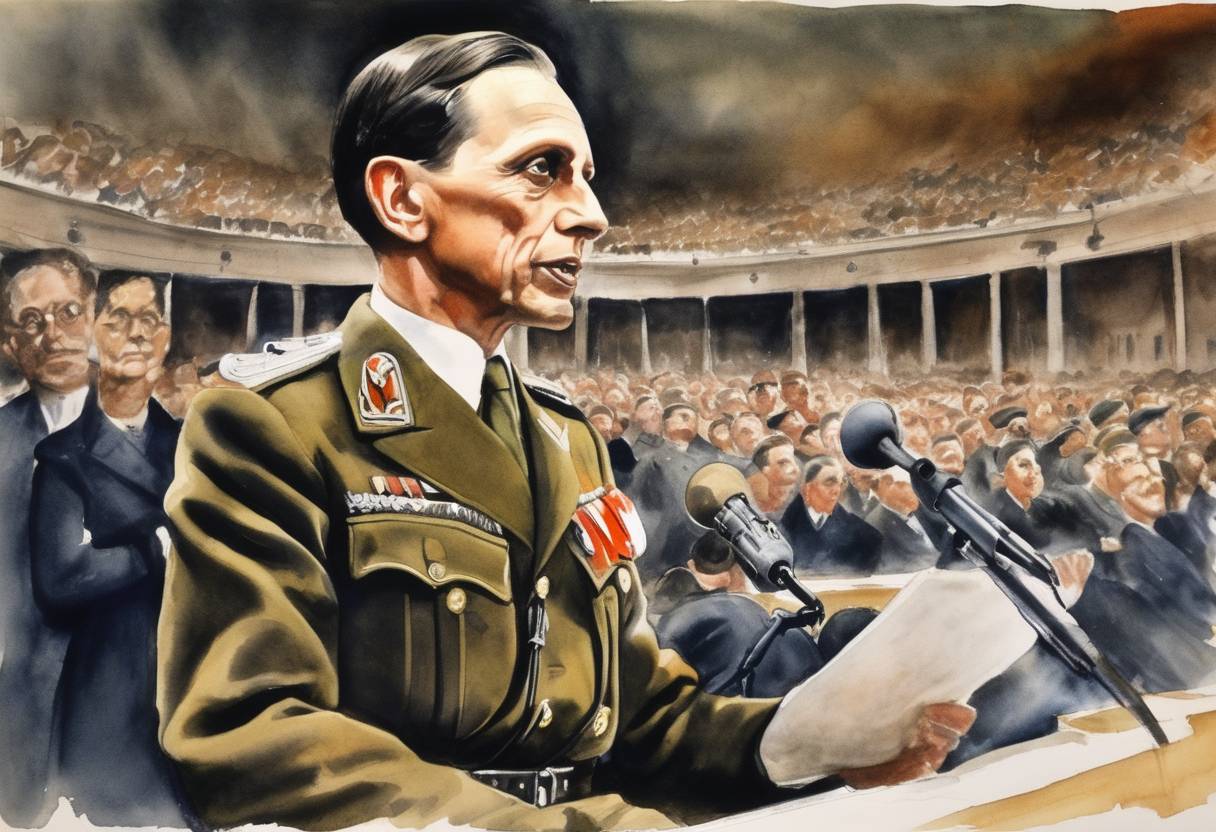
On February 18, 1943, Joseph Goebbels, the Minister of Propaganda for Nazi Germany, delivered the infamous “Total War” speech at the Berlin Sportpalast, urging the German people to commit fully to the war effort against the Allies. This speech marked a pivotal moment in World War II as it called for comprehensive mobilization of Germany’s resources and populace, emphasizing the need for sacrifice and perseverance in the face of increasing military and economic adversity.
By early 1943, Germany faced considerable setbacks on multiple fronts. The recent capitulation at Stalingrad had marked a significant defeat for the German military, profoundly affecting morale and exposing the vulnerability of Nazi forces. The Allies’ strategic bombing campaign further threatened Germany’s infrastructure and war production capabilities. In this atmosphere of crisis, Goebbels sought to invigorate the German nation and direct its collective efforts toward achieving victory.
Held in the Berlin Sportpalast, Goebbels’ speech was attended by a well-orchestrated audience composed of Nazi party members, war veterans, and select loyal citizens. The event, extensively broadcast on radio, was a propaganda spectacle designed to reach and rally the entirety of the German population.
Goebbels employed rhetorical fervor to convey the immediacy and necessity of total war. He posed stark questions to the audience, asking whether they wanted “total war” and “more total and radical than we could even imagine today.” The speech aimed to justify the severe measures the regime would implement, including increased labor demands, stricter rationing, and intensified military conscription.
Total Mobilization: Goebbels emphasized the need for the complete dedication of manpower and resources to the war effort. This included an all-encompassing societal shift, requiring sacrifices from every sector, particularly from women and older age groups previously exempt from some wartime duties.
Resilience and Sacrifice: The speech called for endurance amidst hardships, framing total war as the pathway to ultimate victory. This appeal was designed to maintain public support and counteract growing war-weariness.
Nationalistic and Ideological Rhetoric: The speech capitalized on nationalist sentiment and the existing Nazi ideological framework. Goebbels portrayed the conflict as a necessary struggle to preserve German identity and survival against what he characterized as foreign aggressors.
The Total War speech aimed to align the German populace with the regime’s intensified war efforts and propagate a narrative of resilience despite mounting challenges. While it temporarily bolstered some home-front morale, the realities of war and the continued losses on the battlefield ultimately outweighed any motivational impact. The speech is historically significant as it encapsulates the Nazi regime’s desperation in its later stages and exemplifies the use of propaganda to try and sustain a beleaguered war effort.
Source: en.wikipedia.org