The First Bombing Raid Against Tokyo by B-29 Superfortress Bombers
1944 · Tokyo, Japan
The first bombing raid against Tokyo by American B-29 Superfortress bombers during World War II.
July 31, 1945
Plymouth and other locations in Devon, England, experienced a devastating fog, leading to the crash of a B-24 Liberator bomber, resulting in the deaths of 23 military personnel.
Plymouth, United Kingdom | United States Army Air Forces
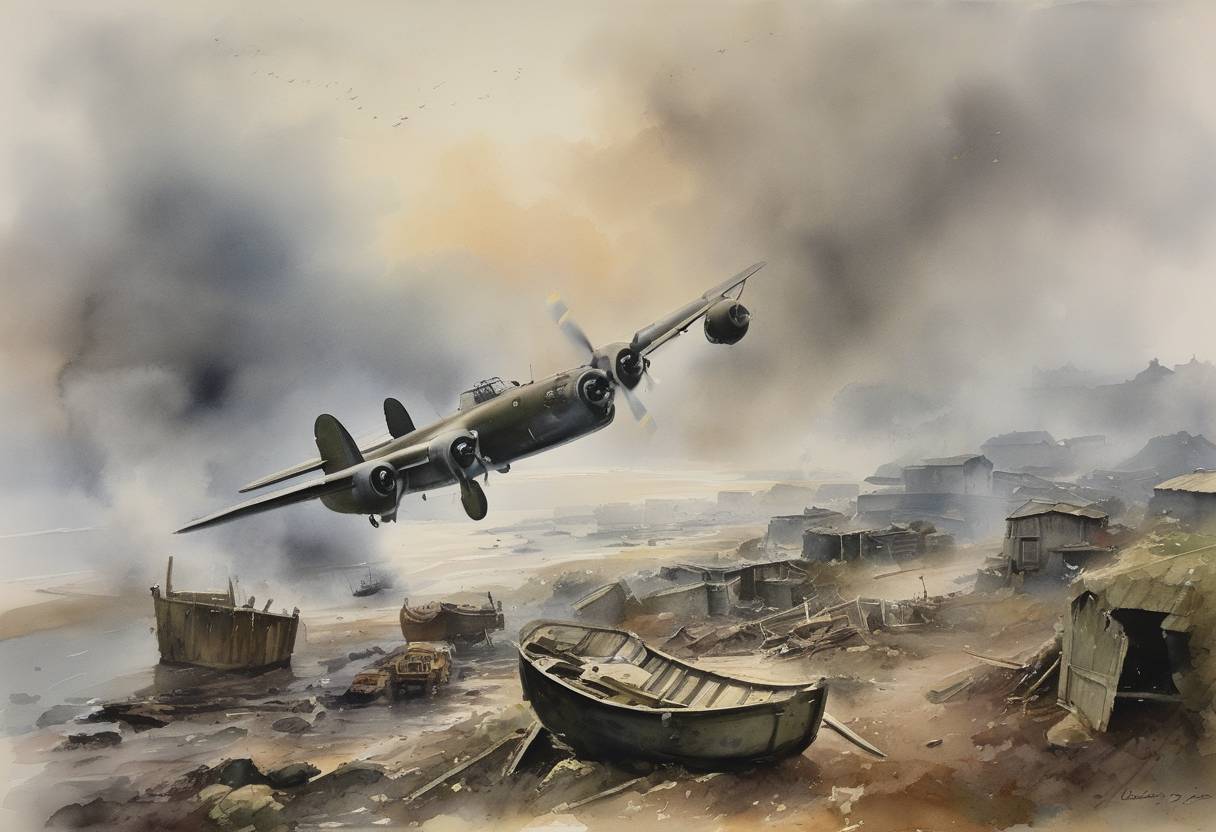
On July 31, 1945, a tragic accident occurred due to heavy fog in Devon, England. A B-24 Liberator bomber, part of the United States Army Air Forces, crashed, resulting in the deaths of 23 military personnel.
As World War II drew to a close, the skies over Europe were busy with military operations winding down, and many military flights were being conducted to reposition aircraft and personnel. However, weather conditions in the region around Plymouth, Devon, were treacherous on that particular day, enveloped in dense fog.
The B-24 Liberator, often used for bombing missions during the war, was on a peacetime mission carrying military personnel. Due to the extremely poor visibility caused by the fog, the aircraft struck terrain unexpectedly. This accident tragically resulted in the death of all 23 servicemen on board.
The crash was a stark reminder of the risks faced by military personnel even after the cessation of active combat operations. The incident highlighted the challenges of navigating aircraft in adverse weather conditions, which later influenced developments in aviation safety and weather forecasting.
Memorials and commemorations in the region keep the memory of those who perished alive, emphasizing the costs of war and the perils faced by those serving in the military, even in non-combat situations. The crash is an enduring part of local historical consciousness in Devon, reflecting the area’s wartime experiences.
Source: www.iwm.org.uk