The Ansei Edo Earthquake of March 21, 1857
1857 · Edo, Japan
An earthquake strikes Tokyo, then known as Edo, with significant destruction.
October 28, 1707
The 1707 Hōei earthquake struck off the southwestern coast of Japan, with an estimated magnitude of 8.6, causing devastating effects on towns and cities in the region.
off the coast of Tosa Province, Japan
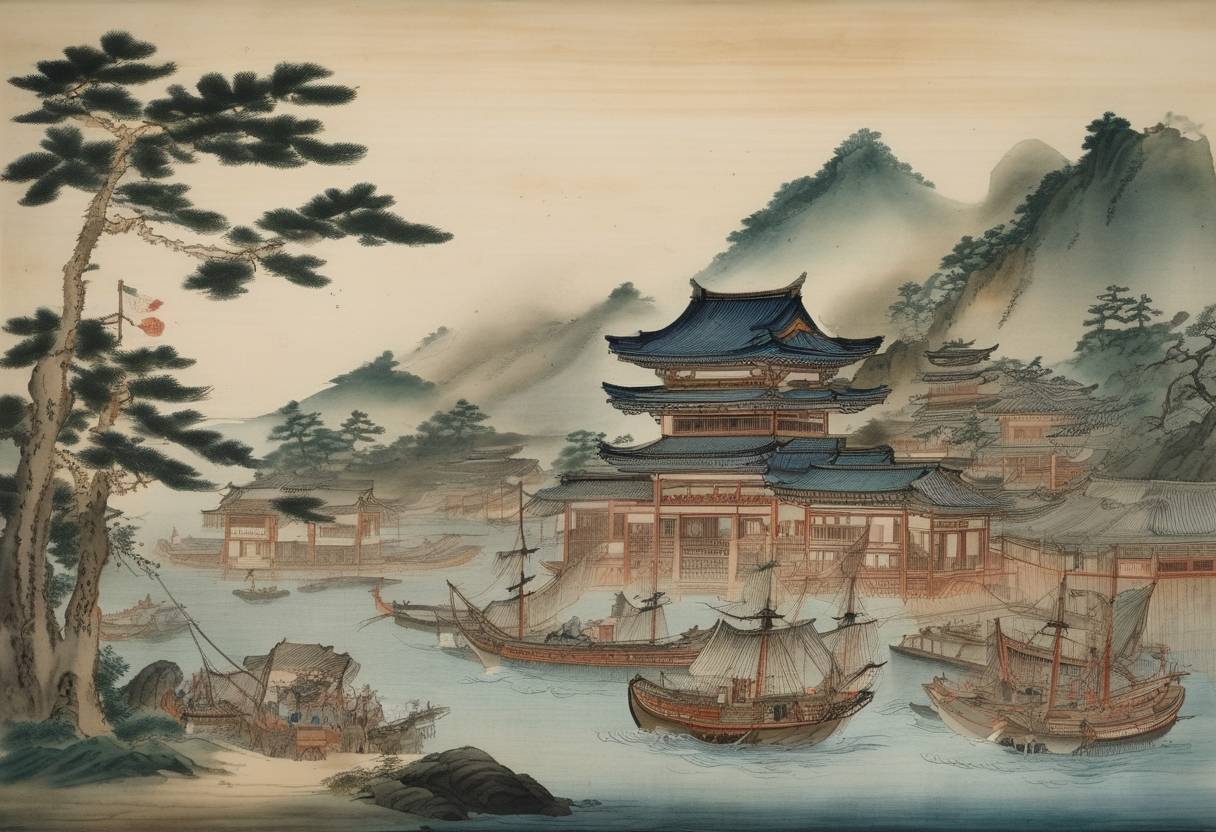
On October 28, 1707, Japan experienced one of the most devastating natural disasters in its history—the Hōei earthquake. Striking off the southwestern coast near Tosa Province (present-day Kōchi Prefecture), it is estimated to have had a magnitude of 8.6. This powerful seismic event was part of Japan’s tumultuous geophysical environment and had far-reaching consequences.
Japan is located at the convergence of several tectonic plates, making it prone to seismic activity. The Hōei earthquake occurred along the Nankai Trough, an active seismic zone known for generating large megathrust earthquakes. Prior to 1707, the region had experienced several significant quakes, with local populations accustomed to the risk, albeit with limited preparation due to the era’s technological constraints.
The earthquake’s primary effects were felt across the southern part of Honshu and Shikoku islands. Accounts from the time describe severe shaking that lasted for several minutes, causing widespread structural damage to towns and cities, including considerable devastation in Osaka and Kyoto.
In addition to the immediate shaking, the earthquake generated a massive tsunami that further compounded the disaster’s effects. Waves reportedly reached up to 25 meters high in some coastal areas, obliterating ports and coastal settlements. Thousands of people were killed as the tsunami swept away homes, flattened infrastructure, and disrupted agricultural production, leading to widespread starvation.
The aftermath of the Hōei earthquake and tsunami was dire:
The Hōei earthquake stands as one of the most powerful and consequential earthquakes in Japan’s recorded history. It highlights the challenges faced by a nation in a seismically active region and underscores the vulnerability of coastal populations to natural disasters. The events of 1707 contributed to advancements in understanding seismic activity and disaster preparedness, influencing future generations in Japan and beyond. The legacy of the Hōei earthquake is a testament to human resilience and adaptation in the face of natural calamities.