Capture of Danzig by Soviet Forces - March 30, 1945
1945 · Danzig, Germany (now Poland)
Soviet forces captured the city of Danzig (now Gdańsk, Poland) during World War II, marking a significant advance on the Eastern Front.
July 12, 1943
The Battle of Prokhorovka, one of the largest tank battles in history, took place during the larger Battle of Kursk in World War II.
Prokhorovka, Russia | Soviet Union
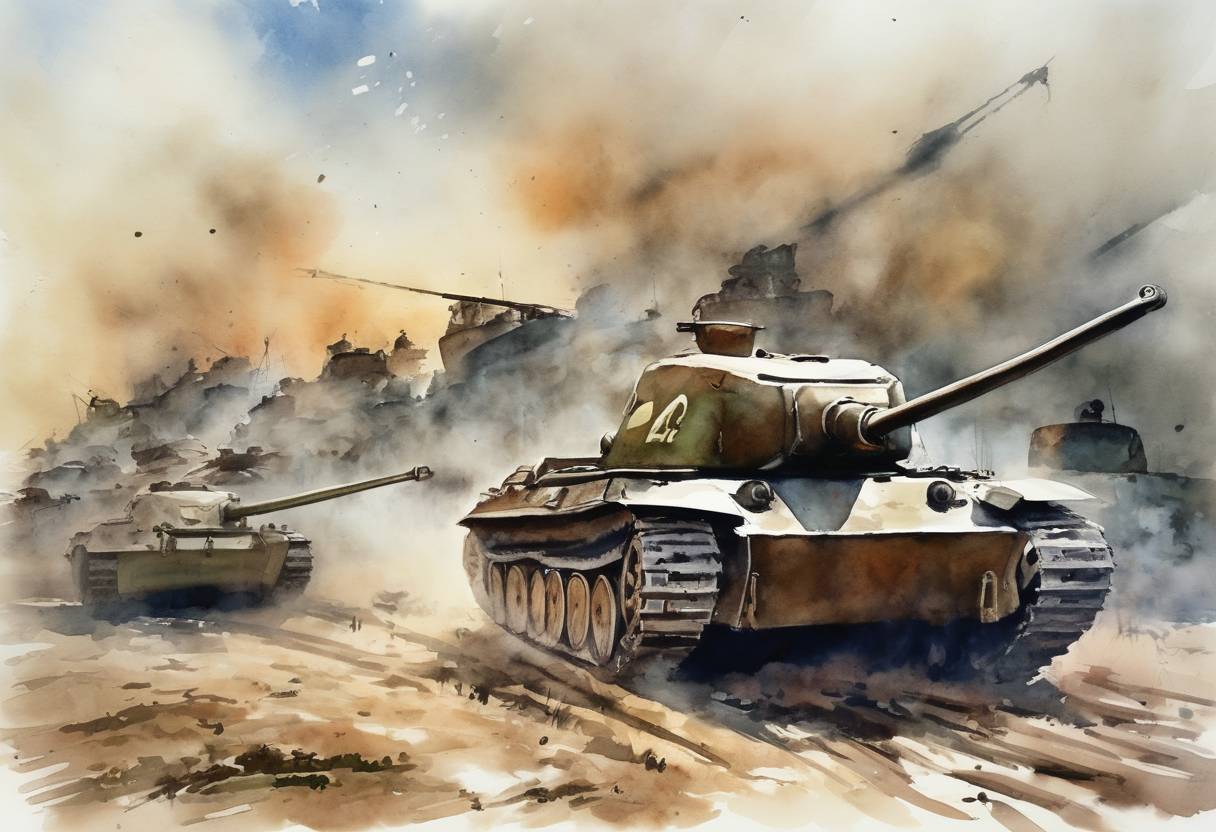
The Battle of Prokhorovka, fought on July 12, 1943, stands as one of the largest tank battles in history. It was a pivotal engagement within the larger context of the Battle of Kursk during World War II. This clash marked a significant turning point on the Eastern Front, as Soviet forces successfully halted the German offensive, Operation Citadel.
Operation Citadel: Initiated by Nazi Germany, Operation Citadel aimed to encircle and destroy a significant portion of the Soviet forces by launching a pincer attack on the Kursk salient. The operation was intended to regain the strategic initiative lost after the defeat at Stalingrad.
Soviet Preparations: Anticipating the German attack, the Soviet Union fortified the Kursk region with extensive defensive works, including minefields, anti-tank ditches, and fortified positions. The Soviets amassed a large concentration of troops and tanks, preparing to absorb the German assault and launch a counteroffensive.
Location: The battle took place near the small town of Prokhorovka, approximately 87 kilometers southeast of Kursk.
Forces Involved: The engagement involved the Soviet 5th Guards Tank Army, commanded by General Pavel Rotmistrov, and the German II SS Panzer Corps, led by General Paul Hausser. The Soviets fielded approximately 800 tanks, while the Germans deployed around 300 tanks and assault guns.
Combat: The battle was characterized by chaotic, close-quarters tank combat. The terrain, marked by rolling fields and ravines, limited visibility and maneuverability, leading to intense and direct engagements between armored units.
Soviet Victory: Despite suffering heavy losses, the Soviet forces managed to halt the German advance. The Germans failed to achieve their objective of breaking through the Soviet defenses and encircling the Red Army forces.
Strategic Impact: The failure of Operation Citadel marked the last major German offensive on the Eastern Front. The Soviet victory at Prokhorovka and the broader Battle of Kursk shifted the strategic initiative to the Soviet Union, paving the way for subsequent offensives that would eventually lead to the liberation of Soviet territory and the advance into Eastern Europe.
Casualties: Both sides incurred significant losses. The Soviets lost a substantial number of tanks, but the Germans, unable to replace their losses as effectively, suffered a critical depletion of their armored forces.
The Battle of Prokhorovka and the larger Battle of Kursk marked a turning point in World War II. The Soviet Union’s ability to absorb and repel the German offensive demonstrated the growing strength and resilience of the Red Army. This victory contributed to the eventual Soviet advance towards Berlin and the ultimate defeat of Nazi Germany in 1945.
The battle remains a symbol of Soviet tenacity and strategic acumen, underscoring the importance of preparation, intelligence, and the effective use of armored forces in modern warfare.
Source: en.wikipedia.org