Establishment of Manchukuo: February 18, 1932
1932 · Changchun, China
Japan declared the establishment of the puppet state of Manchukuo in Manchuria.
September 18, 1931
The Mukden Incident occurs, leading to the Japanese invasion of Manchuria.
Shenyang, China | Imperial Japanese Army
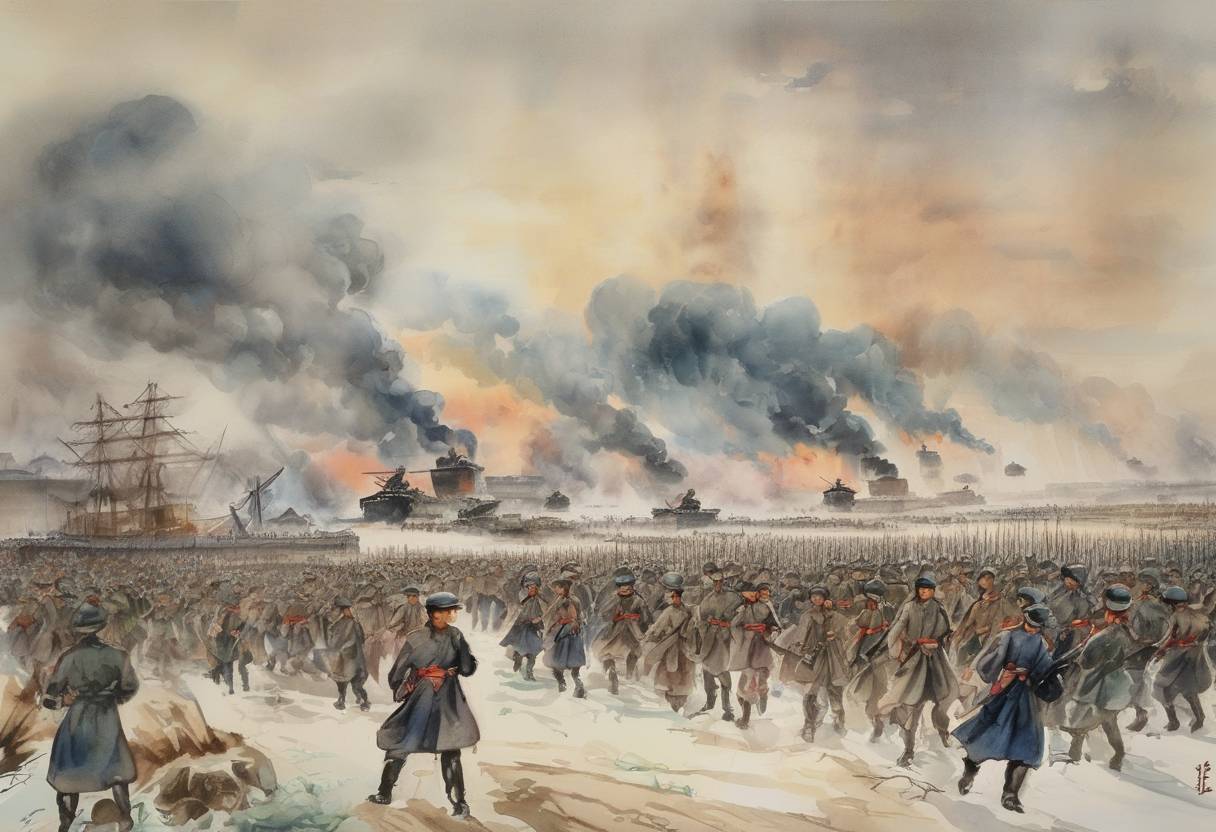
The Mukden Incident, which occurred on September 18, 1931, was a pivotal event that marked the beginning of the Japanese invasion of Manchuria, a region in Northeast China. This incident is often seen as a prelude to the broader conflicts of the Second Sino-Japanese War and World War II in the Pacific.
Japanese Interests in Manchuria: Japan had significant economic and strategic interests in Manchuria, including investments in the South Manchuria Railway and a desire for natural resources. The region was seen as vital for Japan’s expansionist policies.
Political Climate: The early 1930s were marked by political instability in China, with the Nationalist government under Chiang Kai-shek struggling to consolidate power amidst internal divisions and external pressures.
Japanese Military Ambitions: The Japanese Kwantung Army, stationed in Manchuria, was eager to expand Japan’s influence and acted with considerable autonomy from the Japanese government in Tokyo.
Explosion at Mukden: On the night of September 18, 1931, a small explosion occurred near the tracks of the South Manchuria Railway near Mukden (modern-day Shenyang). The explosion was orchestrated by Japanese military personnel as a pretext for military action.
Immediate Response: The Japanese Kwantung Army quickly blamed Chinese dissidents for the explosion and used it as justification to launch a full-scale invasion of Manchuria. Within hours, Japanese forces began occupying key locations in the region.
Occupation of Manchuria: By early 1932, Japan had established control over Manchuria and set up the puppet state of Manchukuo, installing the last Qing emperor, Puyi, as its nominal ruler.
International Reaction: The League of Nations condemned Japan’s actions, leading to Japan’s withdrawal from the organization in 1933. This incident highlighted the weaknesses of the League in enforcing international law and maintaining peace.
Long-term Impact: The Mukden Incident set a precedent for aggressive military expansion by Japan, contributing to the deterioration of international relations in the lead-up to World War II. It also exacerbated tensions between Japan and China, eventually leading to the outbreak of the Second Sino-Japanese War in 1937.
The Mukden Incident is a critical example of how military provocations can escalate into broader conflicts. It underscores the challenges of international diplomacy and the limitations of interwar peacekeeping efforts. The incident also illustrates the complex interplay between national interests, military ambitions, and international responses that characterized the early 20th century geopolitical landscape.
Source: en.wikipedia.org