Franklin D. Roosevelt's Fourth Term Election - November 7, 1944
1944 · Washington, D.C., United States
Franklin D. Roosevelt was elected to a fourth term as President of the United States.
November 5, 1940
Franklin D. Roosevelt was elected to a third term as President of the United States, breaking the tradition of a two-term limit.
Washington D.C., United States | Democratic Party
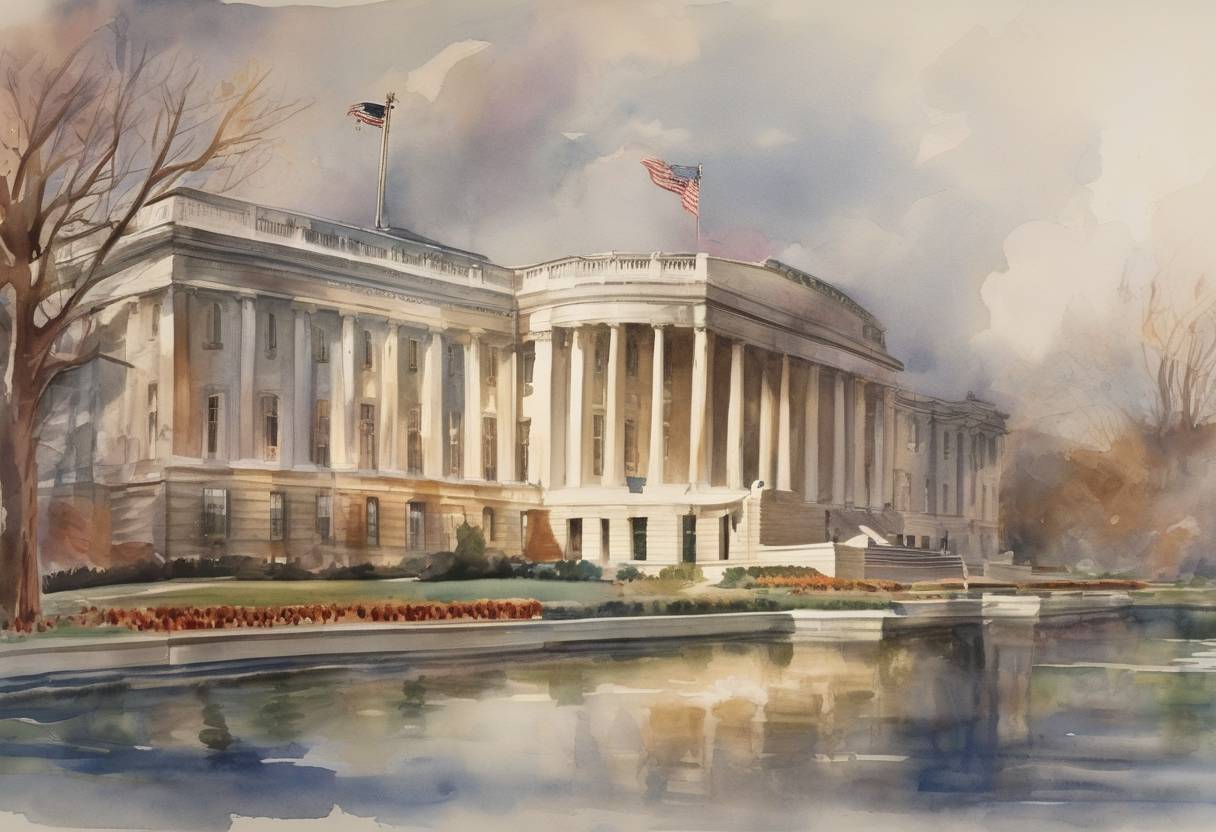
On November 5, 1940, Franklin D. Roosevelt was elected to an unprecedented third term as President of the United States, breaking the long-standing tradition of a two-term limit established by George Washington. This historic event marked a significant moment in American political history, reflecting both the unique circumstances of the time and Roosevelt’s enduring popularity.
The Great Depression: Roosevelt first took office in 1933 during the depths of the Great Depression. His New Deal policies aimed at economic recovery and reform had garnered significant public support.
World War II: By 1940, World War II was raging in Europe, and the global political landscape was increasingly unstable. Although the United States had not yet entered the war, the conflict influenced American politics and public opinion.
Public Sentiment: Many Americans were concerned about the potential for U.S. involvement in the war and valued Roosevelt’s experienced leadership during such uncertain times.
Candidates: Roosevelt, a Democrat, ran against Republican Wendell Willkie, a businessman and lawyer with no prior political experience. Willkie campaigned on a platform of preparedness for war and criticized Roosevelt’s New Deal policies.
Campaign Issues: The election focused heavily on foreign policy and national defense. Roosevelt promised to keep the United States out of the war while preparing the nation for any eventuality.
Outcome: Roosevelt won the election with 54.7% of the popular vote and 449 electoral votes to Willkie’s 82. His victory was seen as a mandate for his leadership during a time of global crisis.
Breaking Tradition: Roosevelt’s election to a third term broke the informal two-term limit tradition, which was later formalized by the 22nd Amendment to the Constitution in 1951, limiting presidents to two terms.
Leadership During War: Roosevelt’s third term was dominated by World War II. He led the nation through the attack on Pearl Harbor and the subsequent U.S. entry into the war.
Legacy: Roosevelt’s unprecedented third term solidified his legacy as a pivotal figure in American history, both for his domestic policies and his leadership during a global conflict.
Roosevelt’s third-term election remains a landmark event, illustrating the interplay between domestic politics and international affairs and highlighting the American public’s trust in his leadership during a critical period.
Source: en.wikipedia.org