Afonso IV of Portugal: Death and Legacy
1367 · Lisbon, Portugal
Afonso IV of Portugal, also known as 'Afonso the Brave,' passed away. He was notable for involving Portugal in the Spanish conflicts and improving its legal and administrative systems.
February 1, 1908
King Carlos I of Portugal and his heir, Prince Luis Filipe, are assassinated in Lisbon.
Lisbon, Portugal | Portuguese Monarchy
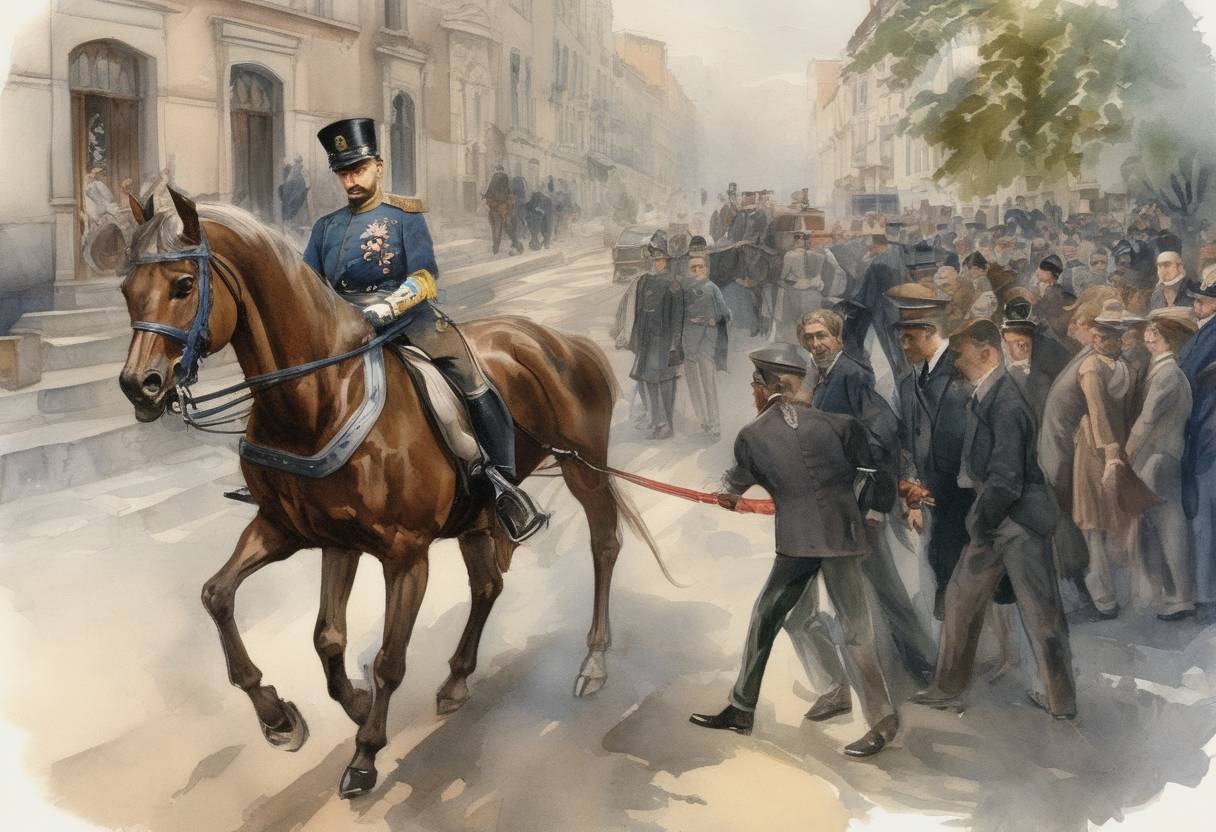
On February 1, 1908, a significant and tragic event unfolded in Lisbon, Portugal, marking a pivotal moment in the nation’s history. King Carlos I of Portugal and his heir, Prince Luís Filipe, were assassinated in a shocking act of political violence that had profound implications for the Portuguese monarchy and the country’s political landscape.
The early 20th century was a period of considerable political instability in Portugal. The country was grappling with economic difficulties, social unrest, and political corruption. King Carlos I, who ascended to the throne in 1889, faced mounting criticism for his handling of these issues. His decision to appoint João Franco as Prime Minister in 1906, granting him dictatorial powers to implement reforms, further polarized the political climate.
The authoritarian measures taken by Franco’s government, including the suspension of the parliament and the imposition of press censorship, intensified opposition from republican factions and other political groups. This environment of discontent set the stage for the tragic events of February 1, 1908.
On the afternoon of February 1, 1908, King Carlos I and his family were returning to Lisbon from the royal palace at Vila Viçosa. As their open carriage passed through the Terreiro do Paço (now Praça do Comércio), two republican activists, Alfredo Luís da Costa and Manuel Buíça, emerged from the crowd and opened fire.
The assassins were quickly subdued and killed by police and military personnel present at the scene. The assassination sent shockwaves throughout Portugal and Europe, highlighting the deep-seated political divisions within the country.
Following the assassination, Prince Manuel, the younger son of King Carlos I, ascended to the throne as King Manuel II. His reign, however, was short-lived. The monarchy continued to face significant challenges, and in 1910, a revolution led to the establishment of the Portuguese First Republic, ending the monarchy.
The assassination of King Carlos I and Prince Luís Filipe marked a turning point in Portuguese history. It underscored the intense political strife and the growing republican sentiment that ultimately led to the fall of the monarchy. The event is remembered as a catalyst for change, reflecting the broader struggles for political reform and modernization in early 20th-century Europe.
In summary, the assassination of King Carlos I and Prince Luís Filipe was a dramatic and transformative event in Portugal’s history, illustrating the volatile intersection of monarchy, politics, and social change during this period.
Source: en.wikipedia.org