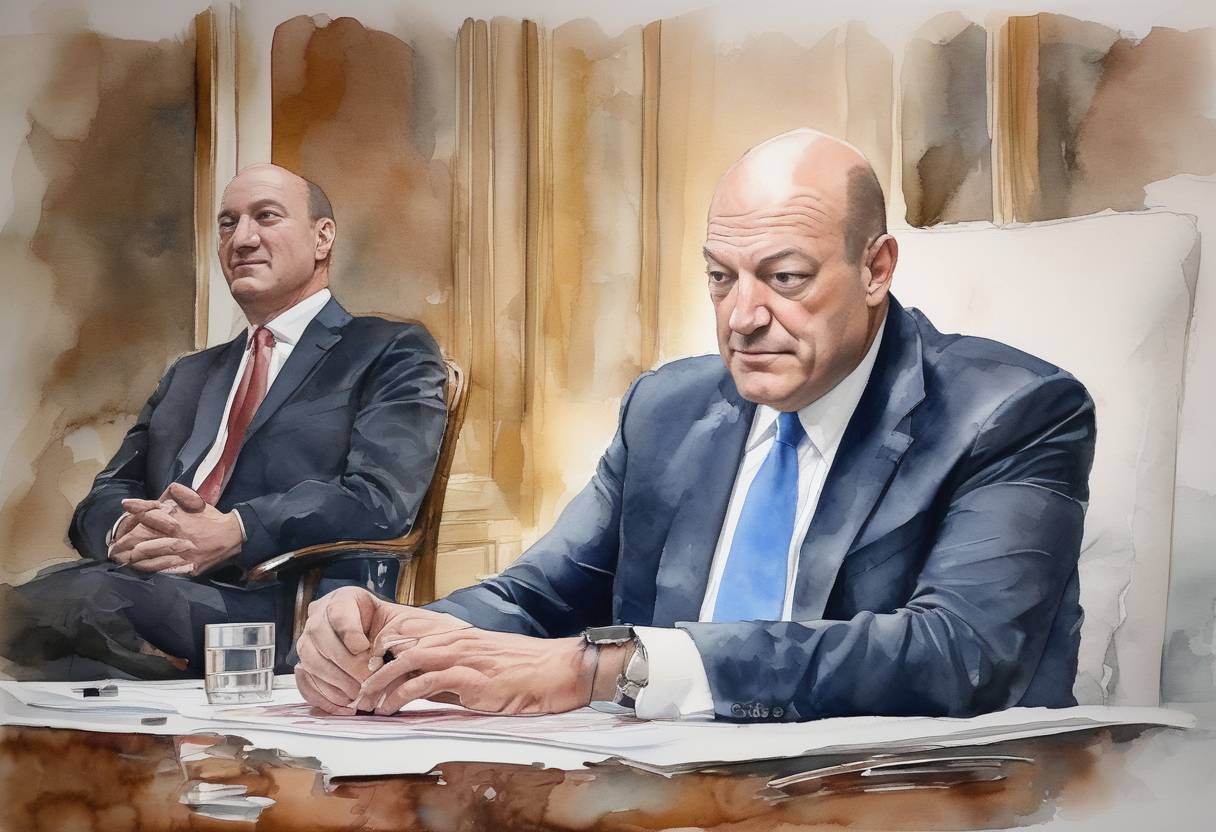
Gary Cohn’s Resignation: March 7, 2018
On March 7, 2018, Gary Cohn, the chief economic advisor to U.S. President Donald Trump, announced his resignation. Cohn’s departure marked a significant moment in the Trump administration, primarily due to his influential role in shaping economic policy and his disagreements with the President over trade issues.
Background
Gary Cohn, a former president and chief operating officer of Goldman Sachs, joined the Trump administration in January 2017 as the Director of the National Economic Council. Known for his pro-business stance and expertise in financial markets, Cohn played a pivotal role in the administration’s economic agenda, including the successful passage of the Tax Cuts and Jobs Act in December 2017.
The Tariff Dispute
Cohn’s resignation was largely attributed to his opposition to President Trump’s decision to impose tariffs on steel and aluminum imports. Announced in early March 2018, the tariffs were set at 25% on steel and 10% on aluminum. The move was part of Trump’s broader “America First” trade policy, aimed at protecting domestic industries but criticized for potentially sparking trade wars and increasing costs for American consumers and businesses.
Cohn, a staunch advocate of free trade, argued against the tariffs, warning that they could harm the U.S. economy and strain relationships with key allies. Despite his efforts to sway the President’s decision, Trump proceeded with the tariffs, leading to Cohn’s decision to resign.
Impact and Aftermath
Cohn’s resignation was seen as a blow to the faction within the White House that favored free trade and global economic cooperation. His departure raised concerns among investors and business leaders about the direction of U.S. economic policy and the potential for increased protectionism.
Following Cohn’s resignation, Larry Kudlow, a conservative economist and media commentator, was appointed as his successor. Kudlow shared some of Cohn’s free-market views but supported Trump’s tariff strategy, reflecting the administration’s continued commitment to its trade policies.
Broader Historical Significance
Cohn’s resignation highlighted the internal divisions within the Trump administration regarding trade policy and underscored the challenges of balancing protectionist measures with the principles of free trade. The tariffs and the subsequent departure of a key economic advisor were pivotal in shaping the administration’s economic legacy and its approach to international trade relations.
Overall, the event underscored the complexities of navigating economic policy in a rapidly changing global landscape and the impact of leadership changes on policy direction.