Guglielmo Marconi Applies for a Patent for Wireless Telegraphy
1896 · London, United Kingdom
Guglielmo Marconi applies for a patent for his wireless telegraphy system in the United Kingdom.
July 25, 1837
The first commercial use of an electric telegraph was demonstrated by William Fothergill Cooke and Charles Wheatstone on the Great Western Railway in England.
London, United Kingdom | Great Western Railway
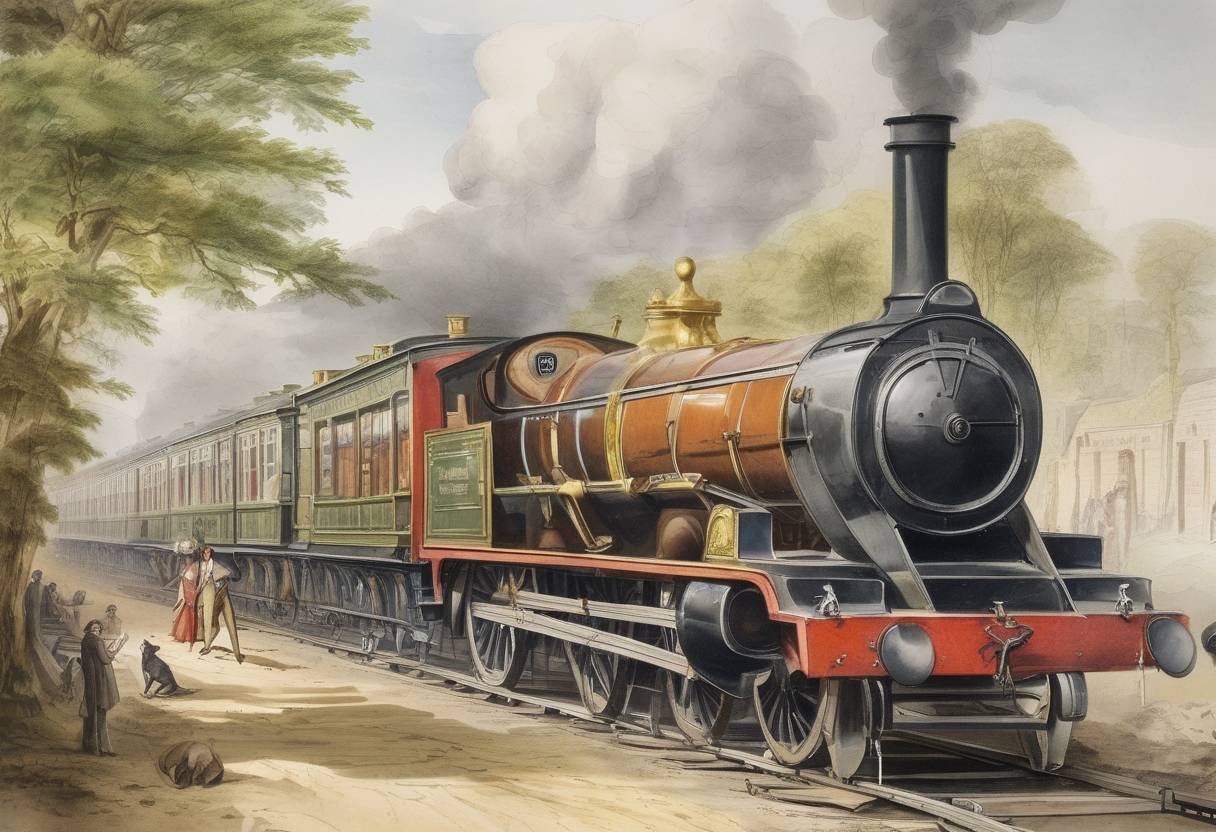
On July 25, 1837, a significant milestone in communication technology was achieved with the first commercial use of an electric telegraph. This groundbreaking event was demonstrated by inventors William Fothergill Cooke and Charles Wheatstone on the Great Western Railway in England.
Before the advent of the electric telegraph, long-distance communication was limited to physical means such as messengers, semaphore lines, or optical telegraphs, which were slow and often unreliable. The need for a more efficient communication system was particularly pressing with the rapid expansion of railways, which required timely and accurate information to ensure safety and coordination.
William Fothergill Cooke: An English inventor who initially studied medicine but became fascinated with electrical engineering. He saw the potential of the telegraph for railway signaling.
Charles Wheatstone: A renowned scientist and professor at King’s College London, Wheatstone was already known for his work in acoustics and optics. He brought his scientific expertise to the development of the telegraph.
The demonstration took place on a section of the Great Western Railway, which was one of the major railway lines in England. Cooke and Wheatstone installed a five-needle telegraph system, which used a series of wires to transmit electrical signals that moved needles to point to letters of the alphabet. This system was more complex than later single-wire systems but was effective for its time.
The successful demonstration of the electric telegraph marked the beginning of a new era in communication. It paved the way for the widespread adoption of telegraphy, which would revolutionize how information was transmitted over long distances.
The success of Cooke and Wheatstone’s telegraph led to the formation of the Electric Telegraph Company in 1846, the world’s first public telegraph company. Their invention significantly contributed to the industrial and communication revolutions of the 19th century, underscoring the importance of technological innovation in societal advancement.
In summary, the first commercial use of the electric telegraph by Cooke and Wheatstone on July 25, 1837, was a pivotal moment in history, marking the dawn of modern communication and setting the stage for future technological developments.
Source: en.wikipedia.org