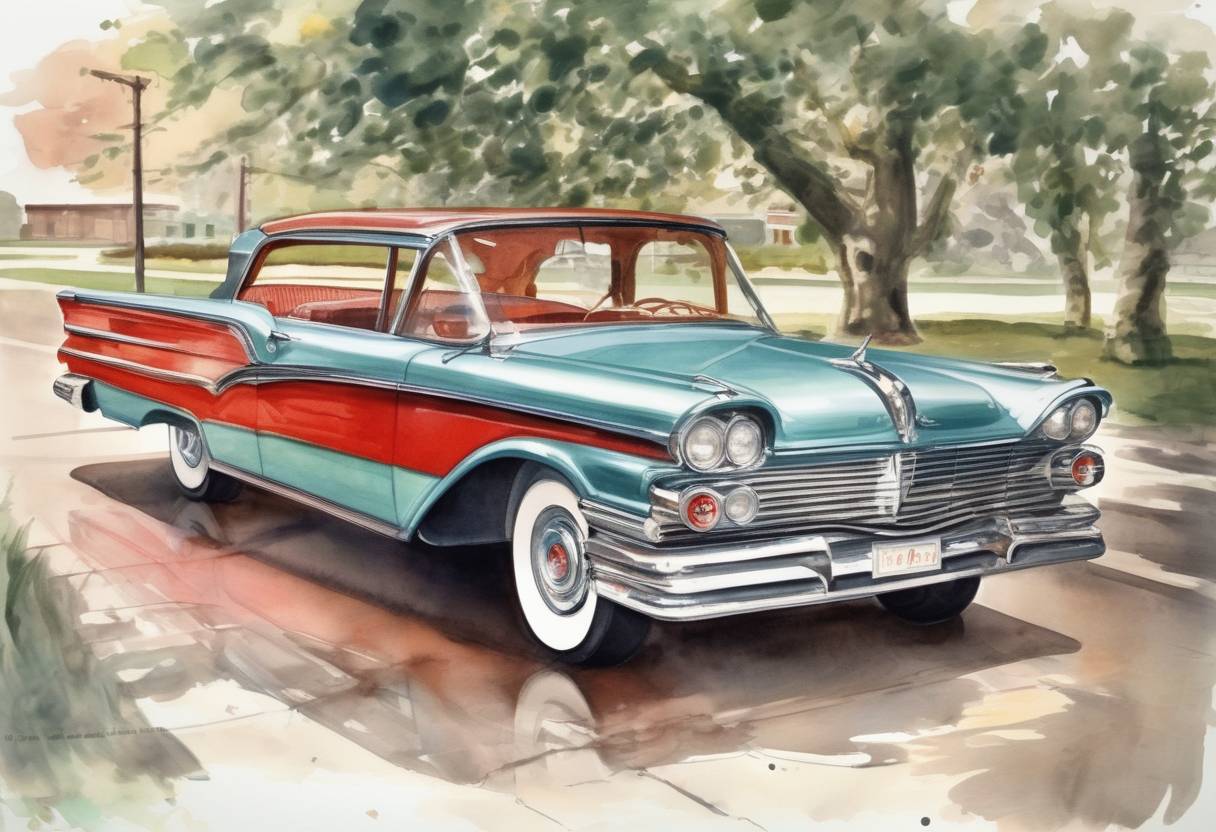
Introduction of the Edsel by Ford Motor Company
On September 4, 1957, the Ford Motor Company introduced the Edsel automobile to the American public. This launch was highly anticipated, as Ford had invested heavily in the development and marketing of the Edsel, aiming to fill a perceived gap between its Ford and Mercury lines. However, the Edsel became one of the most infamous commercial failures in automotive history.
Background
- Market Context: In the 1950s, the American automobile market was booming, with consumers seeking new and innovative car models. Ford aimed to capitalize on this trend by creating a new brand that would appeal to the mid-range market segment.
- Development: The Edsel was named after Edsel Ford, the son of the company’s founder, Henry Ford. The development process was extensive, involving significant market research and design efforts to ensure the car would stand out.
Launch and Features
- Marketing Hype: Ford’s marketing campaign for the Edsel was unprecedented. It was shrouded in secrecy and built up through teaser advertisements, creating a sense of anticipation.
- Design and Features: The Edsel was designed to be distinctive, featuring a unique “horse-collar” grille, push-button transmission, and advanced features for its time, such as self-adjusting brakes and a speedometer that glowed when a preset speed was exceeded.
Reasons for Failure
- Overhyped Expectations: The extensive marketing campaign raised consumer expectations to levels that the Edsel could not meet.
- Design Criticisms: The design, particularly the grille, was polarizing and did not resonate with consumers.
- Economic Factors: The launch coincided with an economic recession, reducing consumer spending on new cars.
- Production Issues: Quality control problems and production delays further tarnished the Edsel’s reputation.
Aftermath and Legacy
- Discontinuation: Due to poor sales, Ford discontinued the Edsel brand in 1960, just three years after its launch.
- Financial Losses: The failure of the Edsel resulted in significant financial losses for Ford, estimated at around \(250 million at the time (equivalent to over \)2 billion today).
- Cultural Impact: The Edsel became a symbol of commercial failure and is often cited in business and marketing studies as a cautionary tale about the risks of overhyping a product.
Broader Historical Significance
The Edsel’s failure highlighted the importance of understanding consumer preferences and market conditions. It also underscored the risks associated with launching a new product line without adequate testing and quality assurance. Despite its failure, the Edsel remains a notable chapter in automotive history, illustrating the complexities of product development and marketing in a competitive industry.