The Fall of the Kingdom of Dublin to Norman Invaders on September 21, 1170
1170 · Dublin, Ireland
The Kingdom of Dublin falls to Norman invaders.
September 14, 0919
Battle of Islandbridge: High King of Ireland Niall Glúndub is killed in battle against the Norse Vikings near Dublin.
Dublin, Ireland | Norse Vikings
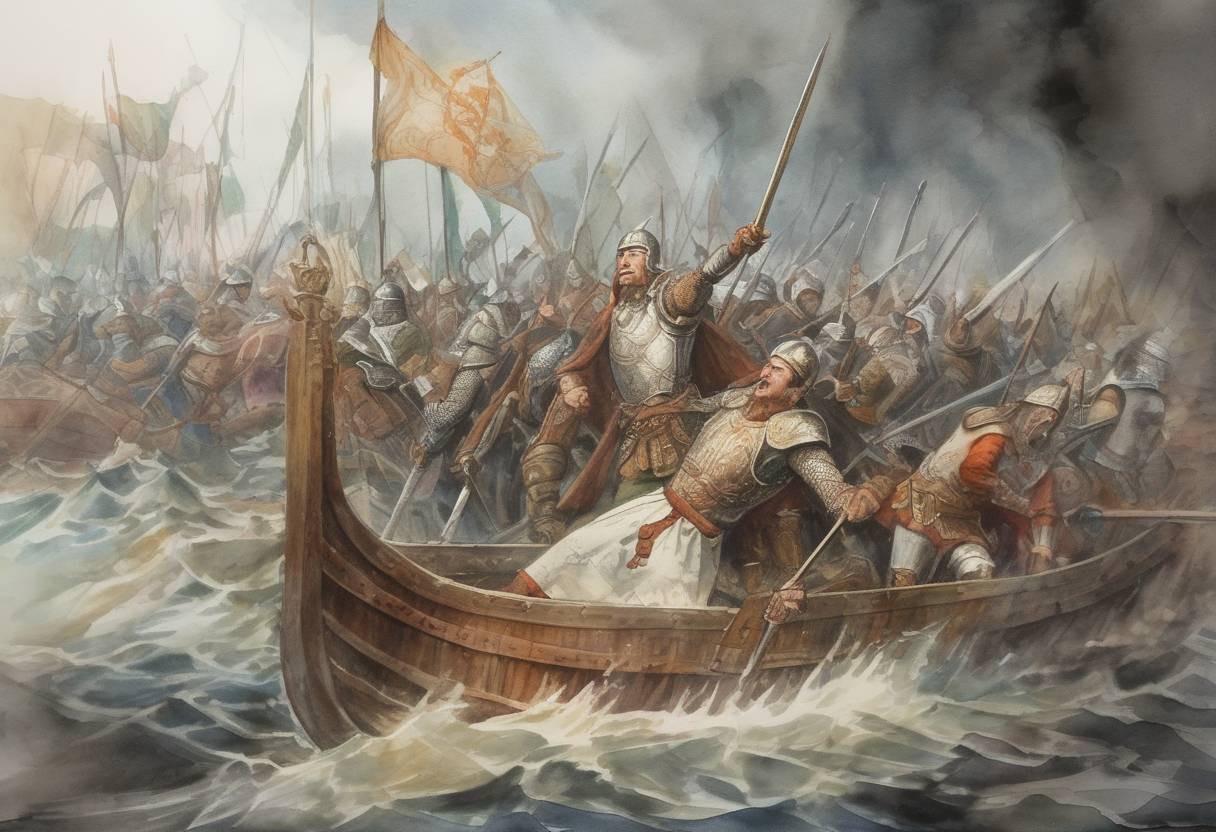
On September 14, 919, a significant event unfolded near Dublin, Ireland, known as the Battle of Islandbridge. This battle marked a pivotal moment in Irish history, as it led to the death of the High King of Ireland, Niall Glúndub, at the hands of Norse Vikings.
The early 10th century in Ireland was characterized by frequent conflicts between the native Irish kingdoms and Norse settlers, who had established themselves in coastal areas, including Dublin. The Norse presence in Ireland began in the late 8th century with raids, eventually leading to settlements and the establishment of Norse-Gaelic kingdoms.
Niall Glúndub, a member of the Uí Néill dynasty, ascended to the position of High King of Ireland in 916. His reign was marked by efforts to consolidate power and resist Norse encroachments. The Norse, under the leadership of Sitric Cáech, a powerful Viking ruler, posed a significant threat to the Irish kingdoms.
The Battle of Islandbridge was part of a broader conflict between the Irish and the Norse. Niall Glúndub, leading a coalition of Irish forces, sought to challenge the Norse dominance in Dublin. The battle took place near the River Liffey, close to what is now the modern-day suburb of Islandbridge in Dublin.
The Irish forces, despite their determination, were ultimately defeated by the Norse. The battle was fierce and resulted in heavy casualties on both sides. Niall Glúndub was killed during the conflict, a significant blow to the Irish resistance against the Norse.
The death of Niall Glúndub had profound implications for Ireland. It marked a temporary setback for the Irish kingdoms in their struggle against Norse influence. The Norse maintained control over Dublin, which continued to serve as a strategic and economic hub for their operations in Ireland.
However, the battle also galvanized Irish resistance, leading to future efforts to reclaim territories and diminish Norse power. The conflict between the Irish and the Norse persisted, shaping the political landscape of Ireland for years to come.
Niall Glúndub’s death is remembered as a symbol of the enduring struggle between the native Irish and the Norse settlers. His legacy is one of resistance and the ongoing fight for Irish sovereignty during a tumultuous period in the island’s history.
The Battle of Islandbridge remains a significant event in the annals of Irish history. It highlights the complex interplay of power, resistance, and cultural exchange between the Irish and the Norse during the early medieval period. The death of High King Niall Glúndub underscores the challenges faced by Irish leaders in their efforts to unify and protect their lands from external threats.
Source: en.wikipedia.org